Neeta Khanuja

design · 2019

an accessible audio tour

The Richardson Olmsted Campus in Buffalo, a former state asylum, offered a “dial and listen” audio tour. We redesigned it as an app that uses beacons to know where a visitor is standing and play the right stop, for sighted and blind visitors alike.

Richardson Olmsted Campus, Buffalo · with Edward Steinfeld and Hemchand Subramanyam

i.

listening to the old tour

We listened to the existing tour several times and logged each of its 15 stops: whether it pointed to something visible, whether it depended on where you stood, what else you could hear or touch, and how it directed you to the next stop.

Many stops asked visitors to look at something, which leaves out a blind visitor.
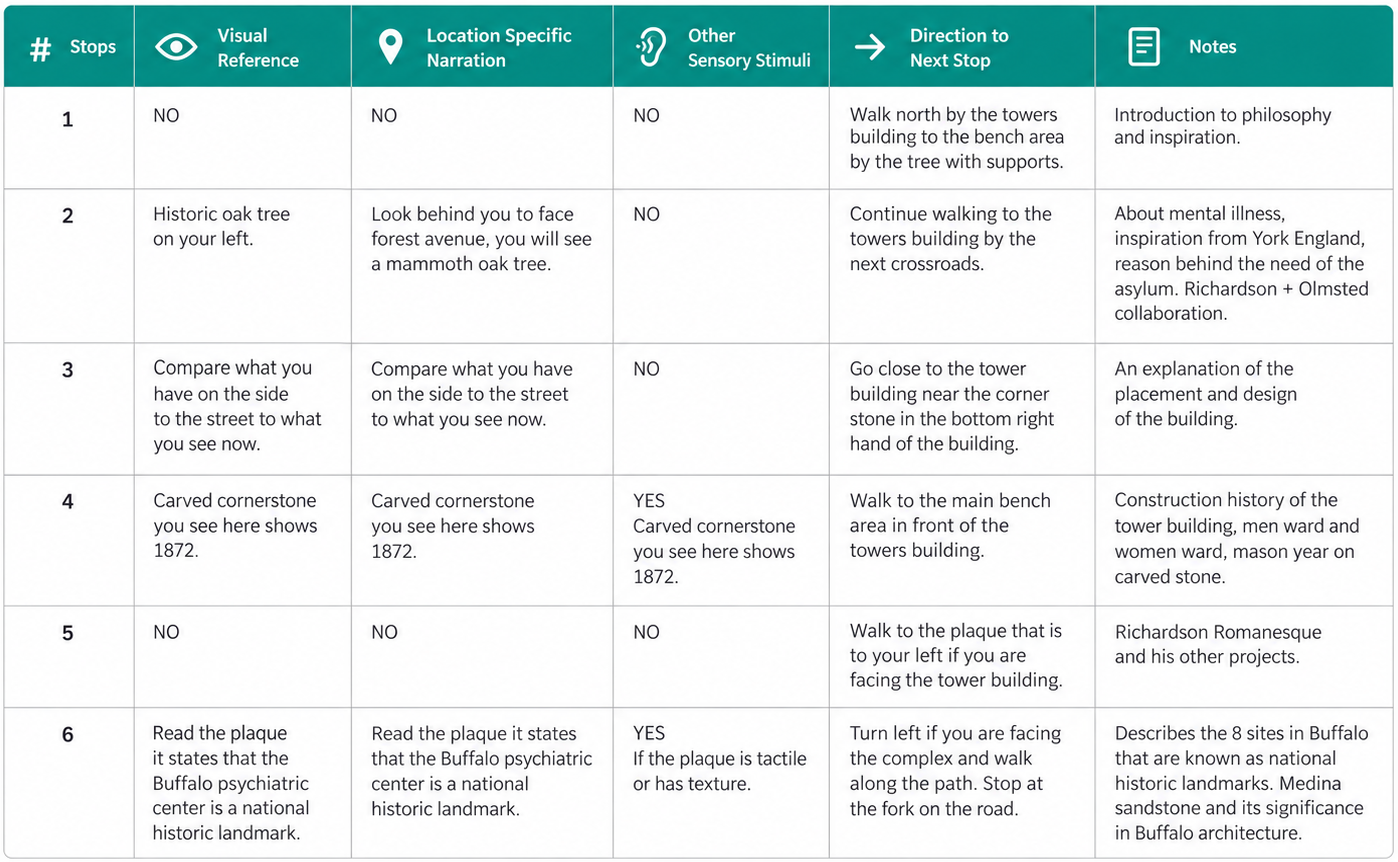
Table analysing the first six stops of the existing tour.
ii.

one tour, three ways through

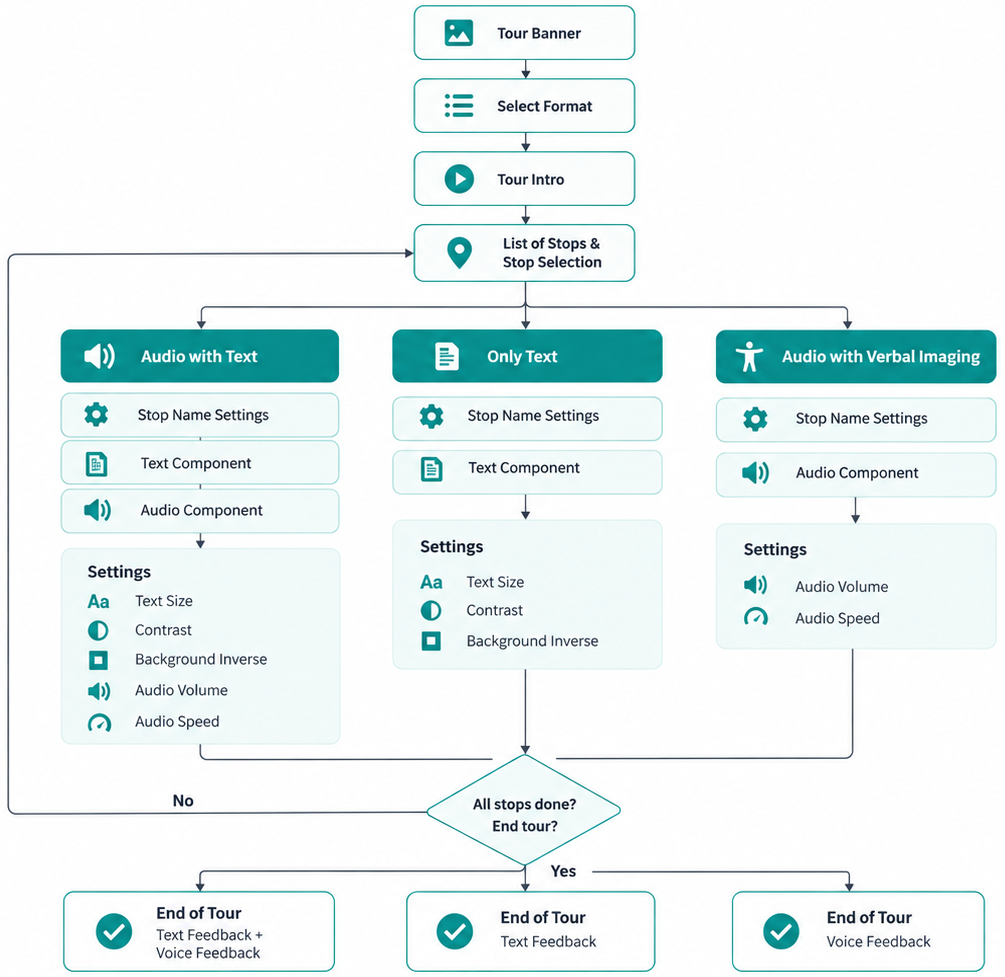
The structure stays simple. A visitor picks a format, hears an introduction, then chooses stops from a screen-reader-friendly list. The three formats are audio with text, text only, and audio with verbal imaging, which describes what a sighted visitor would see. Each has its own settings, and every route ends with feedback by text or voice. Beacons on the campus tell the app which stop a visitor is standing at.

Information architecture: format, intro, list of stops, then text, audio or both, each with settings, ending in feedback.
iii.

wireframes

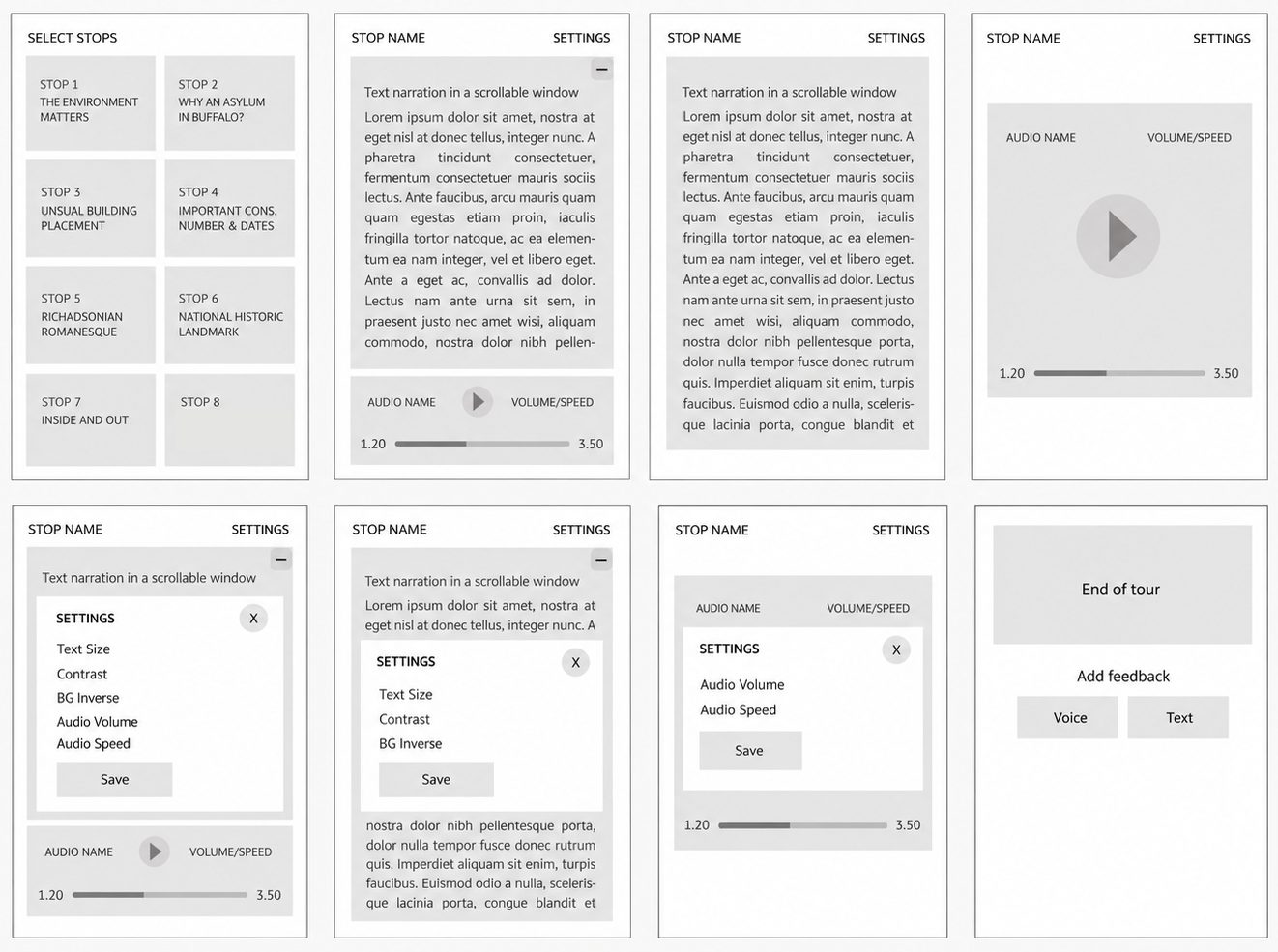
Wireframes in Illustrator worked out the details with the client: the stop list, scrolling narration, an audio player, and settings for text size, contrast, volume and speed.

Eight grey wireframes of the tour app screens.
iv.

a prototype to share

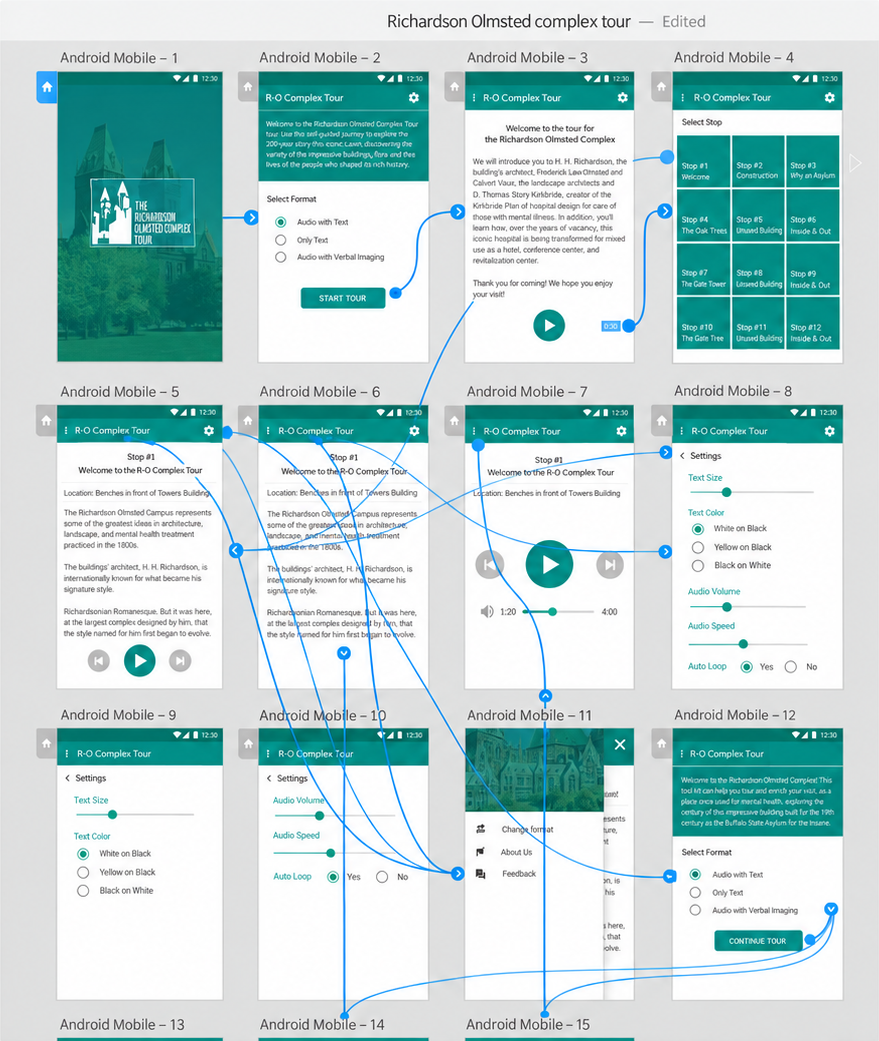
We built a clickable prototype in Adobe XD for the client, the lab and the developers, so the flow from format to stop to feedback could be tried before it was built. XD had more features than InVision and less complexity than Framer.js, and it let us share the prototype and record videos of it.

The Adobe XD prototype: fifteen screens linked by interaction flows.