Neeta Khanuja

design · 2016 · MinD 2019

Lost in Place

Lost in Place is an interactive installation about dementia. Fog covers the viewer’s image. Moving clears it. Standing still lets it return.

The installation creates an unsettling experience of disorientation and lost familiarity. The aim is to make people curious about dementia and start conversations about it.

Studio project, Media Architecture, Bauhaus-Universität Weimar · published at the International MinD Conference 2019, Dresden

The architectural setting at the Ilm river site was developed by Lilly Chan.

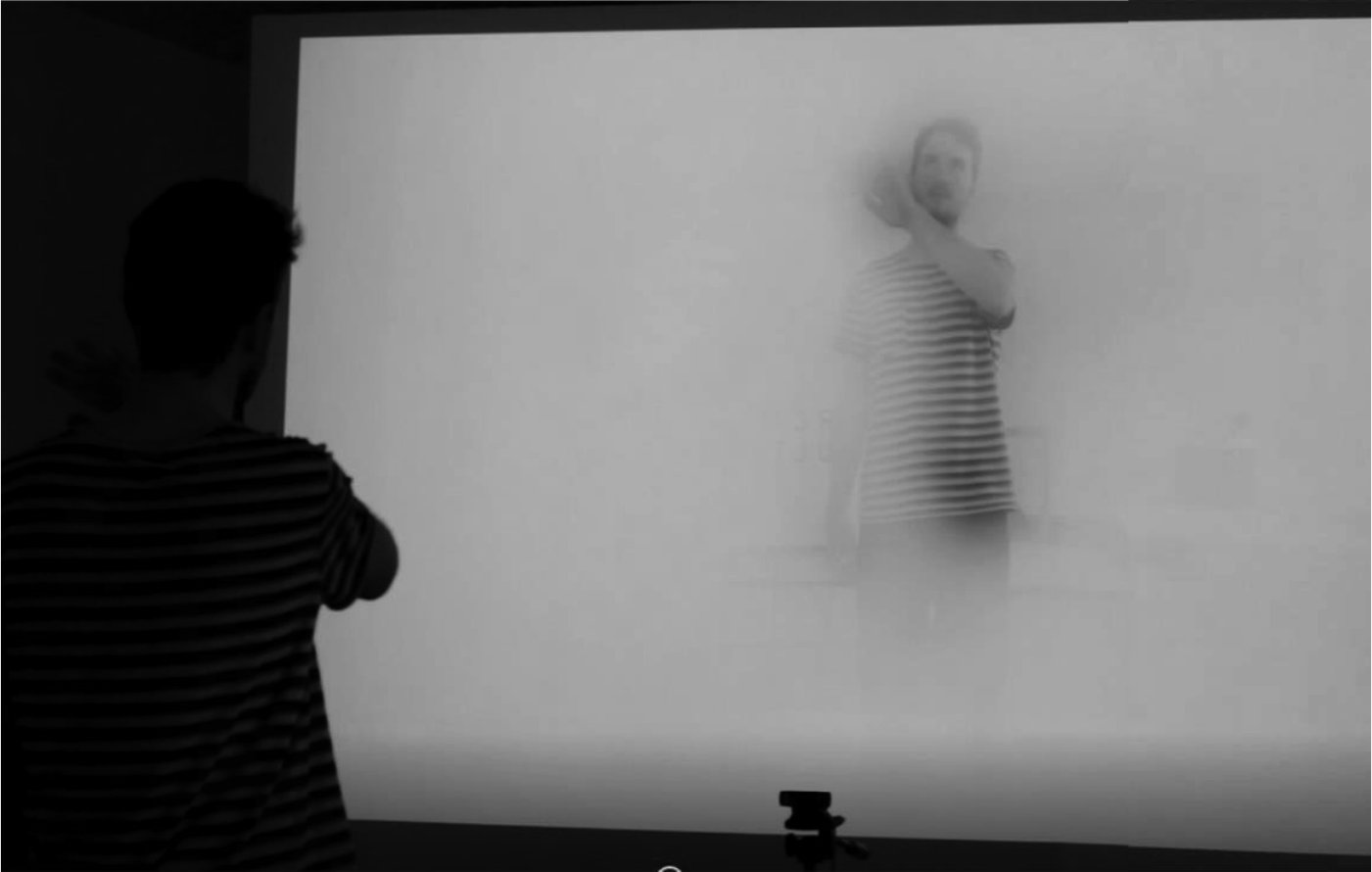
a visitor clearing the fog in the studio
i.

the brief: the Ilm river

The studio brief was to design with the Ilm river in Weimar as the main element. The site was a stone dome under a bridge, in the park by the river.

The plan was to project onto fog inside the dome, so that real fog and virtual fog would meet. Visitors would come across it on an ordinary walk through the park.

  • siteA stone dome under a bridge, by the Ilm river.
  • screenA fog screen inside the dome.
  • visitorsAnyone walking through the park, children and adults.
ii.

from the river to dementia

The river led to fog. Fog led to brain fog, a common experience in dementia. Brain fog led to the topic of the project.

Research drew on poetry written by and for people living with dementia. Neil Ang’s poem The Fog matched the idea closely.

  1. river
  2. fog
  3. brain fog
  4. dementia

“I glance around but I have no clue where I am. The fog is too thick.”

Neil Ang, The Fog, 2018

iii.

three layers

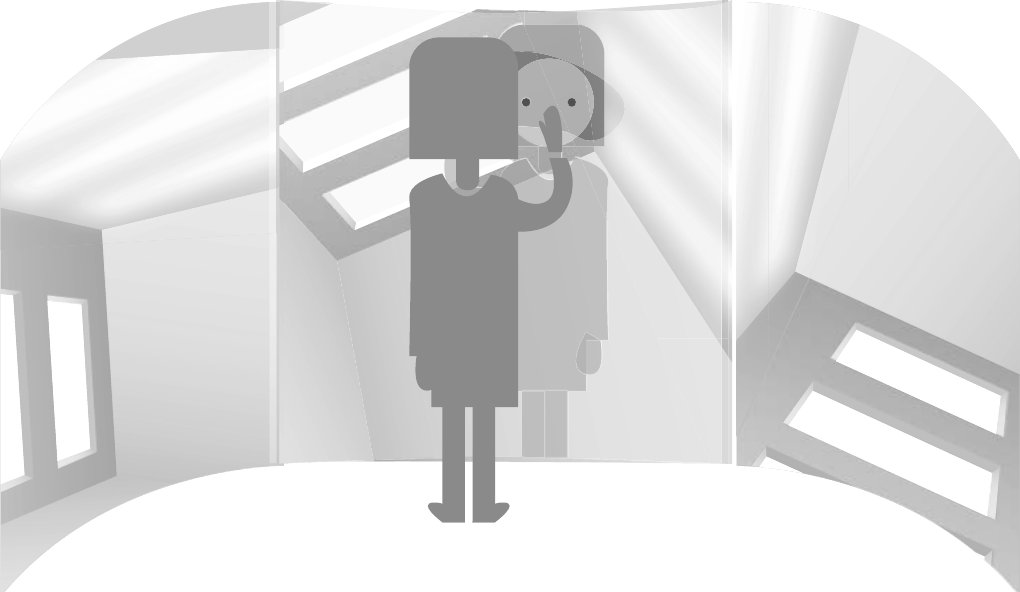
The projection is built in three layers.

  • backgroundThe surrounding space, filmed live by a camera floating on water. A familiar place seen from unfamiliar angles.
  • the viewerA live camera image of the person in front of the installation, shown like a mirror.
  • fogVirtual fog on top, covering the viewer and the space.
Illustration: a person stands in a curved room; their camera image, half covered by fog, is projected beside them.
the experience: the viewer, their image in the fog, and the surrounding space
iv.

moving to stay visible

Moving clears the fog and reveals the viewer’s own image. Within moments of stillness, the fog returns and covers it again.

The viewer has to keep moving to stay visible. This stands for the constant effort people living with dementia make to hold on to memories and to their sense of self.

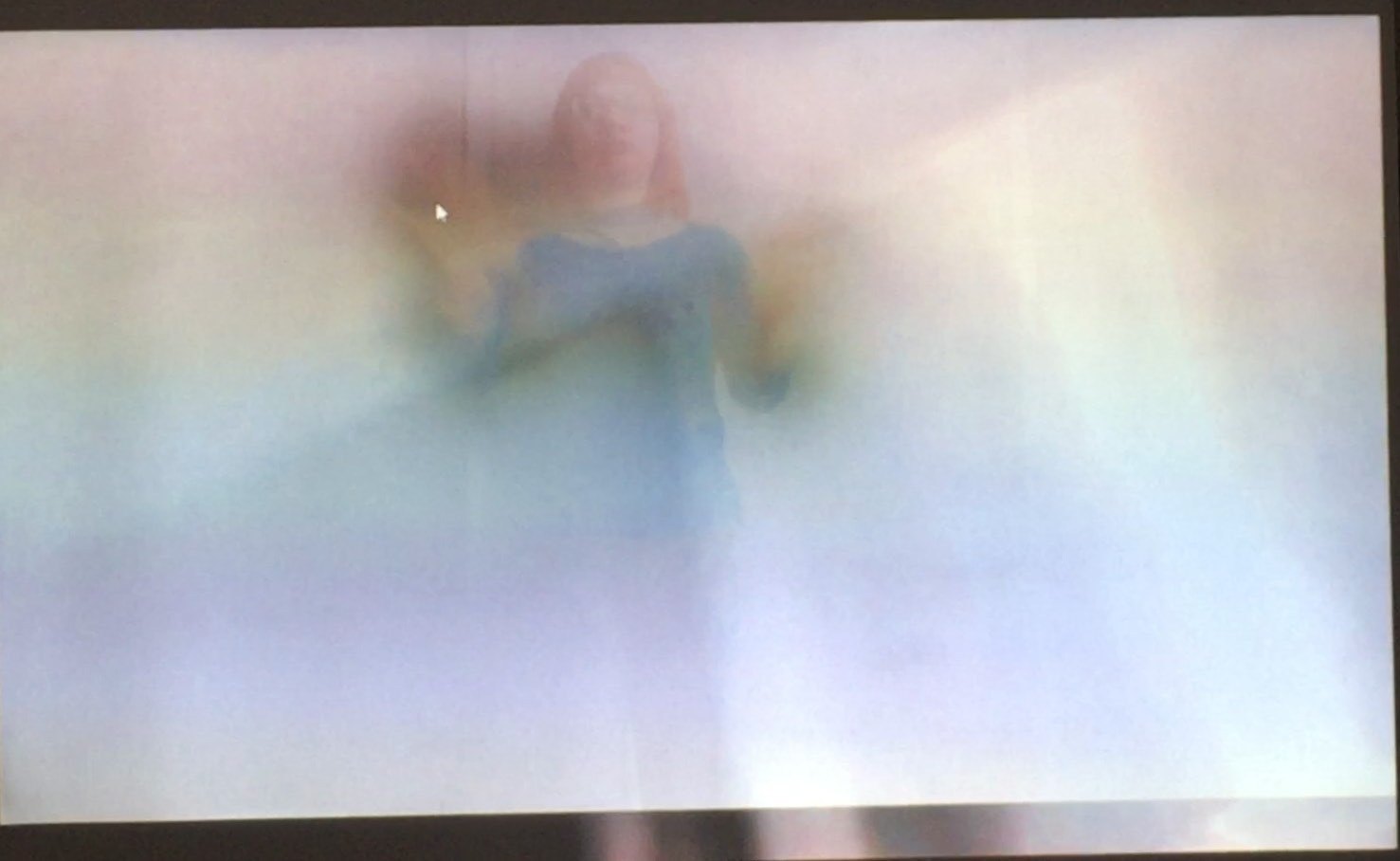
The projection: a figure half visible through the fog.
The projection after stillness: fog over the room, the figure almost gone.
v.

a familiar place made unfamiliar

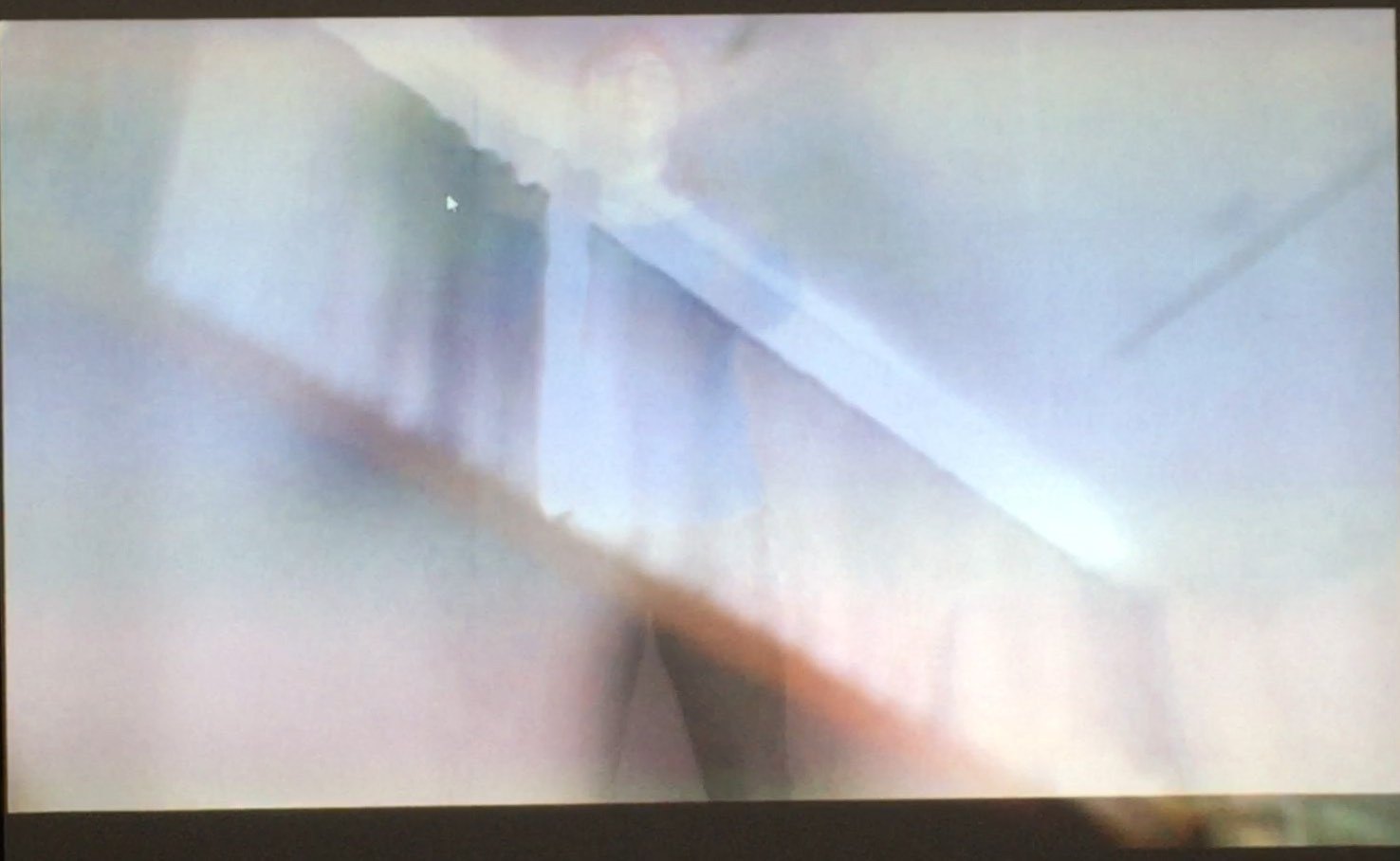
A second camera floats on water. As the water moves, it films the same space from shifting angles. The background looks familiar and strange at once.

This adds a sense of lost orientation behind the fog. At the river, the camera would float on the Ilm.

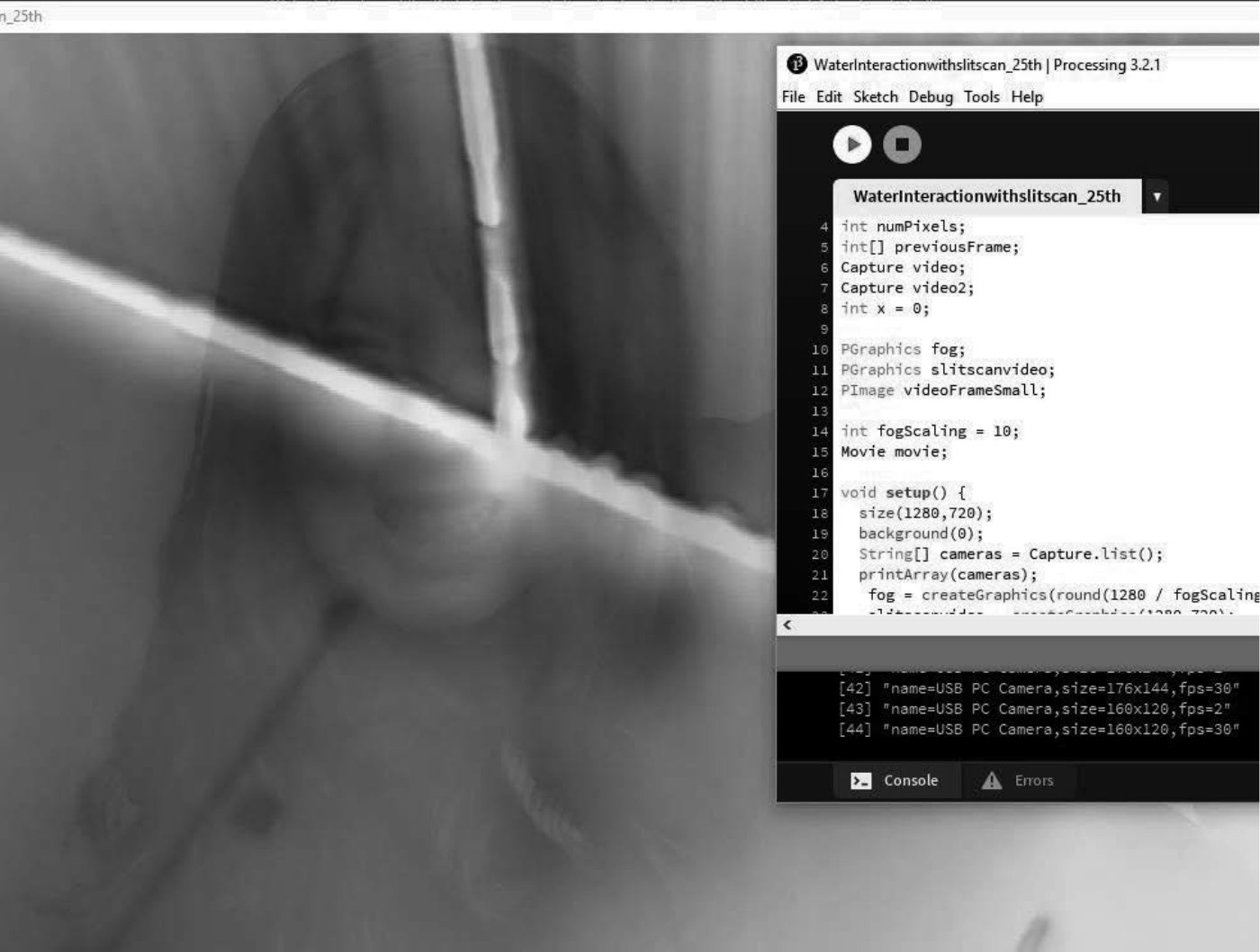
A floating camera view of the room, tilted and blurred, beside the Processing code.
the floating camera view next to the Processing sketch
vi.

the setup

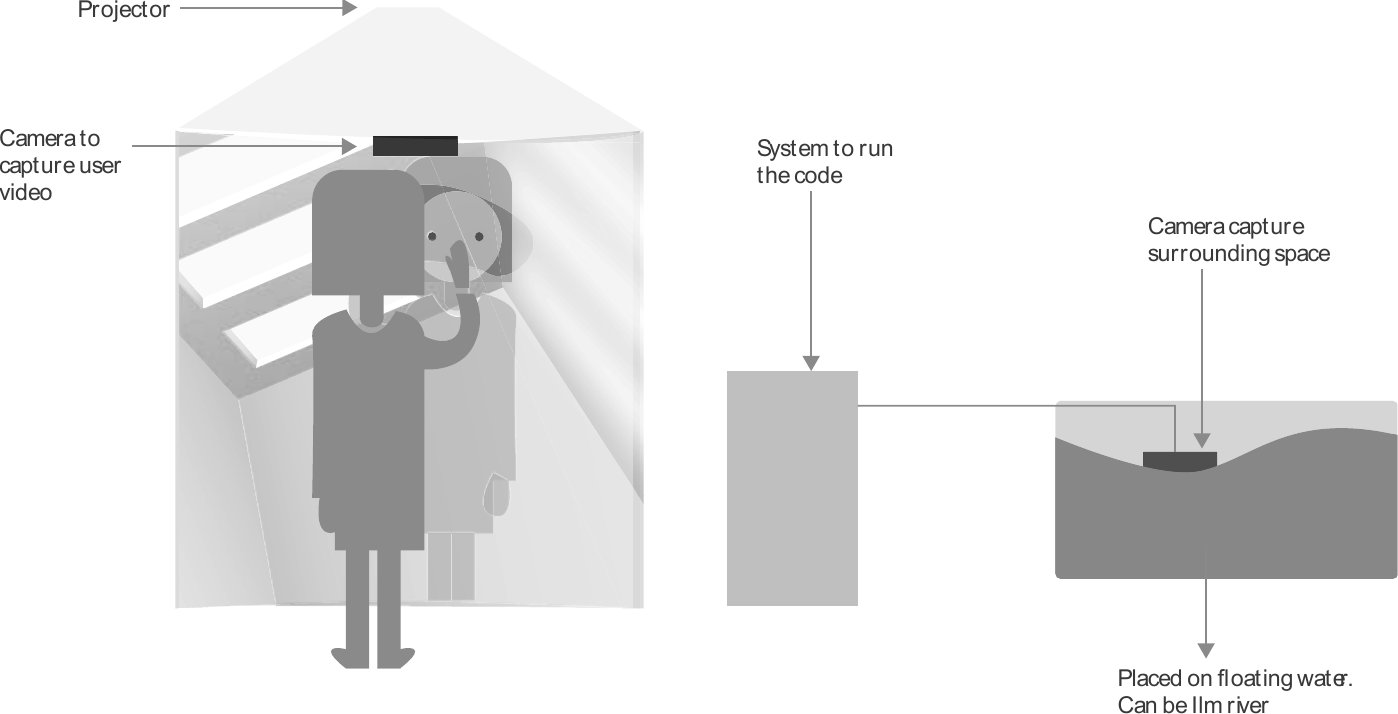
The installation runs on a projector, two cameras and one computer. It is coded in Processing, using camera capture and motion detection. A wiping gesture clears the fog where the hand moves.

Diagram: a projector above the viewer, a camera facing the viewer, a computer running the code, and a camera on floating water capturing the surrounding space.
  • projectorShows the three layers.
  • viewer cameraCaptures the person and their movement.
  • floating cameraFilms the surrounding space from the water.
  • computerRuns the Processing sketch: fog that forms over time and clears with motion.
vii.

after the fog

QR codes at each end of the installation lead to a website about dementia. It shares personal stories, recent research and organisations that support care. Visitors can also volunteer, donate or share the message.

The interaction is playful for children. Adults can read the metaphor and follow the QR code to learn more.

  • experienceClear the fog and see yourself.
  • informationScan the code to read stories and research.
  • actionVolunteer, donate or share.
viii.

testing in the studio

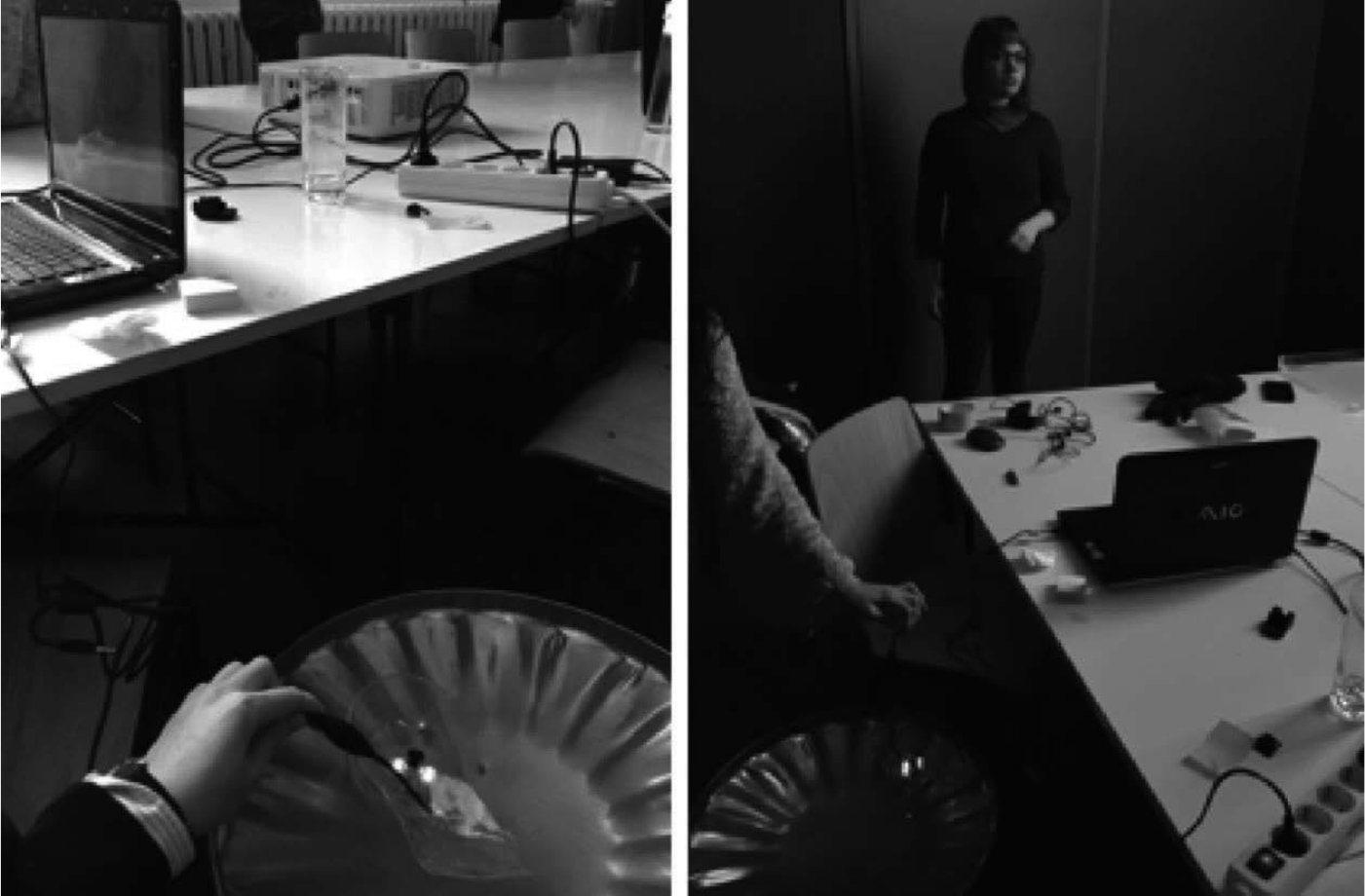
The installation was built and tested in a studio at the university. It has not yet been installed at the river.

A colleague moves in front of the projection; their image shows through the fog.
testing with a colleague
The studio setup: a laptop, cables and a bowl of water for the floating camera.
the setup in the studio, with the bowl of water for the floating camera
ix.

what the project showed

The MinD paper describes the project through four elements of media architecture: site, content, carrier and audience.

Lost in Place: a case study of an interactive installation for dementia awareness · MinD 2019, Dresden