Neeta Khanuja

design · 2026 · 2nd place, BCI programming and arts

NeuroPottery: two minds, one pot

Making things is physical. People living with paralysis, ALS or after a stroke cannot throw a pot, and friends, families and therapy partners who live apart rarely get to make something together. Most brain-computer interfaces move a cursor; they rarely let people create.

NeuroPottery splits pottery between two people in virtual reality. One person’s brain signals turn the wheel, add water and fire the kiln. The other person’s hands shape the clay. Neither can finish the pot alone, and every pot records both of them.

Second place in the BCI programming and arts category at the BR41N.IO Brain-Computer Interface Designers’ Hackathon, organised by g.tec medical engineering at IEEE SMC 2026, Seattle, October 4–5 · with Harshiddhi Pathak and Param Rajpura

Role: ideation and narrative
the live demo, with the Mind on the left and the view in VR on the right
i.

craft needs hands, and a shared room

Three observations started the project.

  • making is physicalPeople living with paralysis, ALS or after a stroke can’t throw a pot.
  • distance keeps us apartFriends, families and therapy partners rarely get to create something together.
  • BCIs can createBrain-computer interfaces can support shared creative experiences, beyond moving a cursor.
ii.

the mind and the hands

The Mind wears a 16-channel g.Nautilus EEG cap. The Hands wear an HTC VIVE Focus Vision headset with hand tracking. They work at the same wheel in a potters’ village.

  • the mind
  • focusspins the wheel
  • jaw clenchadds water
  • blinkfires the kiln
  • calmdecides the glaze
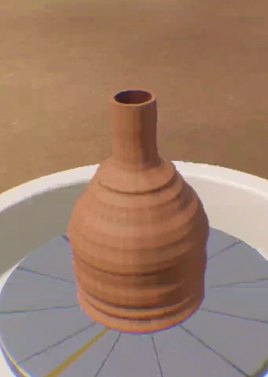
A clay pot on the wheel before firing.
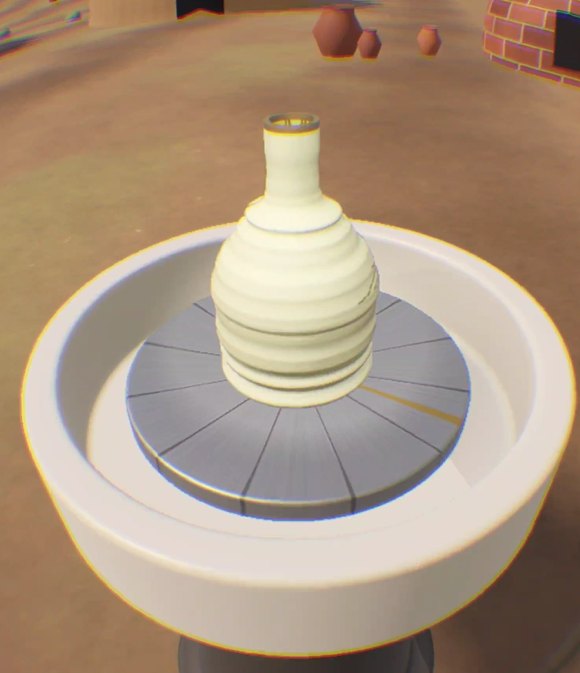
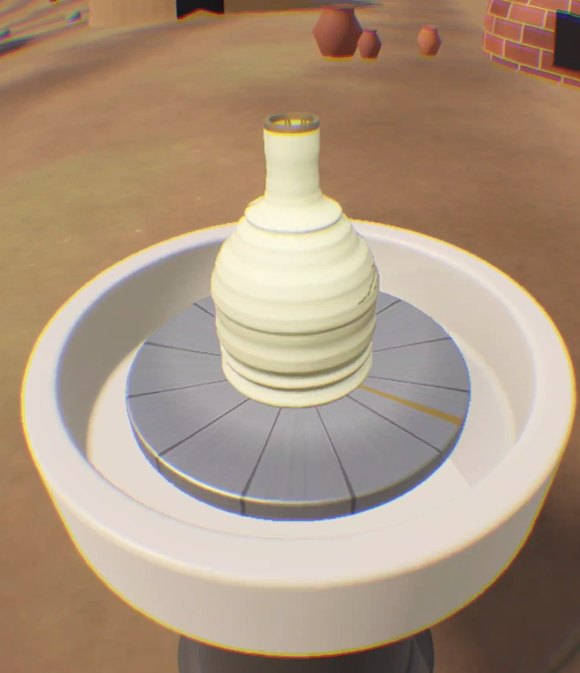
The same pot after firing, cream porcelain with gold bands.
  • the hands
  • openthe centre
  • widenfrom inside
  • pullthe walls up
  • shapein a potters’ village
iii.

from brain signal to clay

The EEG streams over LSL to a PC. A Python bridge turns it into focus, calm, blinks and jaw clenches, and sends them ten times a second over Wi-Fi to a Unity 6 app running on the headset.

  1. the Mindg.Nautilus EEG, 16 channels
  2. LSL streamon the PC
  3. Python bridgefocus, calm, blinks, jaw clench
  4. UDP over Wi-Fi10 packets per second
  5. the HandsUnity 6 on VIVE Focus Vision, hand tracking

each session

  • calibrate30 seconds: relax for 15, then focus for 15.
  • throwFocus spins the wheel, the Hands shape the clay, a clench adds water.
  • fireTwo or three blinks start the kiln, and calm heats it. Firing takes 25 seconds and can be adjusted.
  • resultMoisture, focus and calm together decide how the pot turns out.
iv.

reading the mind

Each control comes from a different signal and set of channels. A 30-second calibration learns each person’s own range: 15 seconds relaxed, then 15 seconds counting back from 100 in sevens.

  • focus · betaFz, Cz, F3, F4. An engagement index, β / (α + θ), spins the wheel from 0 to 150 RPM. Beta stays under 25 Hz to keep out muscle noise.
  • calm · alphaOz, PO7, PO8. Alpha (8–12 Hz) as a share of total power decides the glaze in the kiln.
  • jaw clench · muscleT7, T8. Adds 15% water. Focus is held during a clench, so water can’t fake focus.
  • 2–3 blinks · frontalFp1, Fp2. Gaps under 0.8 s move to the next phase: throw, fire, new pot. Single natural blinks are ignored.
v.

the journey of one pot

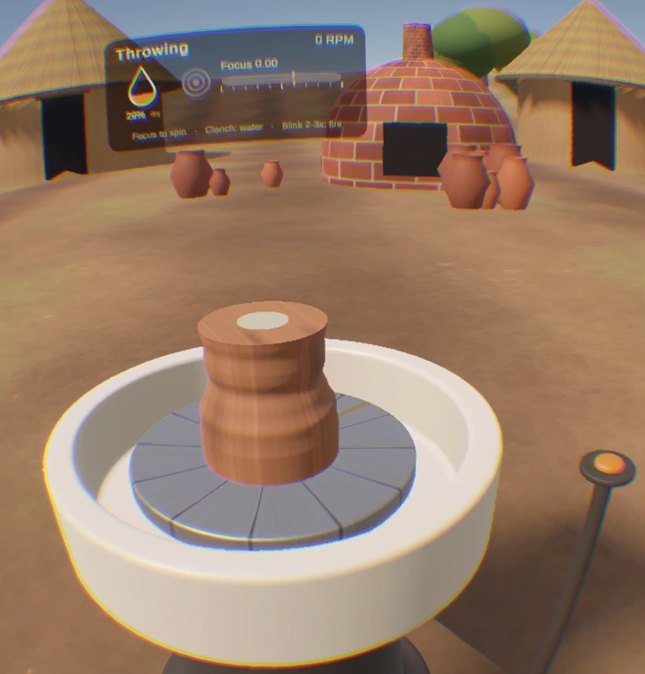
Clay dries while the Hands work. Below 30% moisture, the pot will crack in the kiln, so the Mind has to keep it wet.

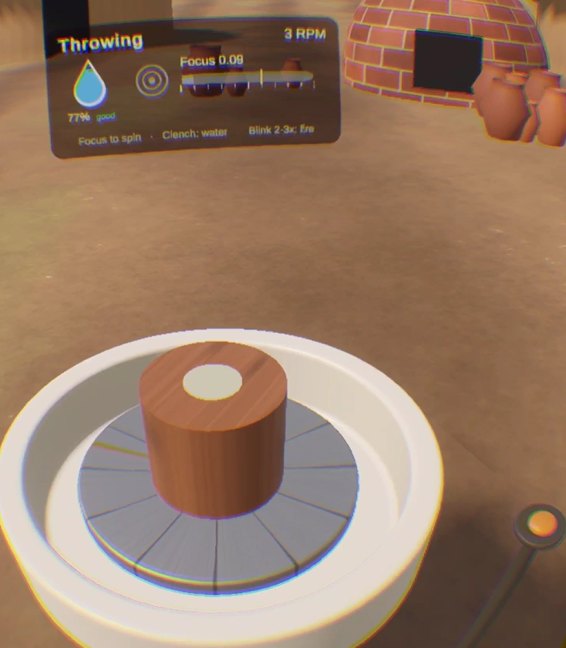
A clay cylinder on the spinning wheel.
1 · throwingFocus spins the wheel. Around 60% moisture, the clay shapes smoothly.
The pot on the wheel in the potters’ village.
2 · drying outThe clay dries over time.
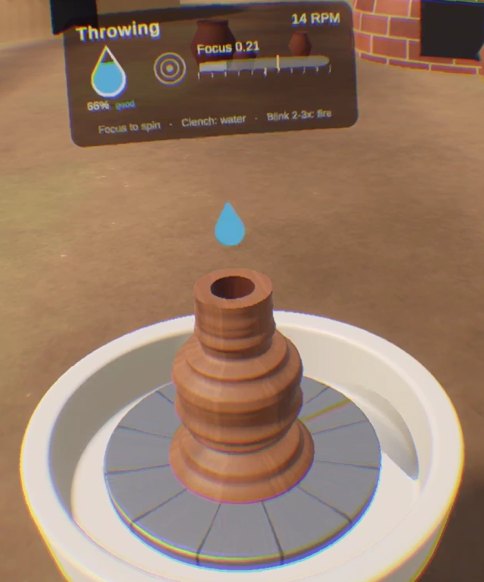
A drop of water falling onto the clay.
3 · add waterA jaw clench adds 15% water. Focus is held, so the wheel stays steady.
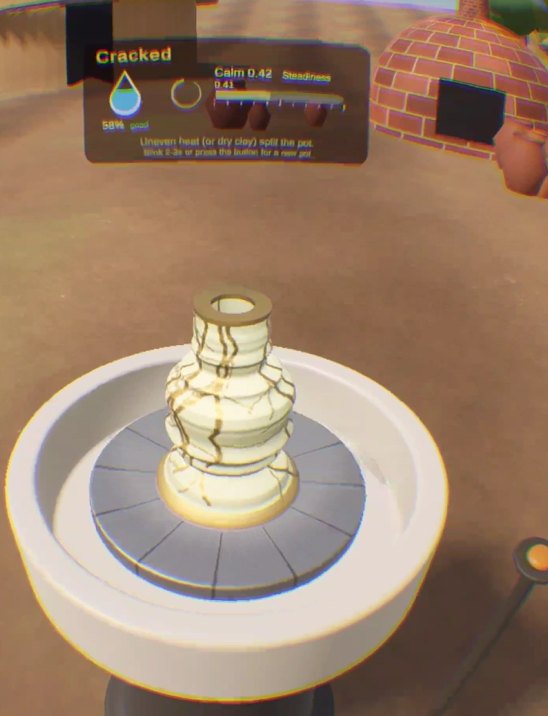
The fired pot with gold cracks.
4 · firingA double blink starts the kiln, and calm heats it.
vi.

one pot records both minds

Gold bands show where the Mind was most focused while shaping. Calm in the kiln decides the glaze.

A cream porcelain pot with gold bands and a gold lip.
perfectCalm score 0.65 or above. Cream porcelain with gold bands and a gold lip.
A pot covered in a fine web of gold.
gold crackleCalm score 0.45 or above. A fine web of gold in the glaze.
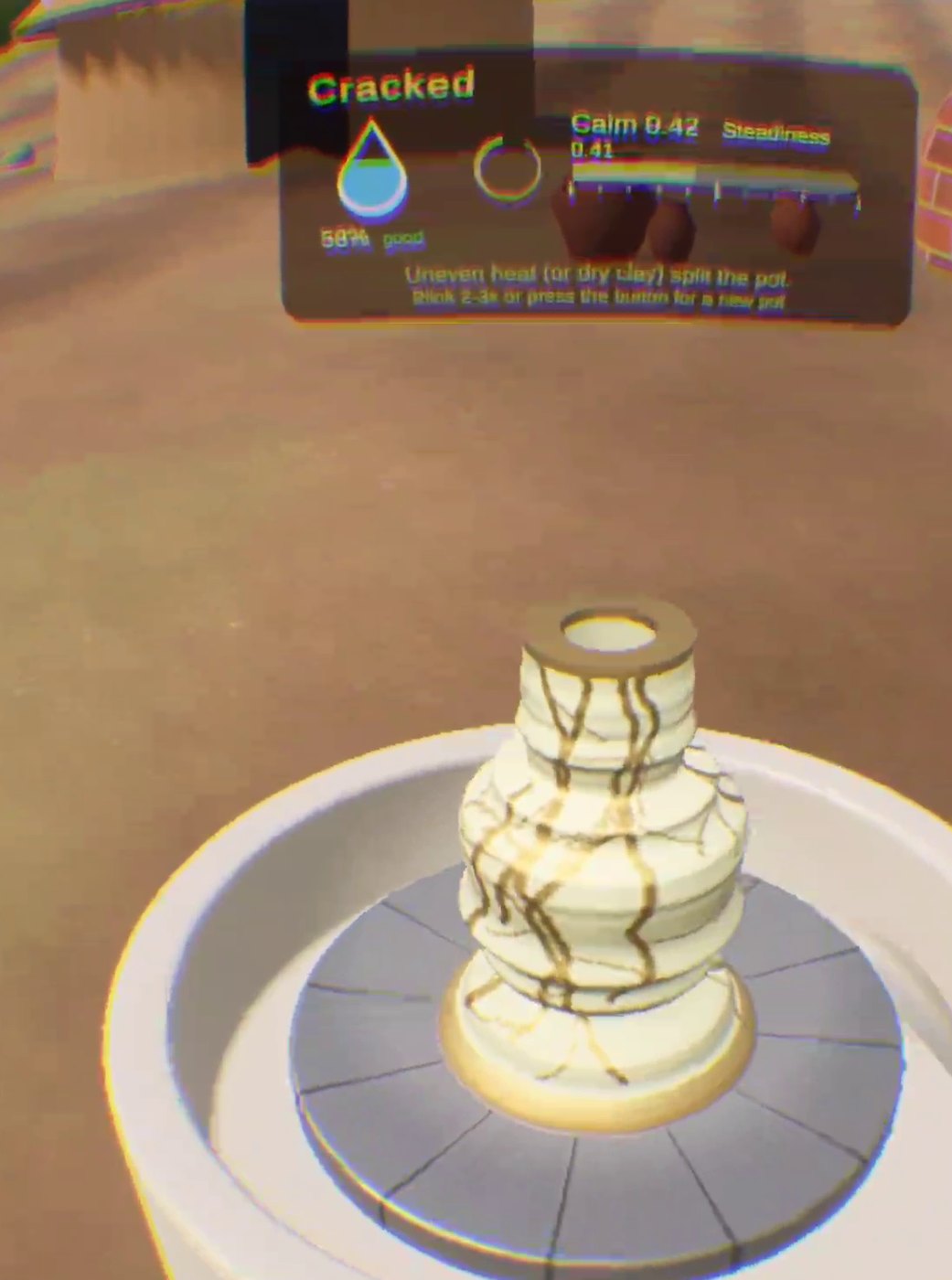
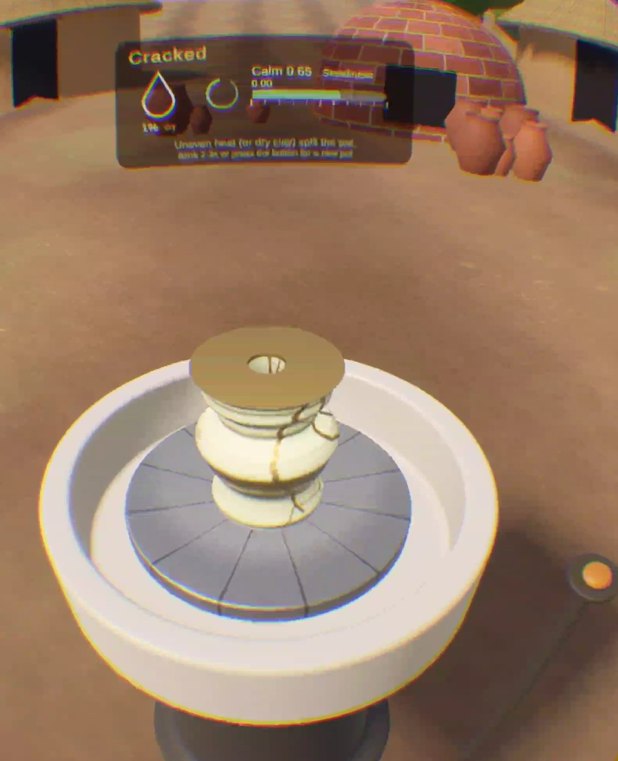
A cracked pot mended with gold.
kintsugiLower calm, or clay below 30% moisture. Cracks mended in gold.
vii.

problems solved along the way

Every detector was validated on synthetic EEG before the live demo.

Focus shapes it. Calm fires it. Two minds, one pot.