Neeta Khanuja

design · 2025

reflecting on emotions with AI

A reflection tool that pairs hand-drawn emotion cards with AI-generated guidance. A person chooses three cards, writes about what is going on, and receives a short response that names what they may be feeling, reframes it and suggests a small next step.

It began as a design inquiry: can tangible, visual forms help people connect with a feeling in ways that words alone do not? It turned into a second question: can AI respond to a feeling with something closer to wisdom than information?

June to August 2025, Portugal · built in Google Apps Script, Google Sheets and the GPT API · phase one of the DIS 2026 pictorial, with Valentina Nisi, Yogesh Kumar Meena and Jodi Forlizzi
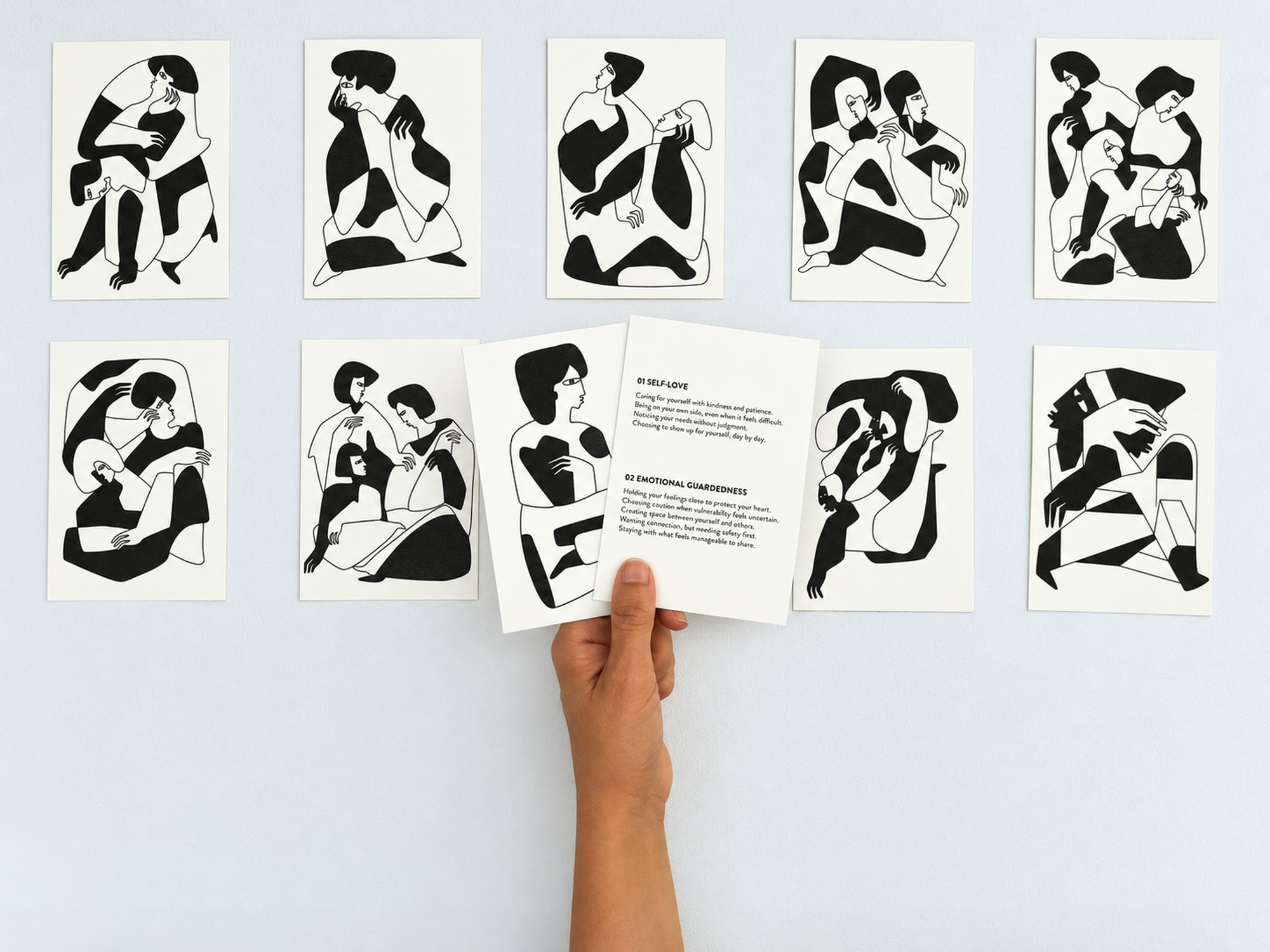
The ten printed emotion cards laid out in two rows, with a hand holding the self-love card, front and back.
the ten printed cards, each front drawn by hand
i.

ten pairs of feelings

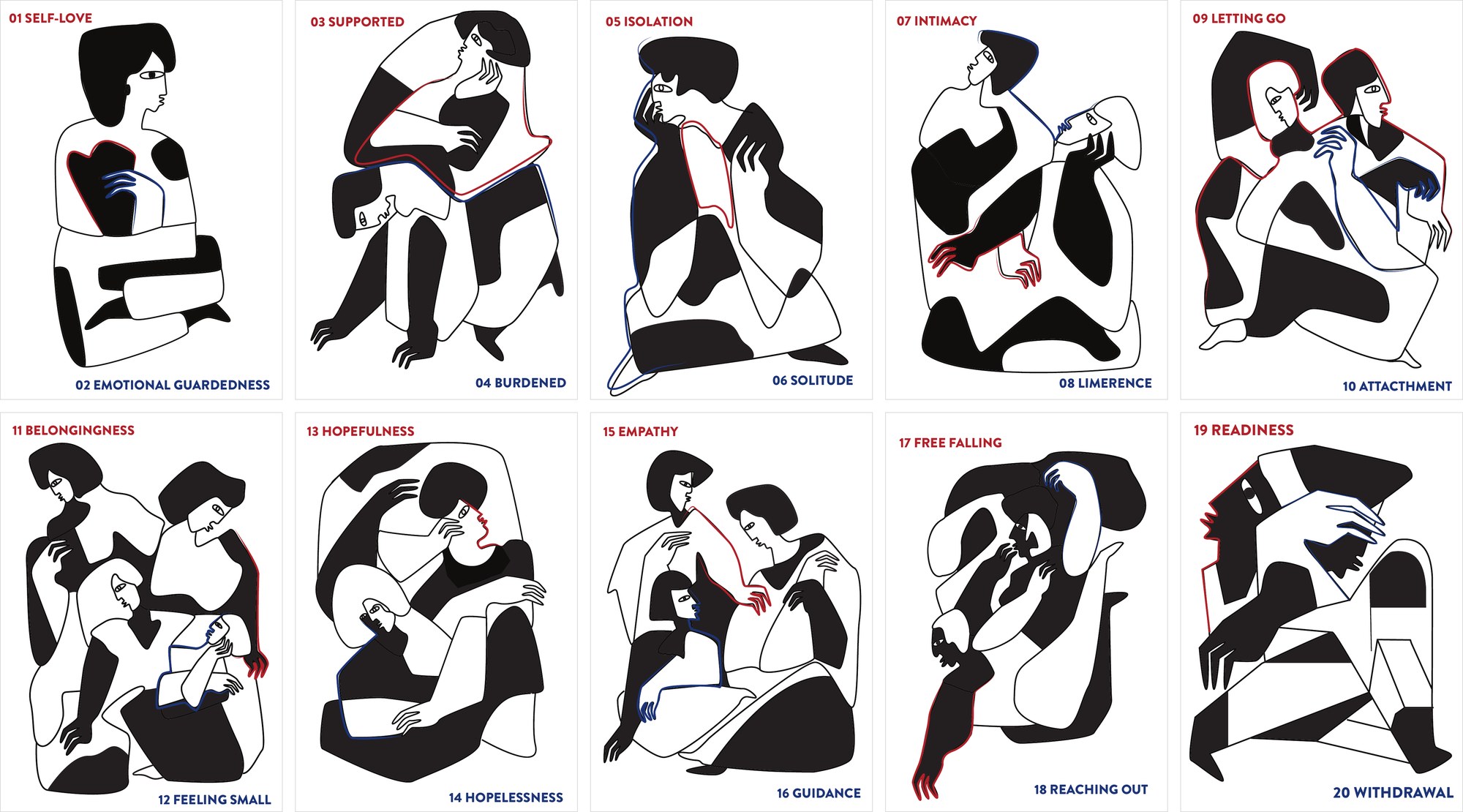
Ten cards, each holding two related feelings rather than strict opposites, make twenty emotional states. Each pair shares one hand-drawn illustration in black line, without colour, so the drawing does not steer how it is read. At 70 × 100 mm, a card is large enough to hold and small enough to move around.

The ten card fronts: black-and-white drawings, each labelled with two emotions, such as self-love and emotional guardedness, isolation and solitude, free falling and reaching out.
the ten card fronts, each pairing two emotions
ii.

one card, front and back

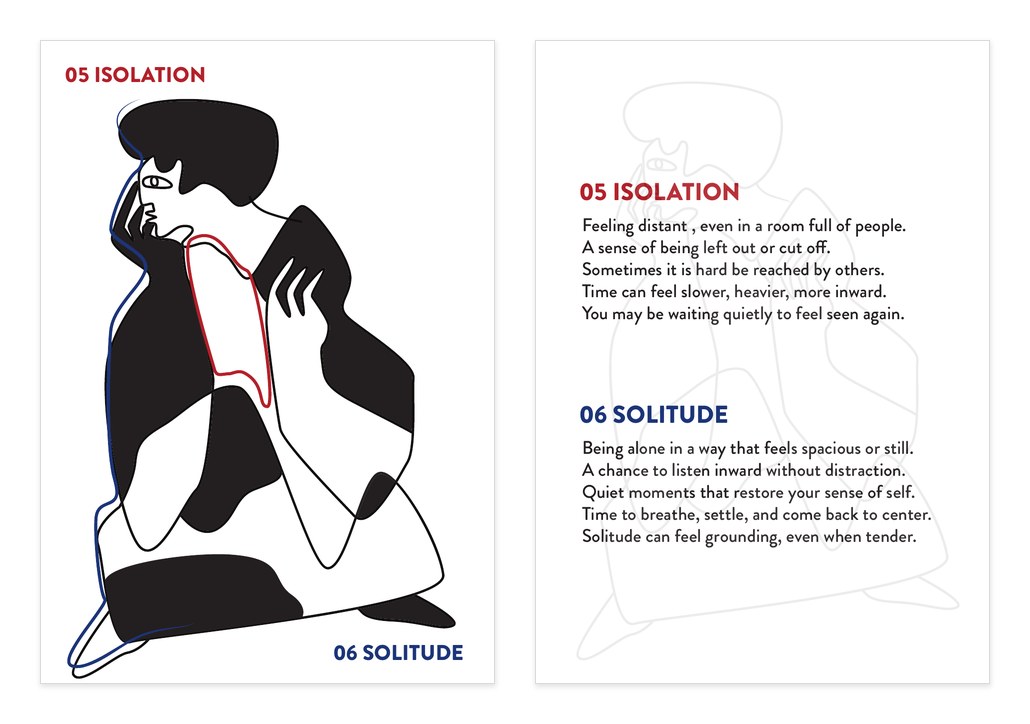
The front is a drawing. The back names both emotions with a few lines on each.

“Isolation: feeling distant, even in a room full of people.”

“Solitude: being alone in a way that feels spacious or still.”

Card five: the front shows a figure hugging their knees; the back describes isolation and solitude.
iii.

three cards, one reflection

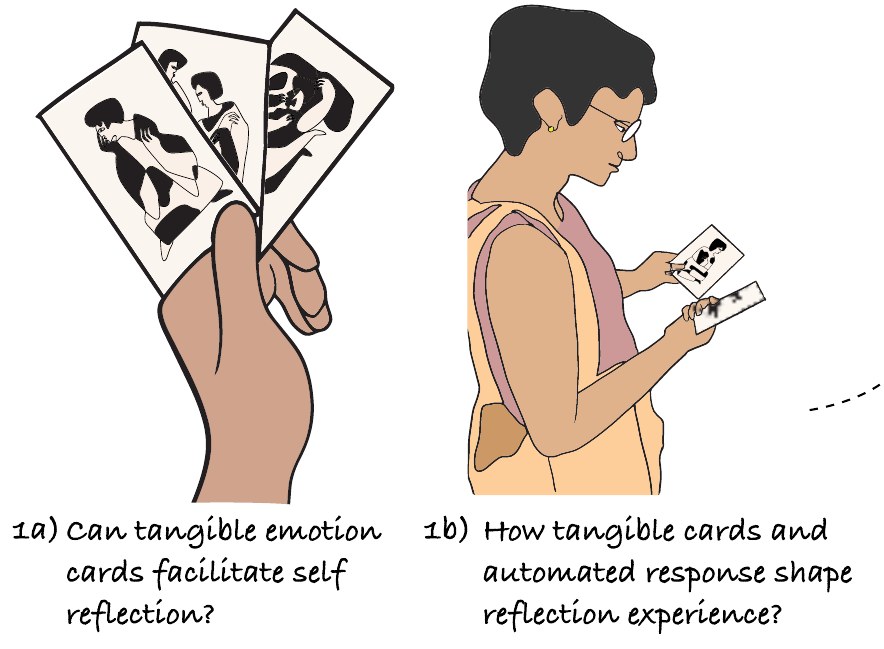
A person picks three cards that feel close to their day, without explaining why. Choosing and arranging them is already part of the reflection. The three cards set the question they are asked; they write a few lines in response, and the tool answers with short guidance. Early trials with friends shaped the card design and the flow.

Drawings of a hand holding three emotion cards, and a woman reading a card while holding her phone.
iv.

under the hood

The prototype was built in Google Apps Script, with Google Sheets as the data layer and OpenAI’s GPT API as the language model. Keeping the cards in a spreadsheet made them easy to edit between tests.

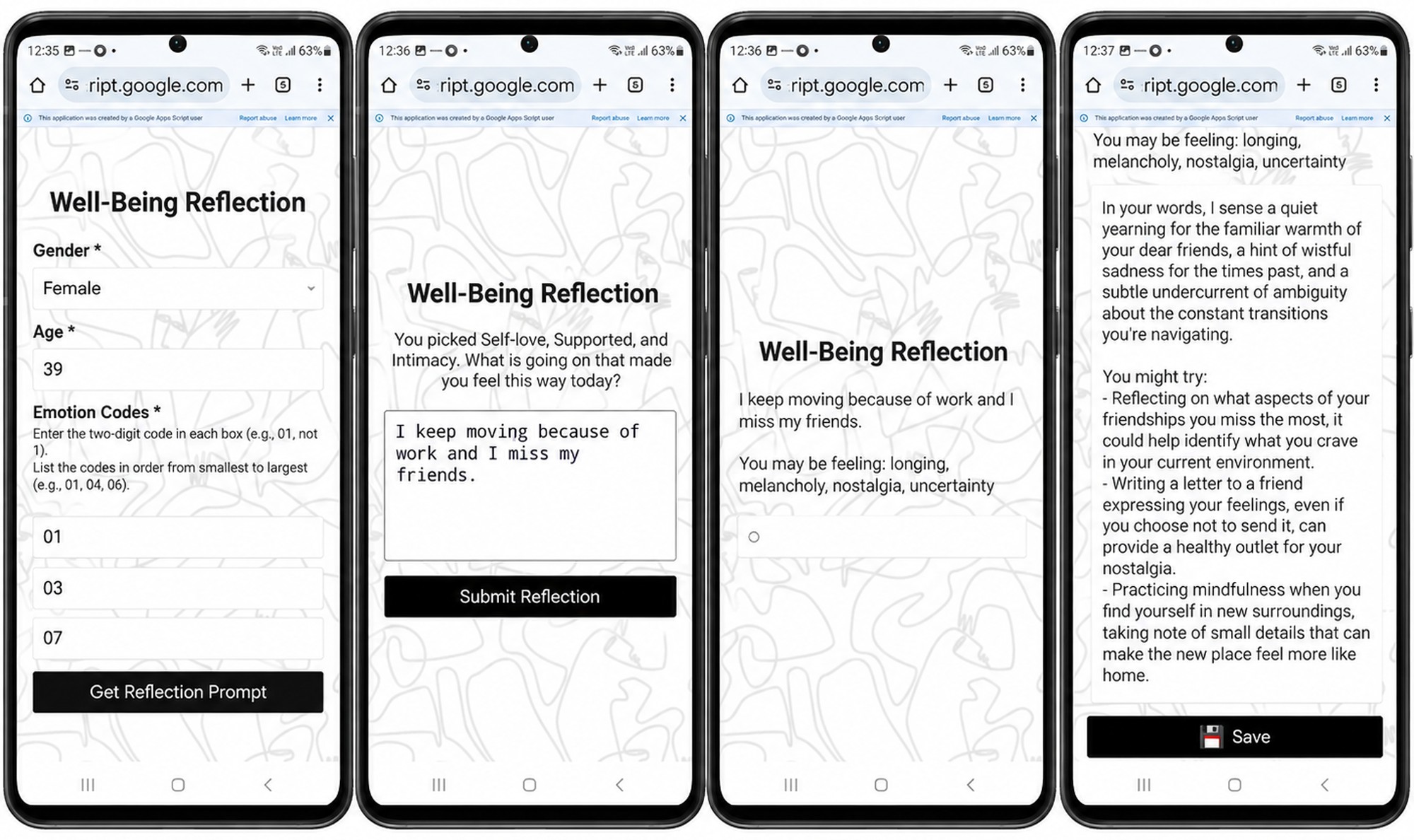
Four phone screens of the Well-Being Reflection web app: entering three card codes, writing a reflection, the emotions it detected, and the guidance with suggested actions.
the web app on a phone: card codes, reflection, detected emotions, guidance
  1. cardsA sheet holds each card’s two-digit code, its two emotions and their descriptions.
  2. promptThe person enters the codes of their three cards. The script looks them up and asks one question that names the cards.
  3. reflectionThe person writes a few lines in response.
  4. modelThe script sends the cards and the reflection to the GPT API, first to name the emotions, then to write guidance in one response style.
  5. guidanceThe page shows the emotions it heard, a short reflection and a few small actions, which the person can save.
v.

can AI be wise?

Naming a feeling is not the same as offering insight. We tested six response styles, each a different prompt to the model, on the same reflections.

  • namingYou are standing between letting go and holding on, feeling the quiet weight of both.Precise and validating, but stayed on the surface.
  • layeringYou seem to be feeling quiet guilt, restless hope, and a longing to regain balance.Nuanced at times, mostly formulaic.
  • minimalI see a feeling of tired hope and quiet confusion.Intimate and direct, but too brief to carry depth.
  • toolkitFeeling uncertain does not mean you are lost… You might try writing what feels unfinished today.Helpful, but read like self-help.
  • storyA bird carried two stones, one of regret and one of hope. When it let one fall, it finally began to rise.Sometimes resonant, sometimes literal.
  • reframingIt sounds like you care deeply and want to meet every expectation.Warm and supportive, still patterned. Used at the conference.

The model could organise emotion into coherent language and mirror tone, but not offer the lived understanding that gives reflection its depth.

vi.

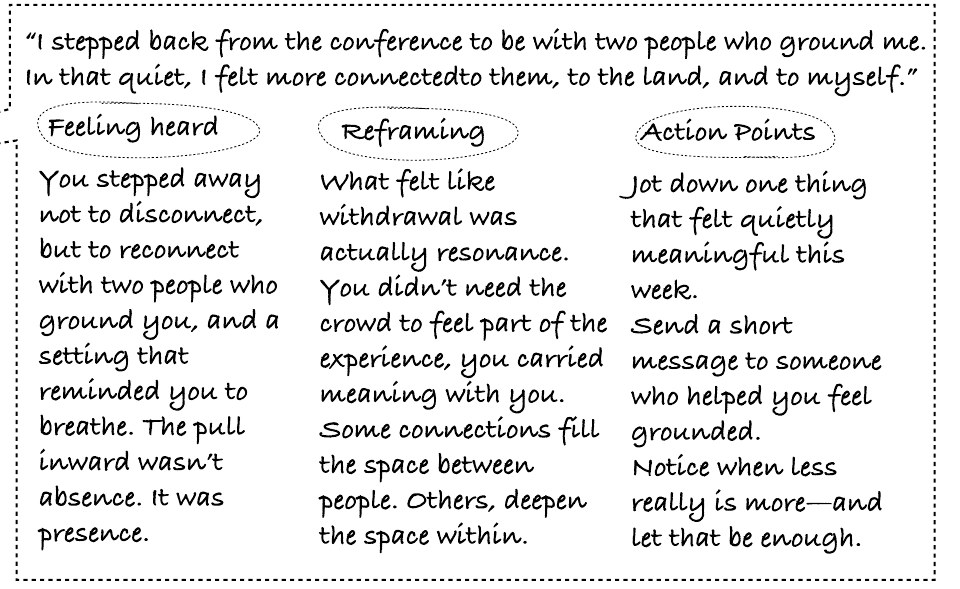
a response in three parts

The final response had three parts: feeling heard, a reframing, and two or three small actions. This example answers the designer’s own reflection after stepping away from the conference to spend time with two people who ground me.

A handwritten-style response in three columns: feeling heard, reframing and action points.
vii.

ten visitors at DIS 2025

We shared the prototype at DIS 2025, in the zine exhibit and a demo session. Visitors could explore the physical cards, read short instructions, scan a QR code to the web app and try the whole flow on their own. Ten researchers, designers and students tried it and talked with us about it.

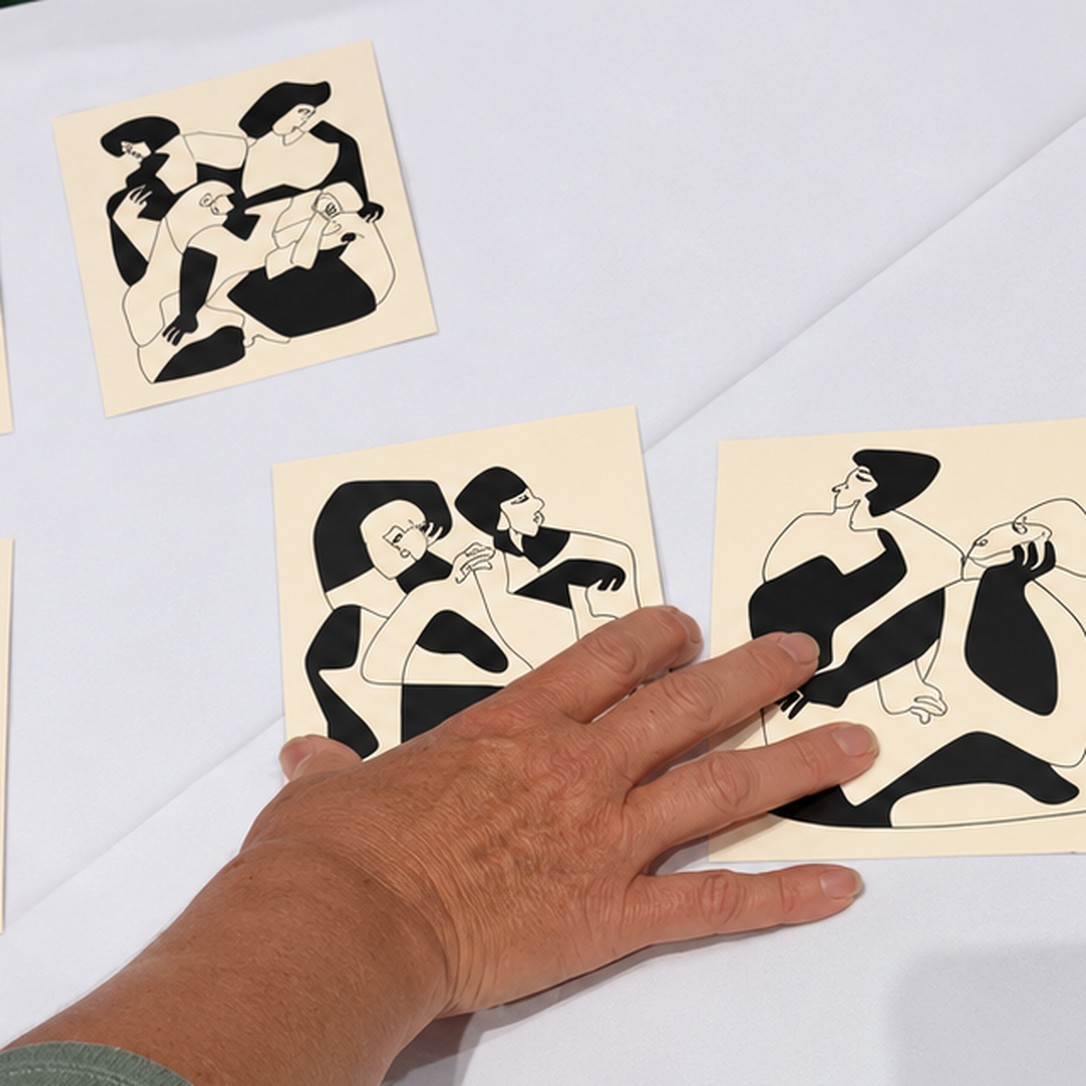
A visitor’s hand resting on the cards laid out on a white table.
choosing from the spread
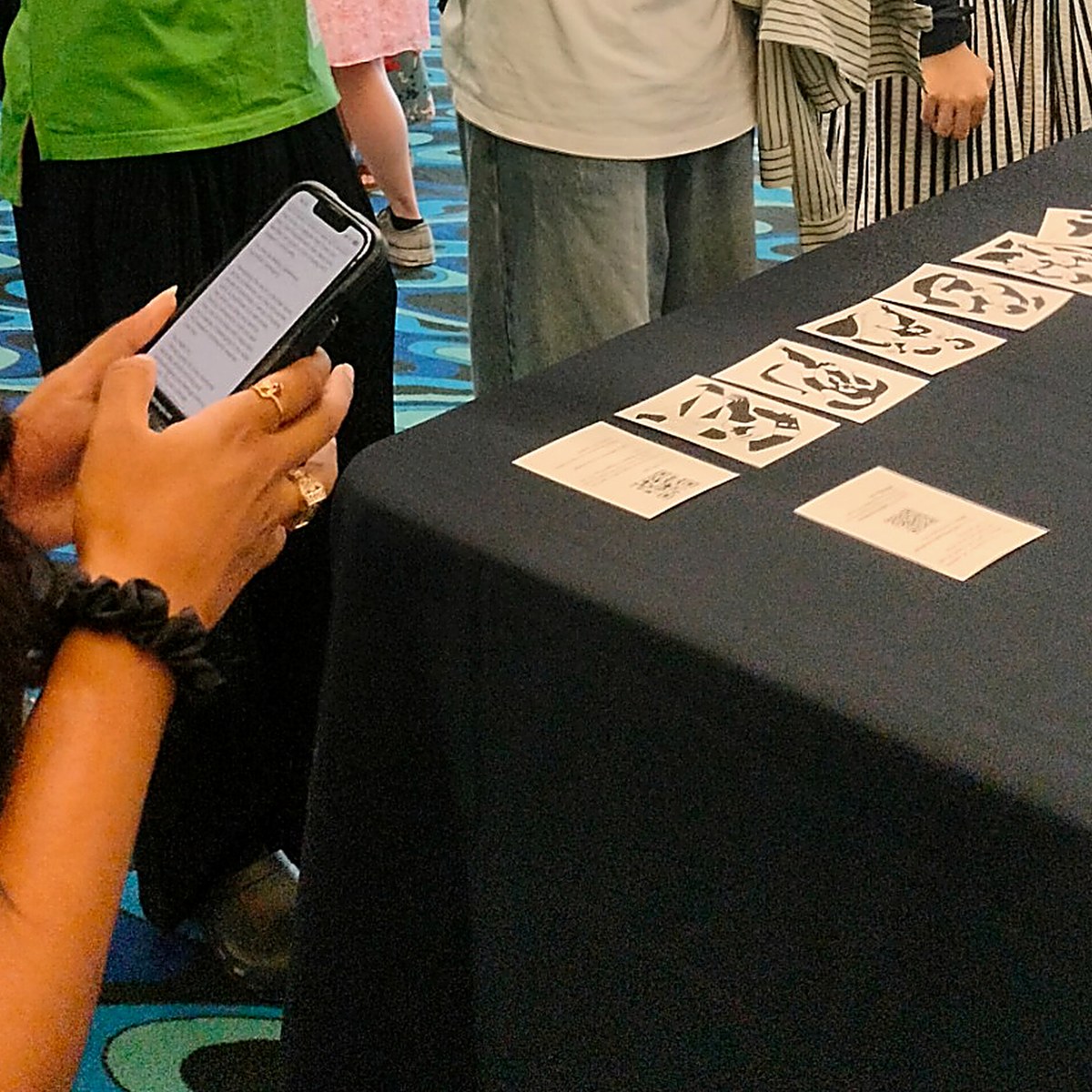
Over a visitor’s shoulder: hands holding a phone with the reflection page open, beside a long table of emotion cards and QR instruction cards.
writing the reflection
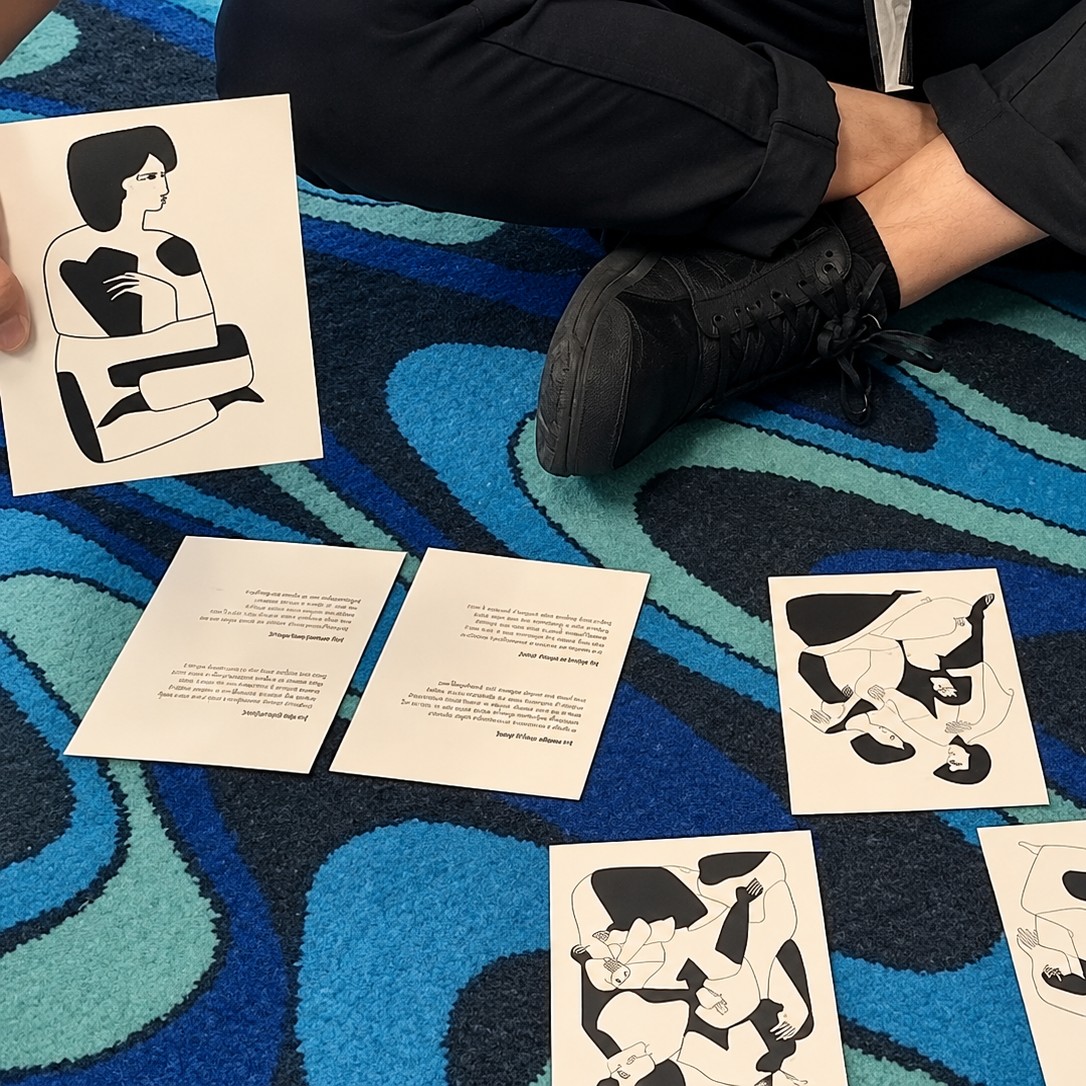
A visitor sitting on the carpet holding one card, with other cards laid out in front.
sorting cards on the floor
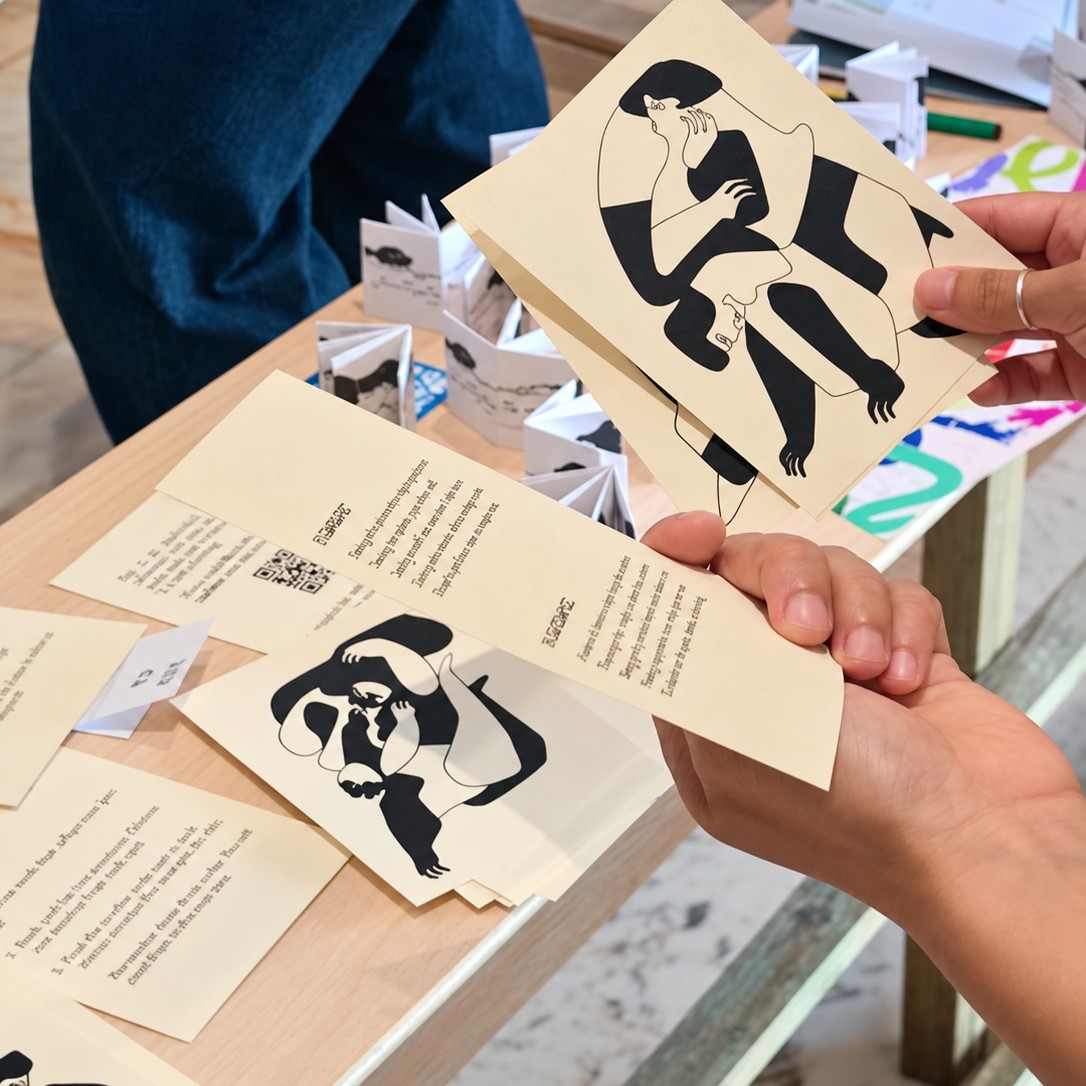
A visitor holding a card and its description at a table of printed cards.
reading front and back
viii.

what visitors told us

They wanted the response to build on the cards they had chosen, not only on what they typed. Going from picking up the cards to typing in the app broke the flow; people were unsure what to write. Several saw it less as a solo self-help app and more as a social practice, like tarot, where one person reads for another. And they doubted generated guidance; they suggested a curated library of human-written reflections and texts, philosophical or spiritual, that the AI draws from.

“I spent a lot of time to choose the cards, so I want the reflection session to have some relation to the cards.”

“The really beautiful thing about tarot is that people do tarot to each other… it feels really good to have your friend see you.”

“We don’t need AI for emotions… when you try to generate content, it does not give you anything which can help.”

ix.

what changed next

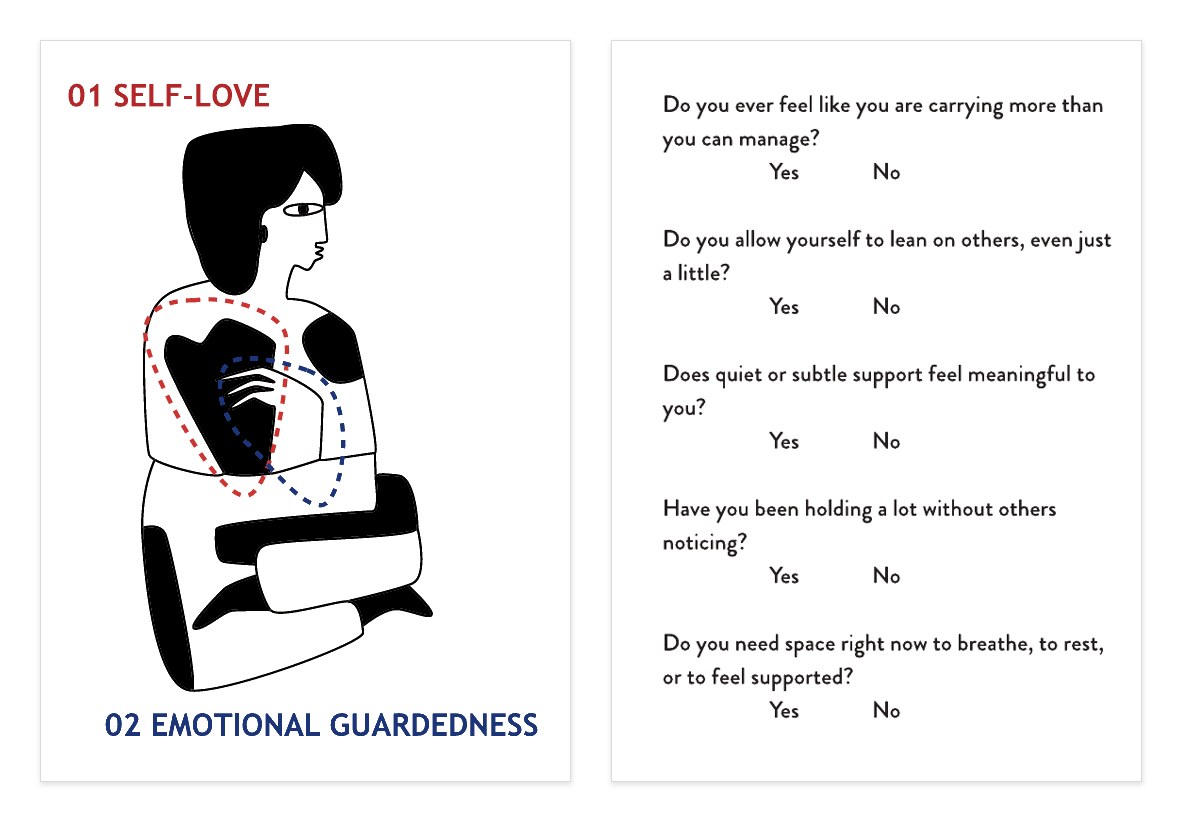
Choosing an emotion asks a person to know what they feel first, and that was often the hardest part. A visitor suggested questions in place of descriptions, so we changed the card. The front now names the two emotions beside the drawing, and the back asks five yes-or-no questions, such as “Have you been holding a lot without others noticing?” Answering them starts the reflection on the card, before the app, and makes it easier to tell which emotion fits.

The revised self-love card: the front with the drawing and both emotion names, the back with five yes-or-no questions.
the revised card, front and back

The bigger shift was in the role of AI. Instead of expecting it to generate wisdom, we began using it to find and adapt wisdom that already exists. The question moved from “can AI be wise?” to “can AI help us find the wisdom already present in our traditions?” That question became the starting point for the self-reflection tool in part two of the PhD, which anchors reflection in themes of aging and draws guidance from Indian philosophical texts.

open questions

This project left us with questions about what role AI can play in how people understand their own feelings.