Neeta Khanuja

research  /  one: in context · two: operationalizing · three: materializing

operationalizing self-perceptions of aging through research through design

Self-perceptions of aging shape how older adults feel in later life, yet they are mostly studied through questionnaires and clinical formats. Few tools help older adults reflect on them in everyday life, and fewer still in India.

We asked what a technology for self-reflection on aging could look like, and how it might support self-perceptions of aging and emotional wellbeing. We approached it through research through design: we designed a SPA-based self-reflection tool with older adults and experts, and let each version answer part of the question.

the SPA-based self-reflection tool

A culturally grounded reflection tool for older adults in India. It combines SPA reflection cards and prompts with non-diagnostic guidance drawn from a curated set of familiar texts.

DIS 2026 pictorial, with Valentina Nisi, Yogesh Kumar Meena and Jodi Forlizzi

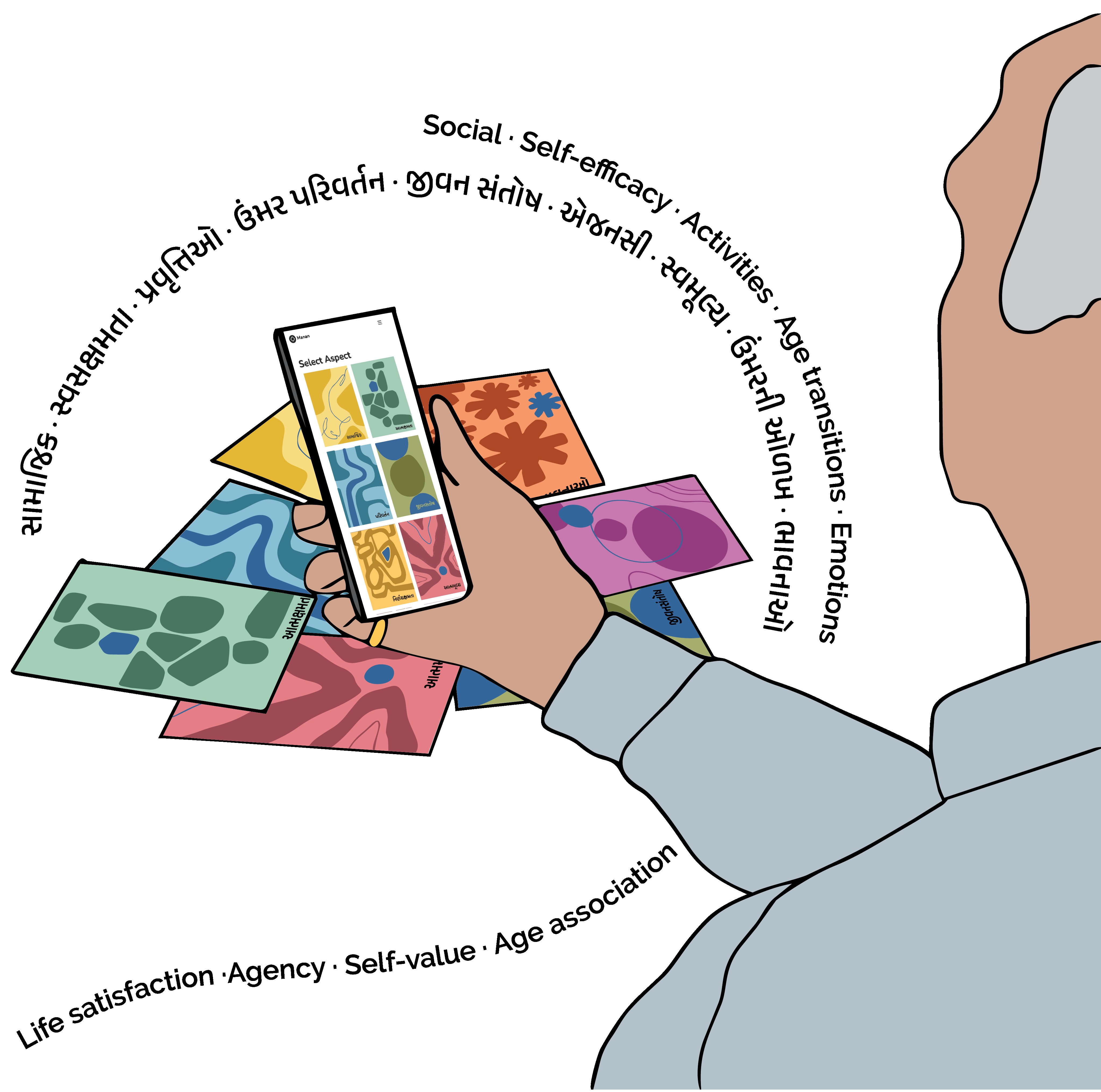
Illustration: an older man holds a phone showing the card selection screen, with the eight SPA reflection cards fanned behind it and the domain names in English and Gujarati arcing around.

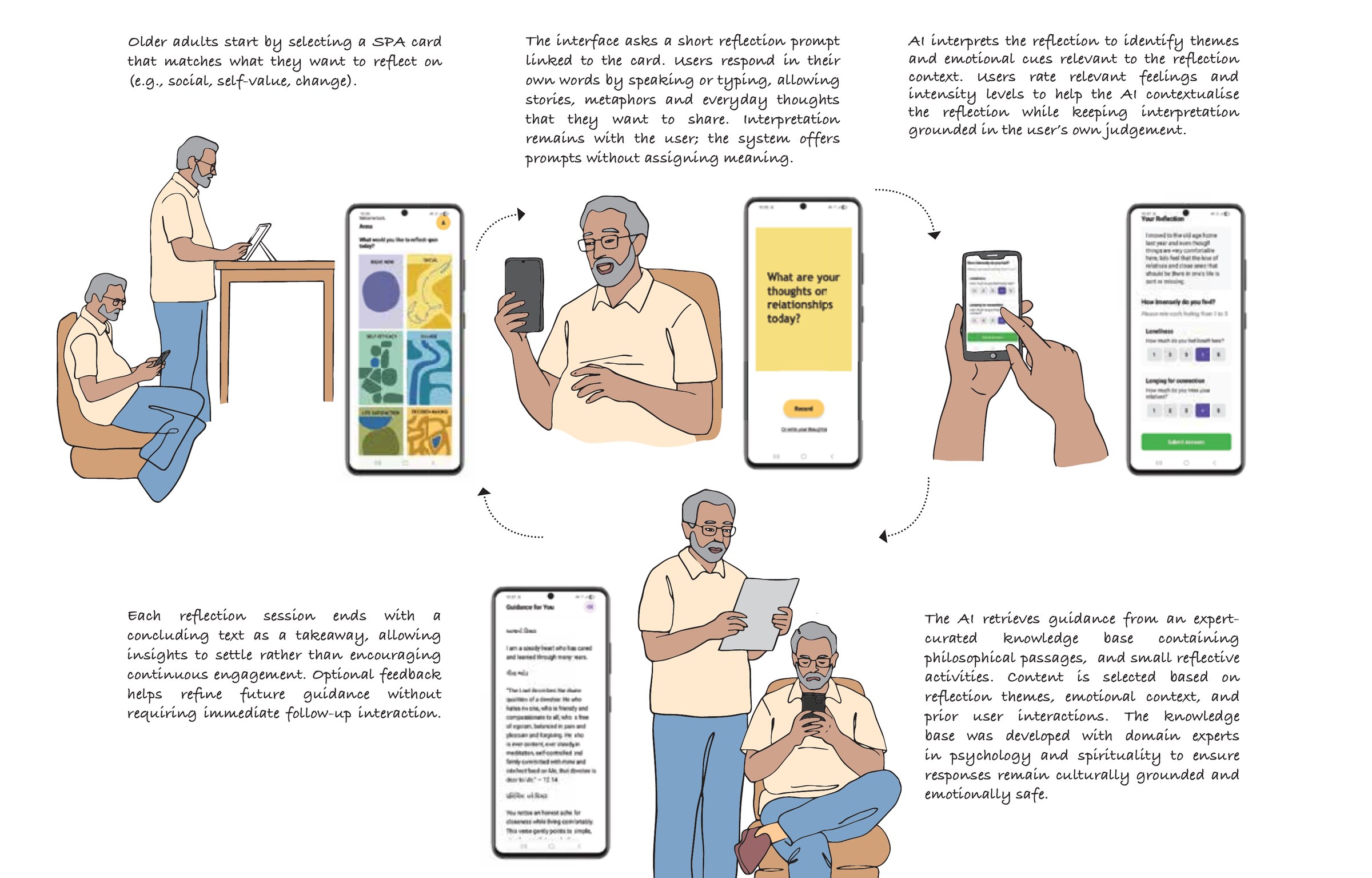
An older adult picks a card for one aspect of aging and reflects on its prompt in their own words. AI interprets the reflection to find its themes and emotional cues, then retrieves guidance from a knowledge base curated with experts in psychology and spirituality: passages from familiar texts such as the Bhagavad Gita and the Upanishads, and small reflective activities.

The AI acts as a curator of material that people have written and reviewed. It does not write emotional guidance of its own.

i.

the design process

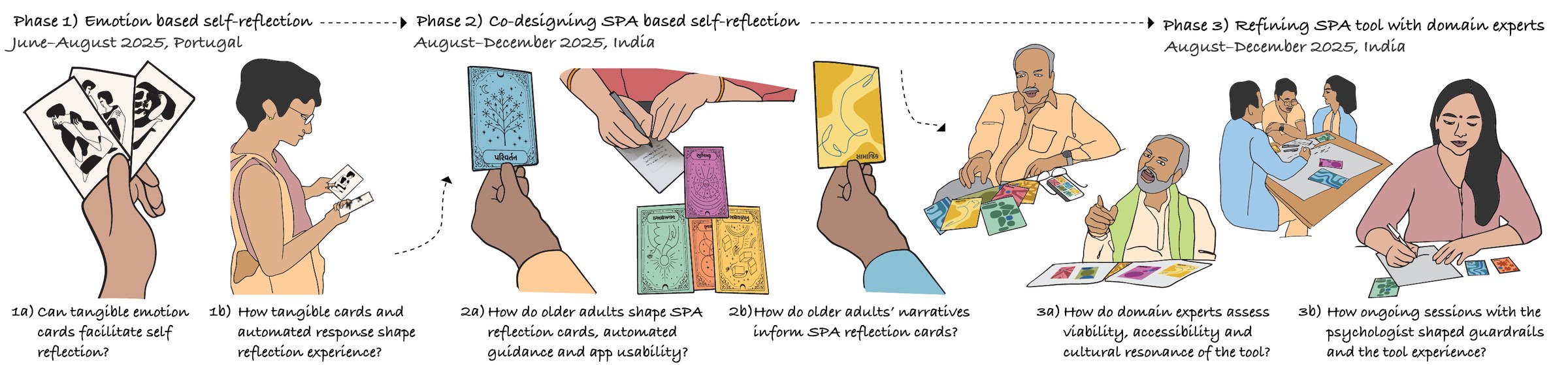
The work moved through three phases between June and December 2025: emotion-based self-reflection in Portugal, co-designing SPA-based self-reflection with older adults in India, and refining the tool with domain experts in India.

Illustrated design process in three phases: emotion-based self-reflection in Portugal, co-designing SPA-based self-reflection in India, and refining the SPA tool with domain experts in India.
ii.

co-design at home

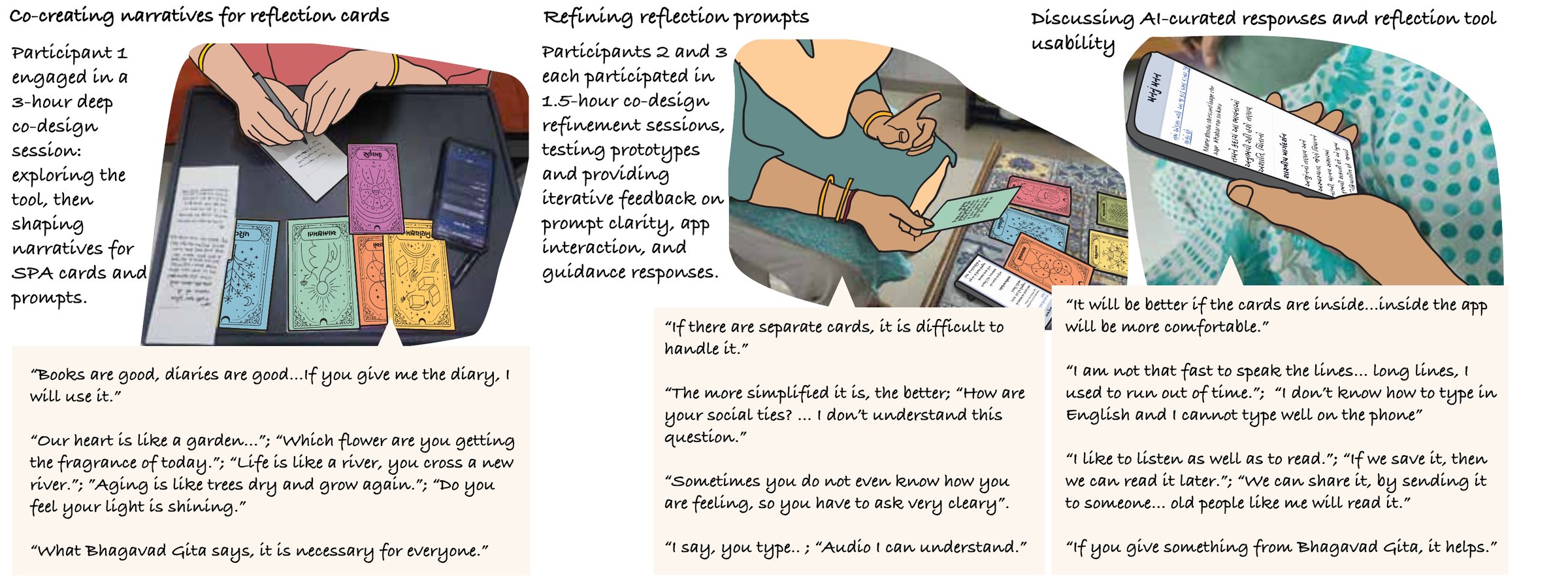
We ran pilot co-design sessions with three older adults in their homes in India. They combined exploration, co-creation and refinement to shape the SPA reflection cards and prompts, and gathered feedback on the AI-curated guidance and the tool’s usability. One participant joined a three-hour session that shaped the narratives for the cards and prompts; two others each joined 1.5-hour sessions to refine the prompts, the app and the guidance.

Three illustrated co-design sessions with participants’ quotes: co-creating narratives for the cards, refining the prompts, and discussing AI-curated responses on the phone.
iii.

from narratives to cards

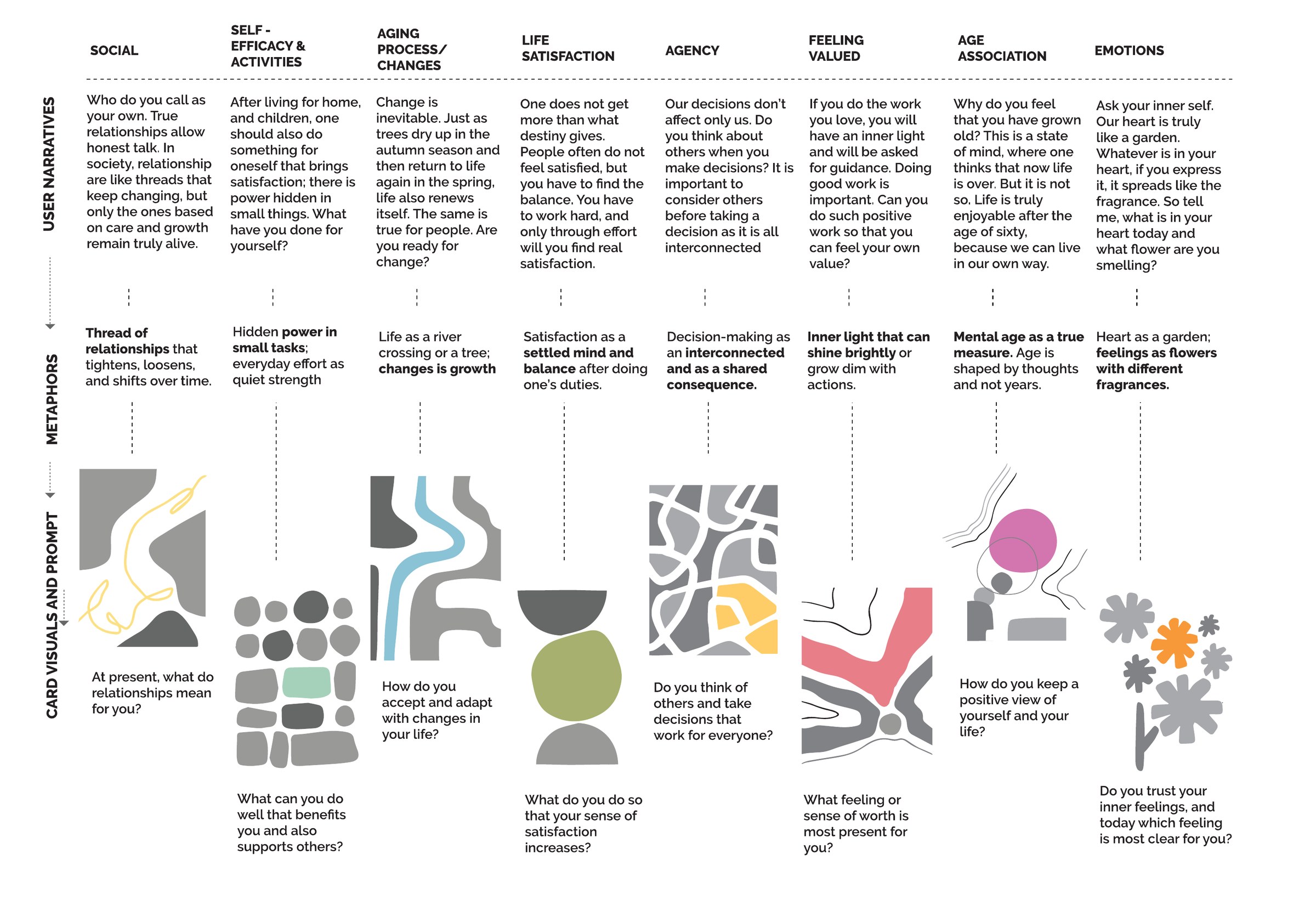
We developed the reflection cards through a synthesis of participants’ narratives and the metaphors in them: relationships as a thread that tightens, loosens and shifts over time; life as a river or a tree, where change is growth; the heart as a garden, with feelings as flowers of different fragrances. We chose an abstract, non-figurative visual language to reduce interpretive constraint and support open-ended meaning-making, translating lived experience into structured, culturally grounded reflection prompts.
A table moving from participants’ narratives, to the metaphors drawn from them, to the card visual and prompt, for each of the eight domains.
participants’ narratives, their metaphors, and the card visuals and prompts
iv.

eight reflection cards

The resulting SPA reflection card set of eight cards comprises nine life-aspect domains that structure self-reflection in later life. Each card pairs an abstract visual form with a focused prompt, offering a stable, low-burden entry point for personal reflection across diverse life concerns.

The eight SPA reflection cards with Gujarati titles: social, self-efficacy, age related transitions, life satisfaction, decision-making, self-value, age association and emotions.
v.

review with experts

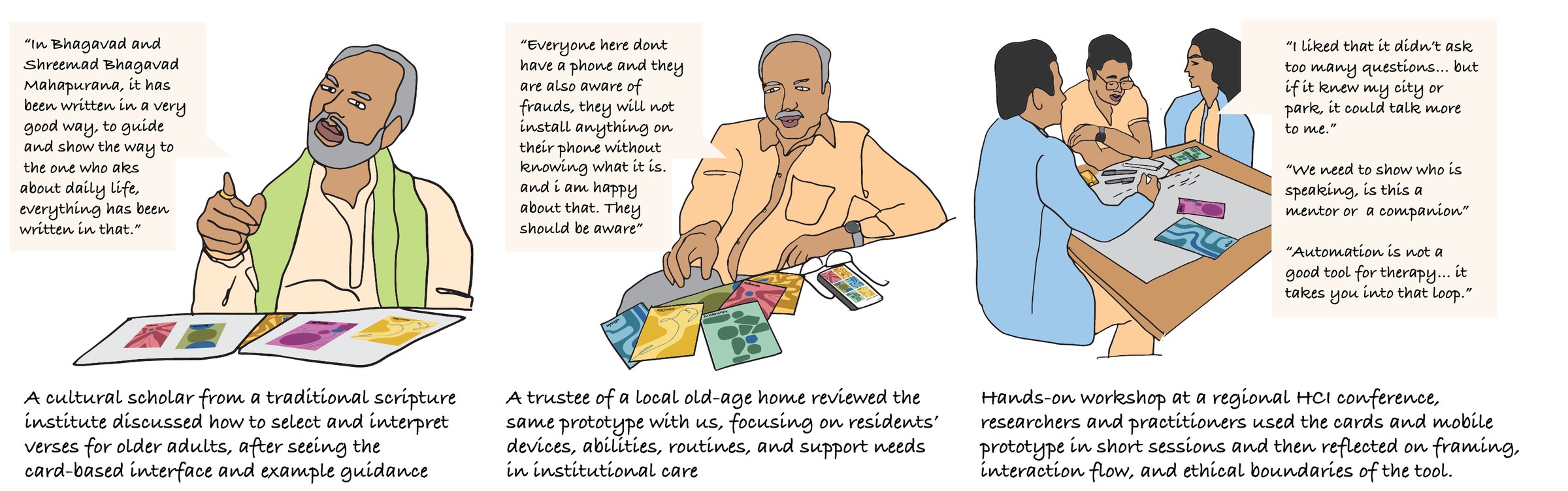
To assess the tool’s viability, safety, accessibility and cultural resonance, three kinds of domain experts engaged with a working prototype: a cultural scholar from a traditional scripture institute, a trustee of a local old-age home, and researchers and practitioners at a regional HCI conference.

Three illustrated expert reviews with quotes: a cultural scholar from a traditional scripture institute, a trustee of a local old-age home, and a hands-on workshop with HCI researchers and practitioners.
vi.

three sessions with a psychologist

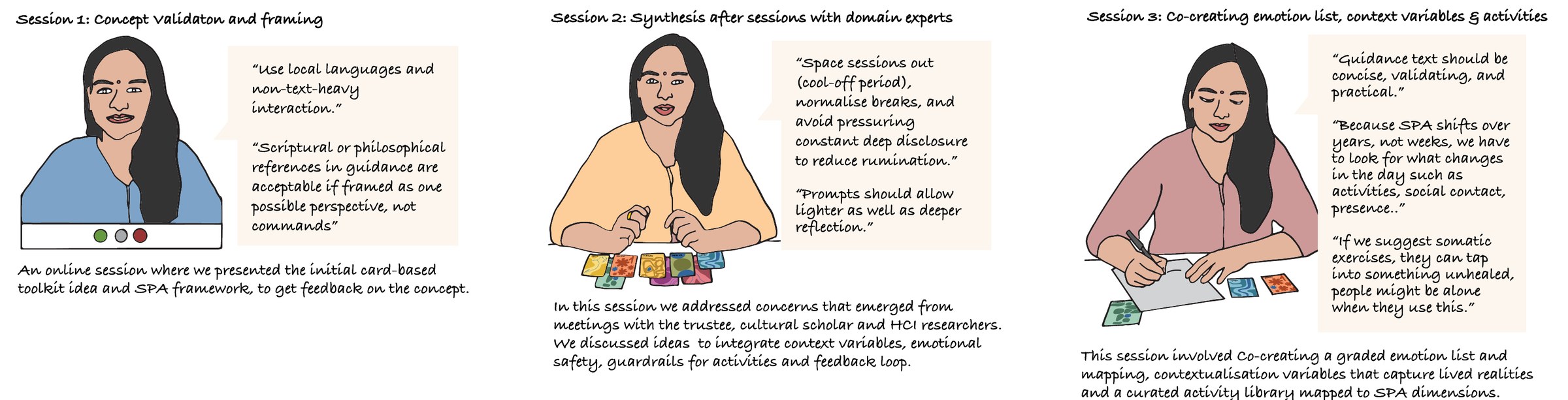
Three sessions with a psychologist shaped the emotional guardrails, language and personalisation logic of the toolkit, ensuring safety and low-risk interaction: validating the concept and its limits, integrating the other experts and shaping the flow, and co-creating the emotions and activities list.

Three illustrated sessions with the psychologist, with her quotes: concept validation and framing, synthesis after the expert sessions, and co-creating the emotion list, context variables and activities.
vii.

final design: one session

An older adult picks the card that matches what they want to reflect on and answers its prompt, by speaking or typing. The tool identifies the themes and feelings in what they said, and they rate how strongly they feel them. It then retrieves guidance from the expert-curated knowledge base, and the session ends with a short takeaway, so the reflection can settle.

Illustrated final flow: selecting a SPA card, answering a short prompt by speaking or typing, rating feelings and intensity, reading guidance from the expert-curated knowledge base, and ending with a takeaway.

what happens next

We then deployed the tool for six weeks with older adults across different living contexts in urban India, to see how reflection fits into their days. A paper on the deployment is in preparation. Part three takes the same materials to designers.