understanding self-perceptions of aging in context
Before designing for self-perceptions of aging, we needed to understand how older adults in urban India experience aging, and how they see their own. We worked with older adults in four living contexts: private homes, income-based and charity-based old age homes, and assisted living.
the aging reflection probe
A seven-day booklet that asks older adults how they see their own aging. This is how it came to be.
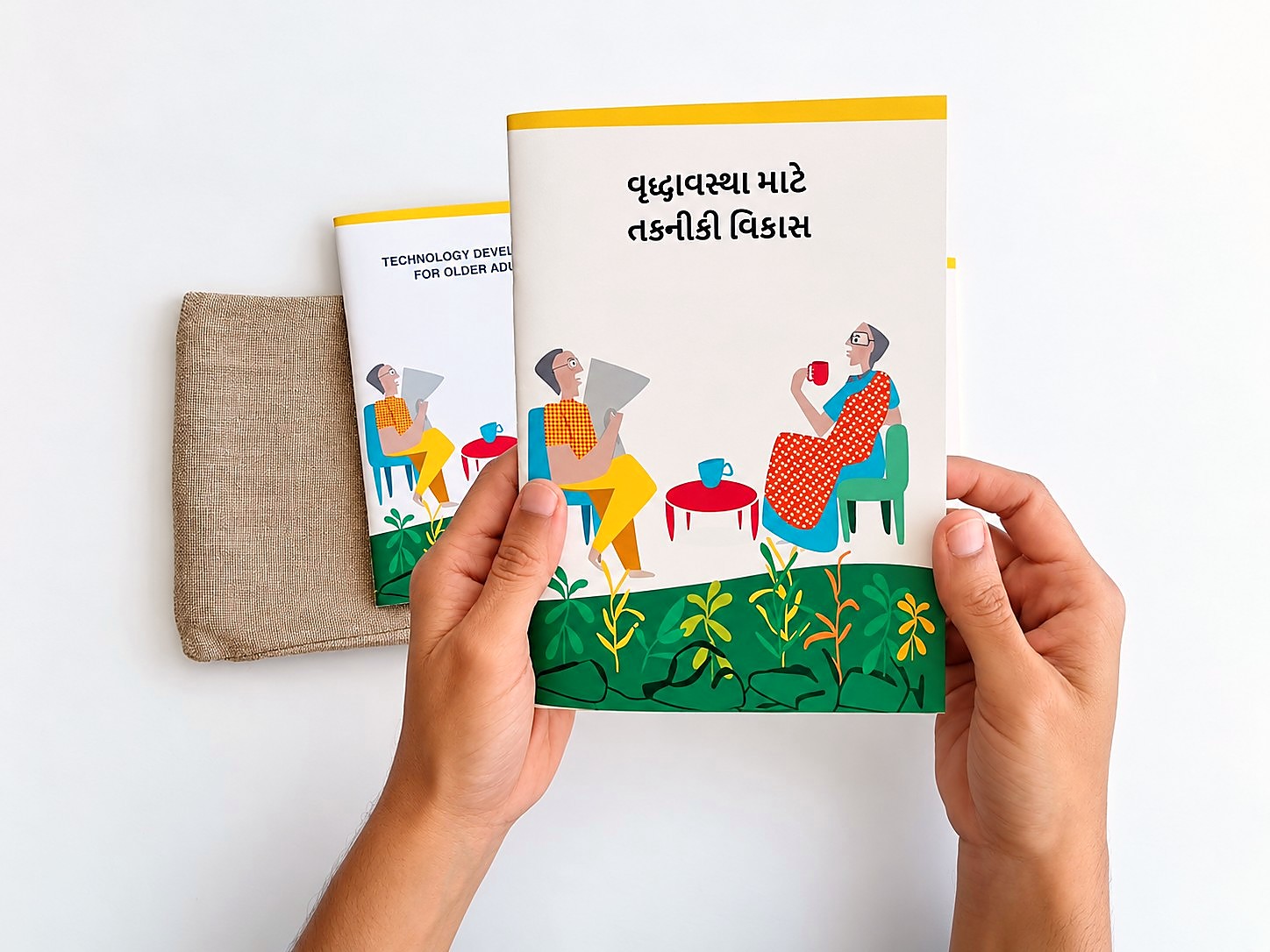
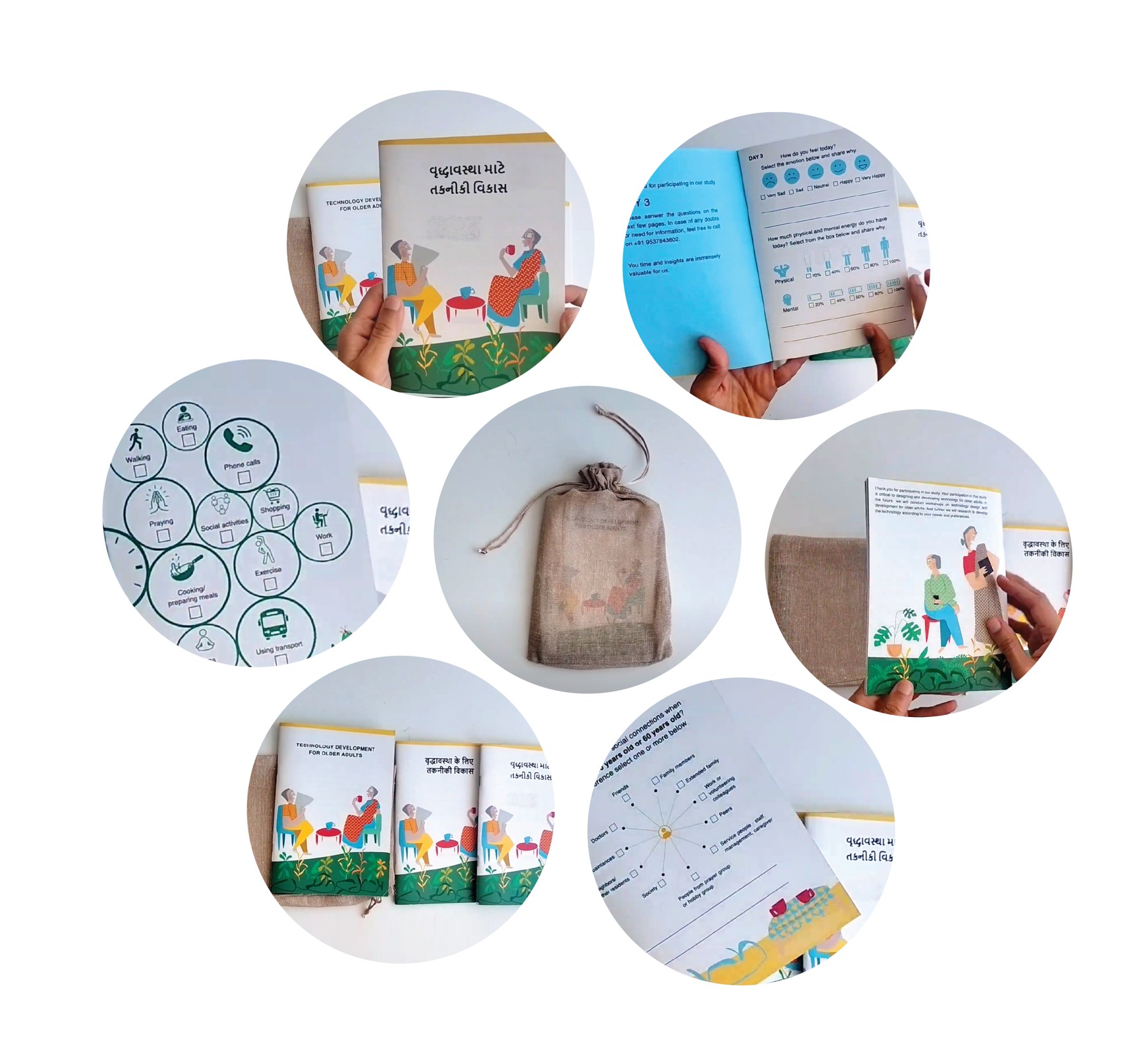
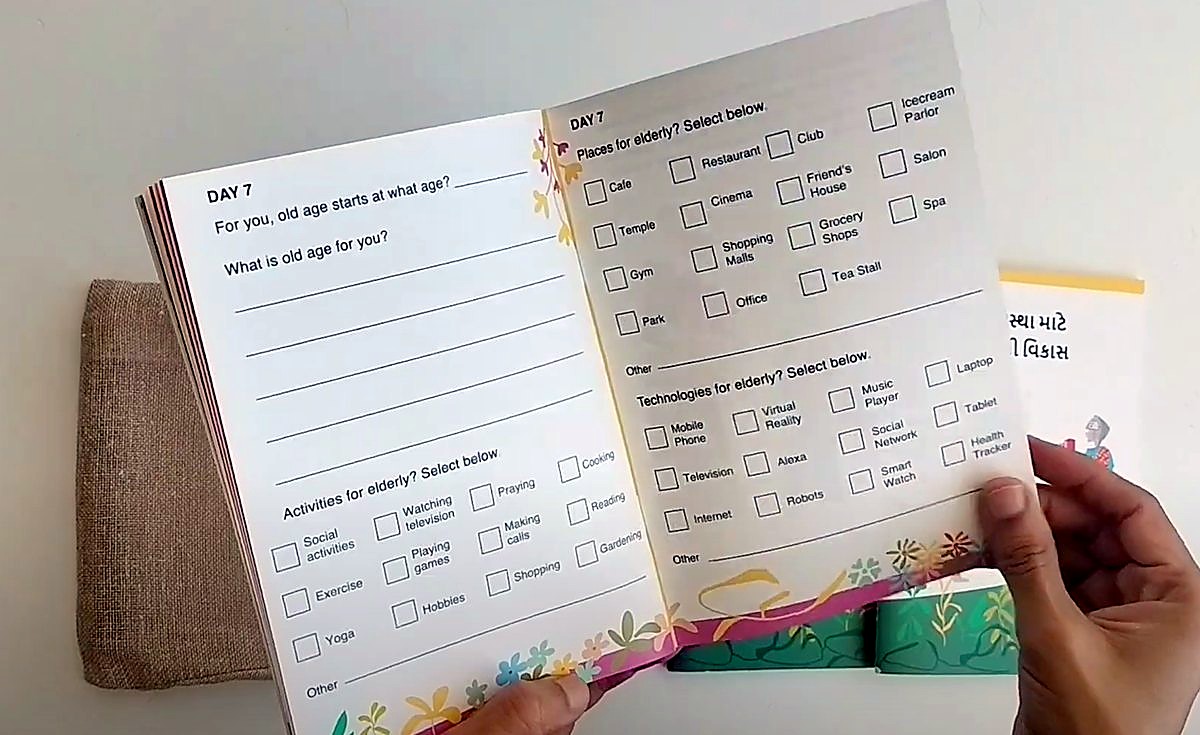
the booklet in Gujarati and English, with its jute pouch
i.
research: nine themes
We reviewed ten measures of aging perception and kept the five that ask about one’s own aging. From their 107 questions we identified nine themes.
Aging Semantic Differential, Philadelphia Geriatric Center Morale Scale, Aging Perceptions Questionnaire, Attitudes to Ageing Questionnaire (AAQ-24), Attitudes Towards Own Aging
social presence
self-efficacy
activities
the aging process
life satisfaction
feeling valued
agency
age association
emotion
ii.
themes to activities
We mapped the themes across seven days, one theme a day, with self-efficacy and activities sharing day two. Emotion was asked every day. We sketched an activity for each theme, and wrote follow-up interview questions to go with them.
day 1social presence
day 2self-efficacy and activities
day 3aging process
day 4life satisfaction
day 5feeling valued
day 6agency
day 7age association
every dayemotion
iii.
probe kit version one
The first kit was an A4 envelope holding seven A5 envelopes, one for each day. Each held that day’s activity cards, the emotion card and sticker sheets.
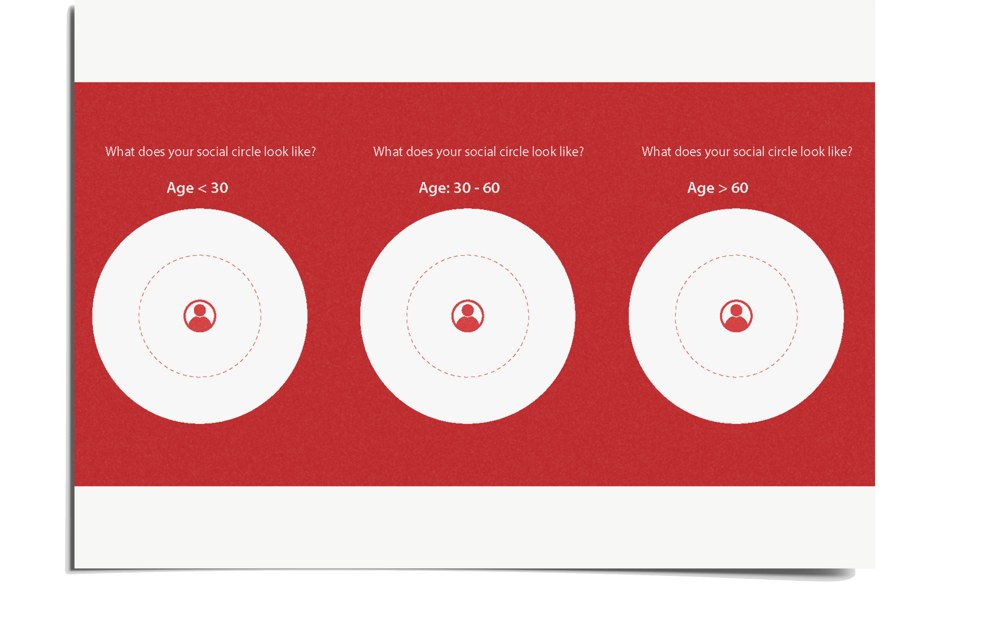
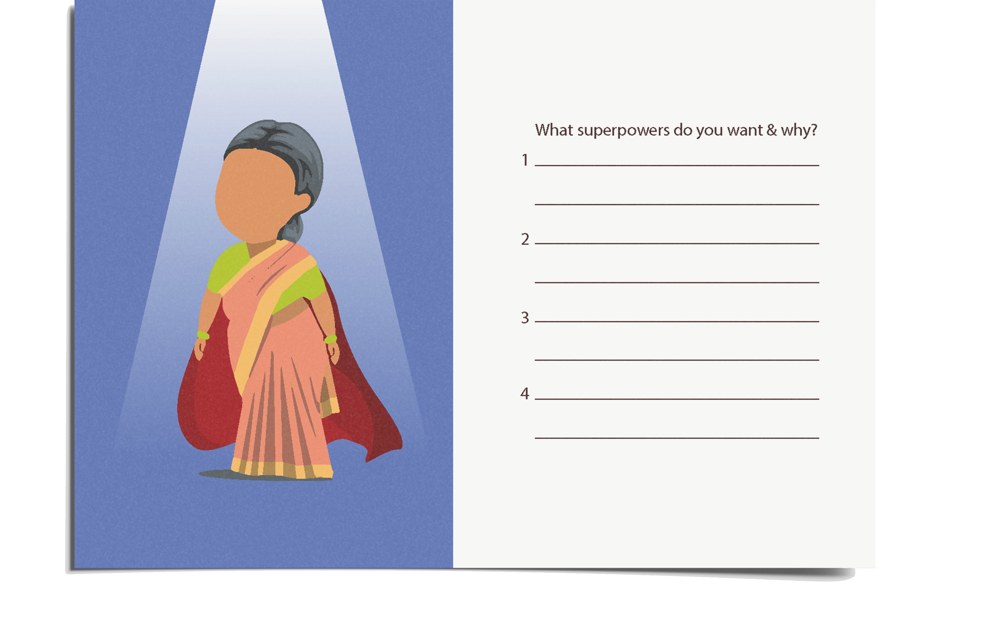
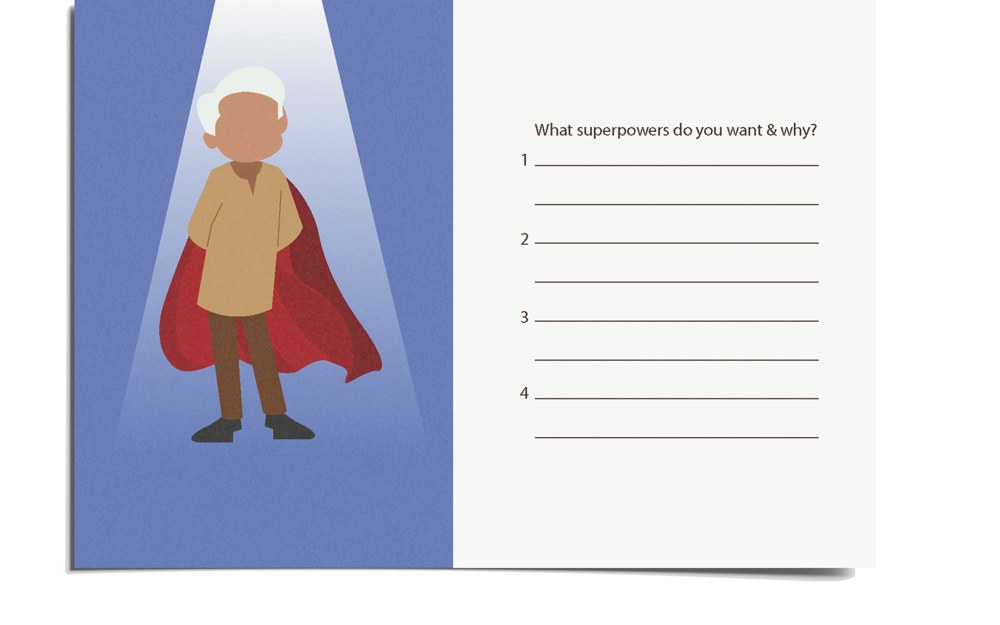
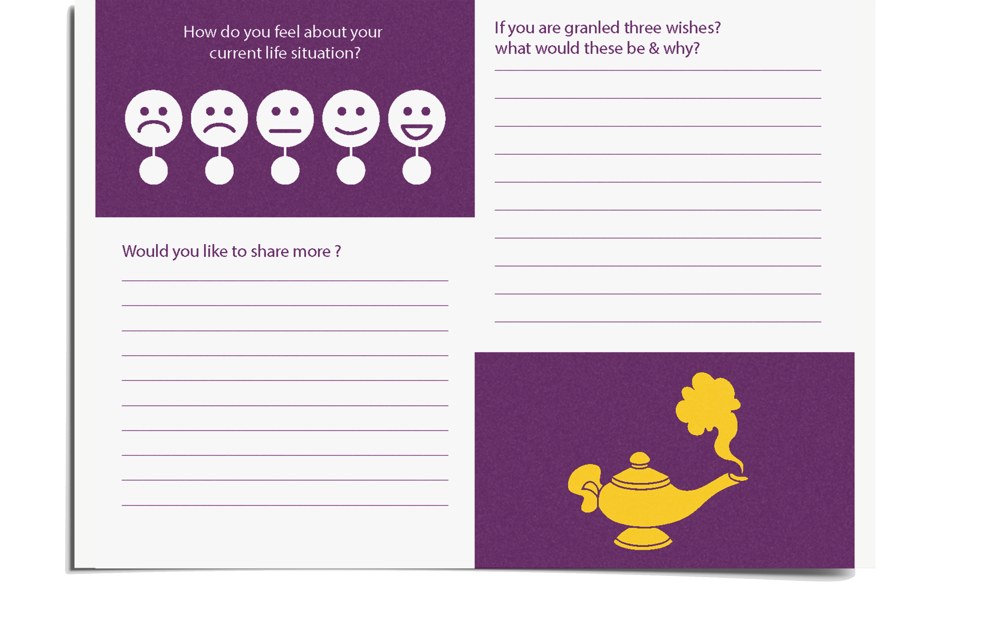
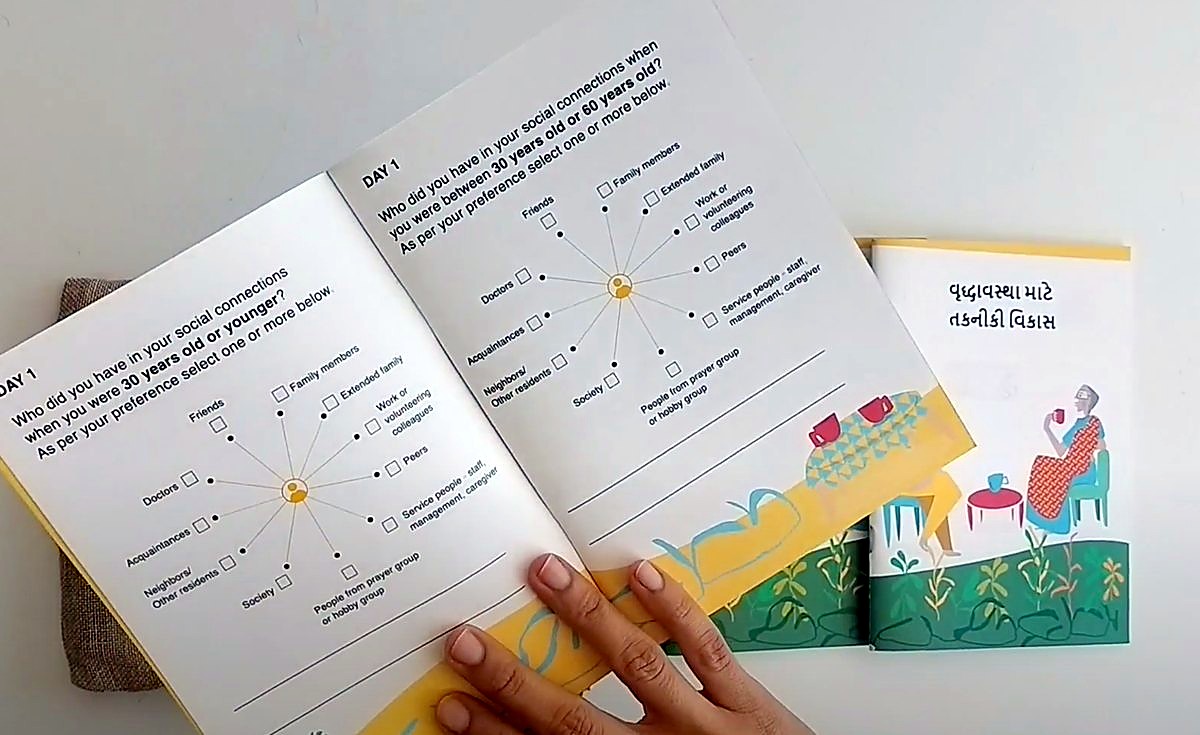
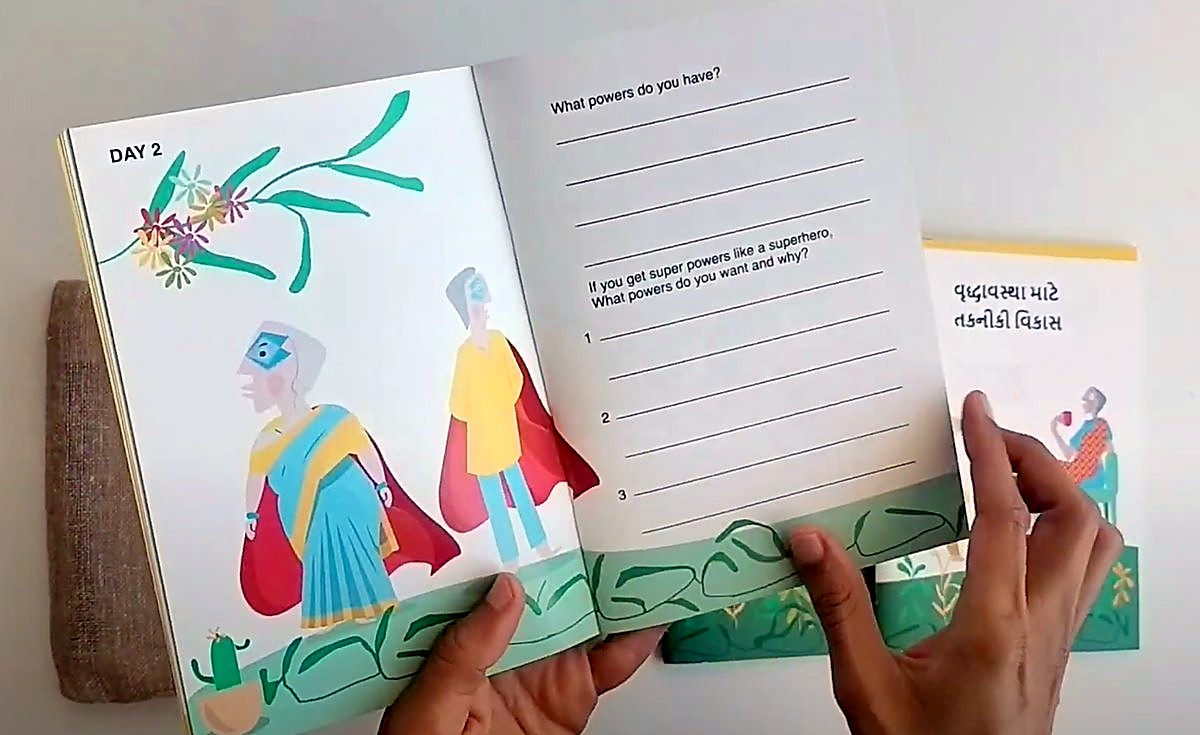
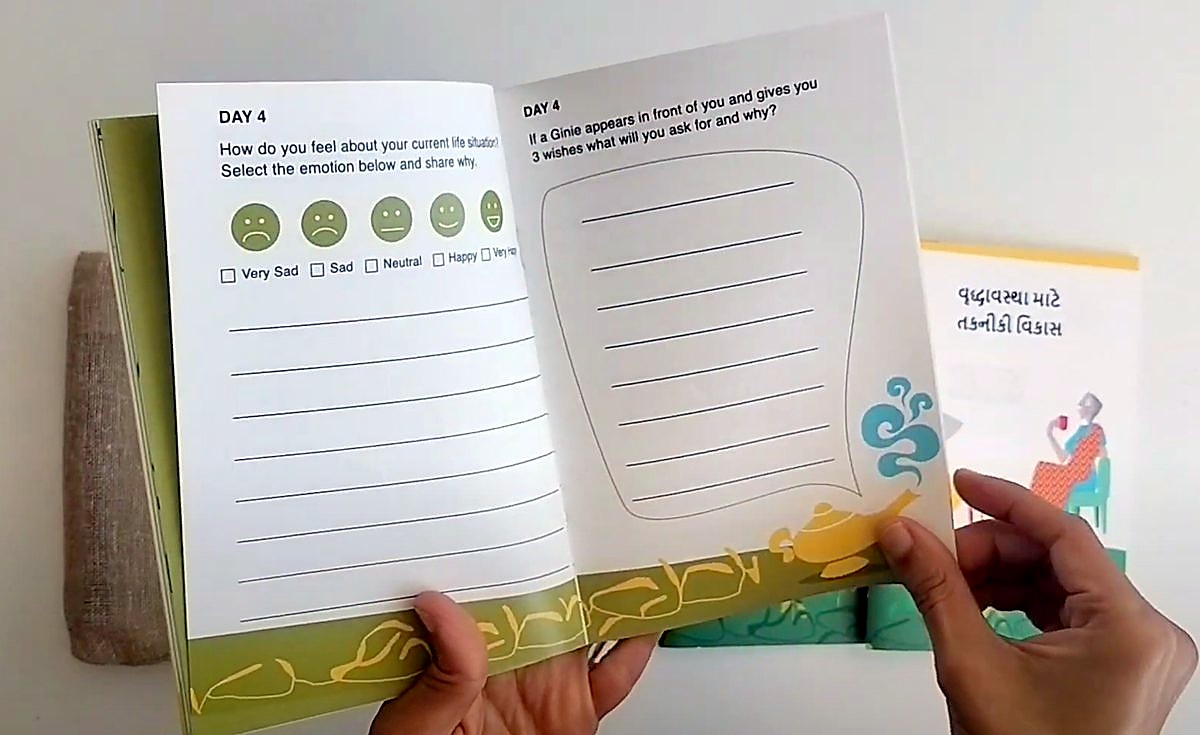
day 1 · social presenceYour social circle below 30, from 30 to 60, and above 60.day 2 · self-efficacyThe superpowers you want, and why, with an older woman in a cape.day 2 · self-efficacyThe same card with an older man in a cape.day 4 · life satisfactionHow you feel about your life now, and three wishes from a genie.
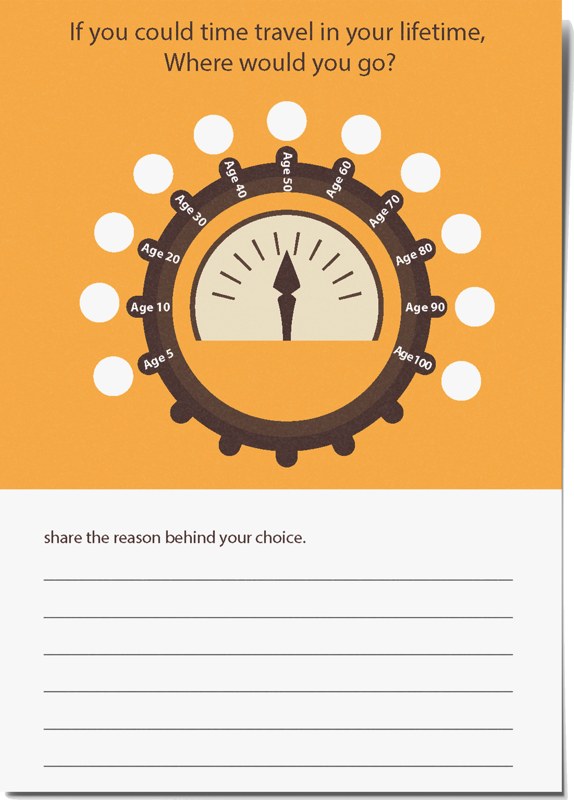
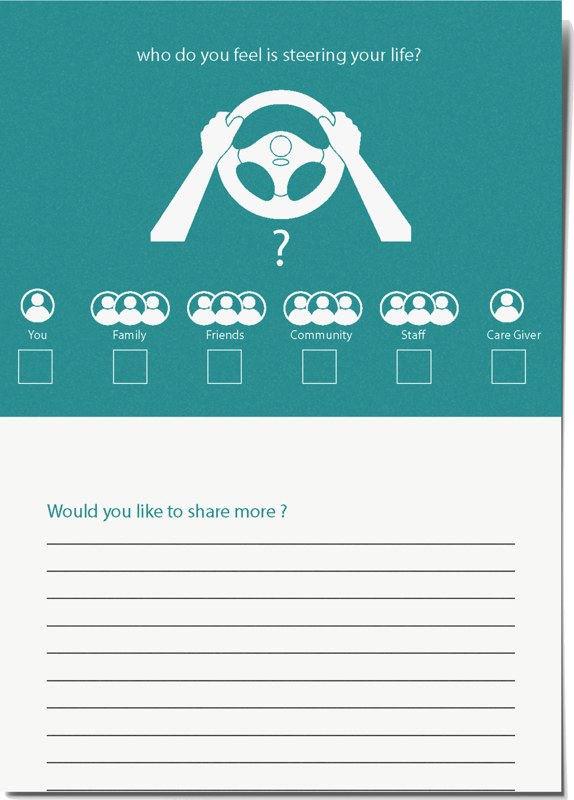
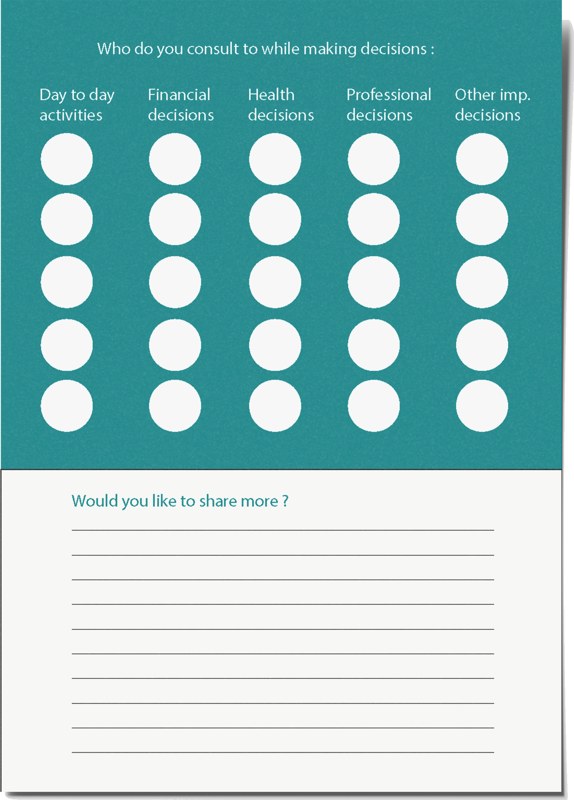
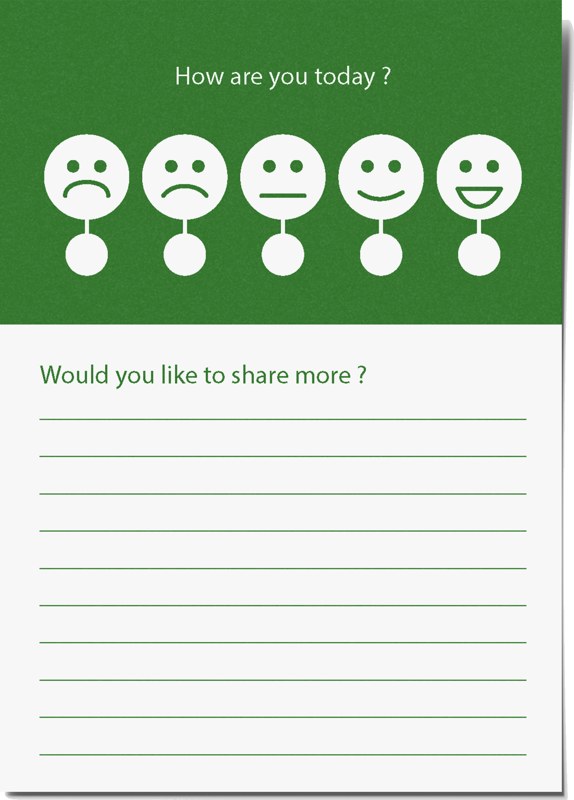
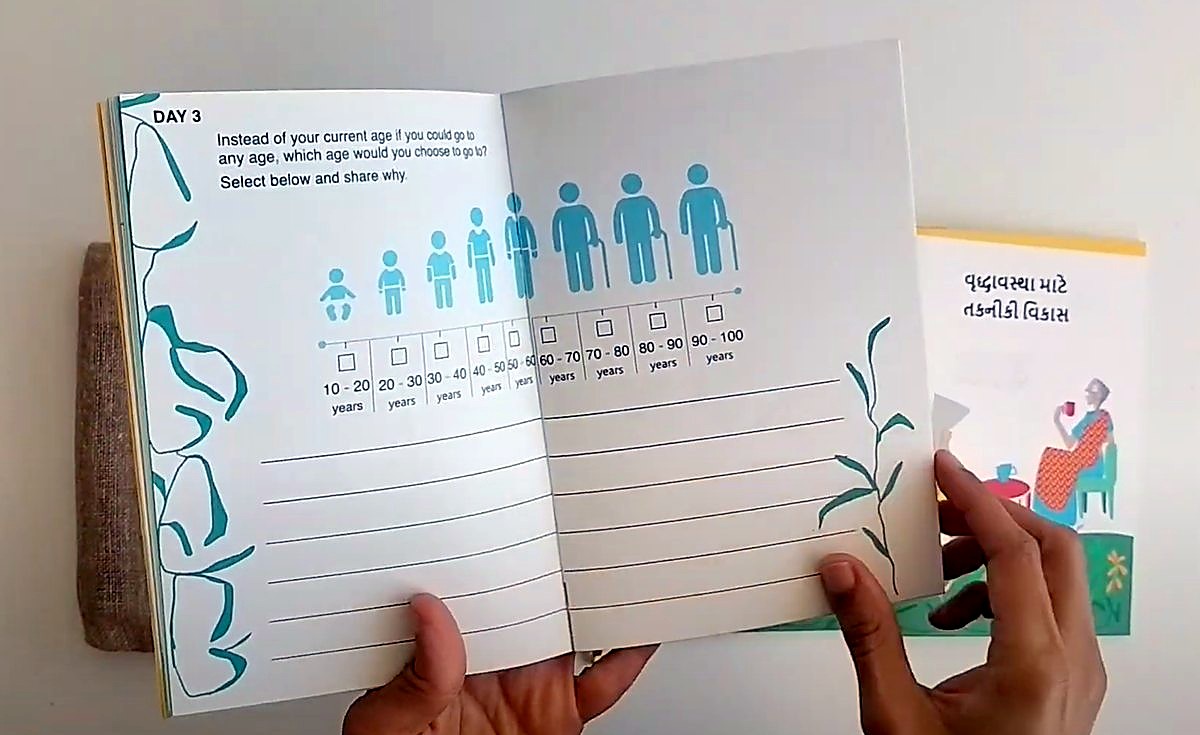
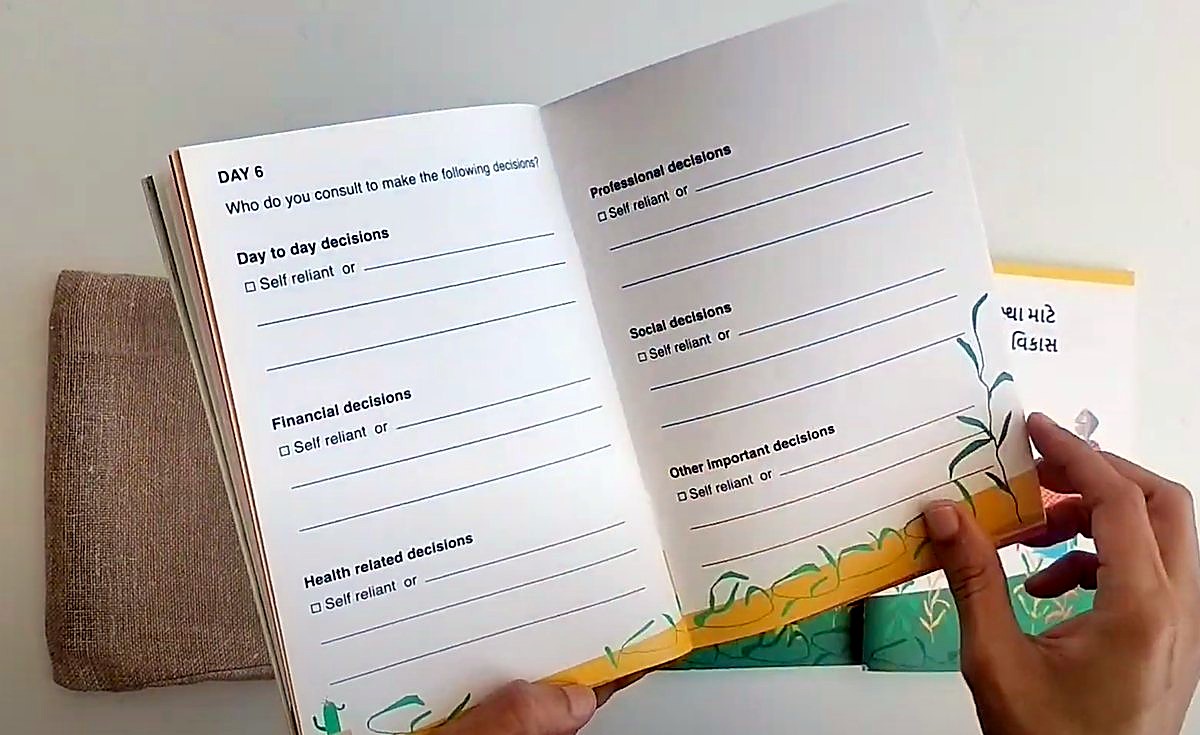
day 3 · aging processA time machine: where in your life would you go?day 6 · agencyWho do you feel is steering your life?day 6 · agencyWho do you consult for each kind of decision?every day · emotionHow are you today?
iv.
two pilots
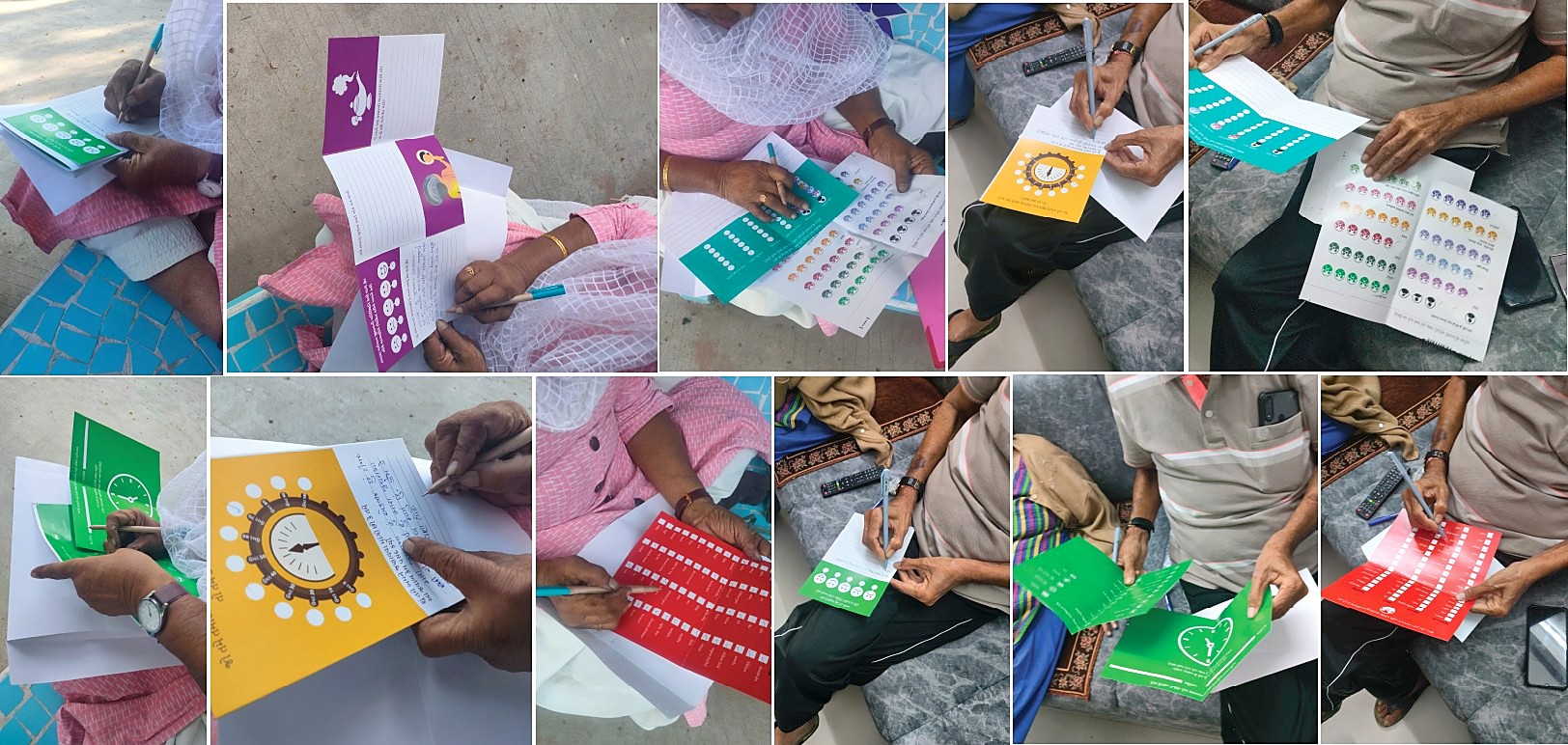
Two older adults tried the kit, one in the garden of a charity-based old age home and one in the common area of an assisted living township. Both chose Gujarati.
materialsWith no table, they balanced envelopes and cards on their laps and lost the order. Stickers were hard to peel and to place. They preferred to write, and found the colours too bright.
promptsSeveral prompts needed explaining: the social circles, the time machine, the activities clock and the age association list. One participant read the genie lamp as a tea kettle.
experienceThe tasks felt easy and took a reasonable time. They enjoyed the superpowers and the three wishes most.
v.
a booklet and a focus group
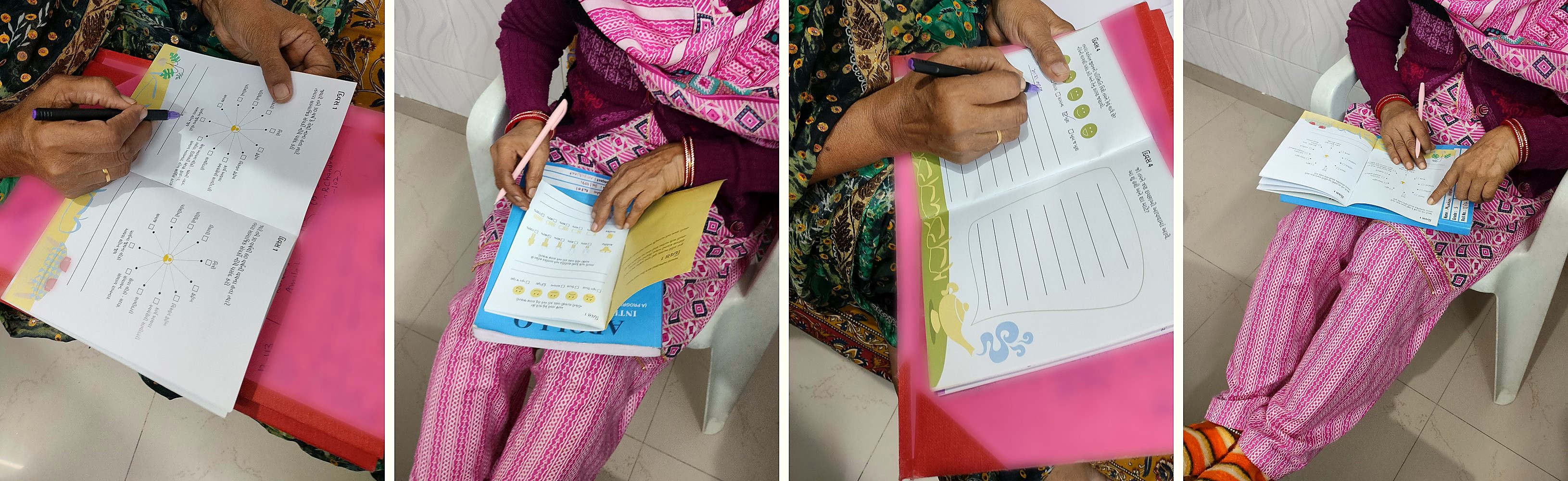
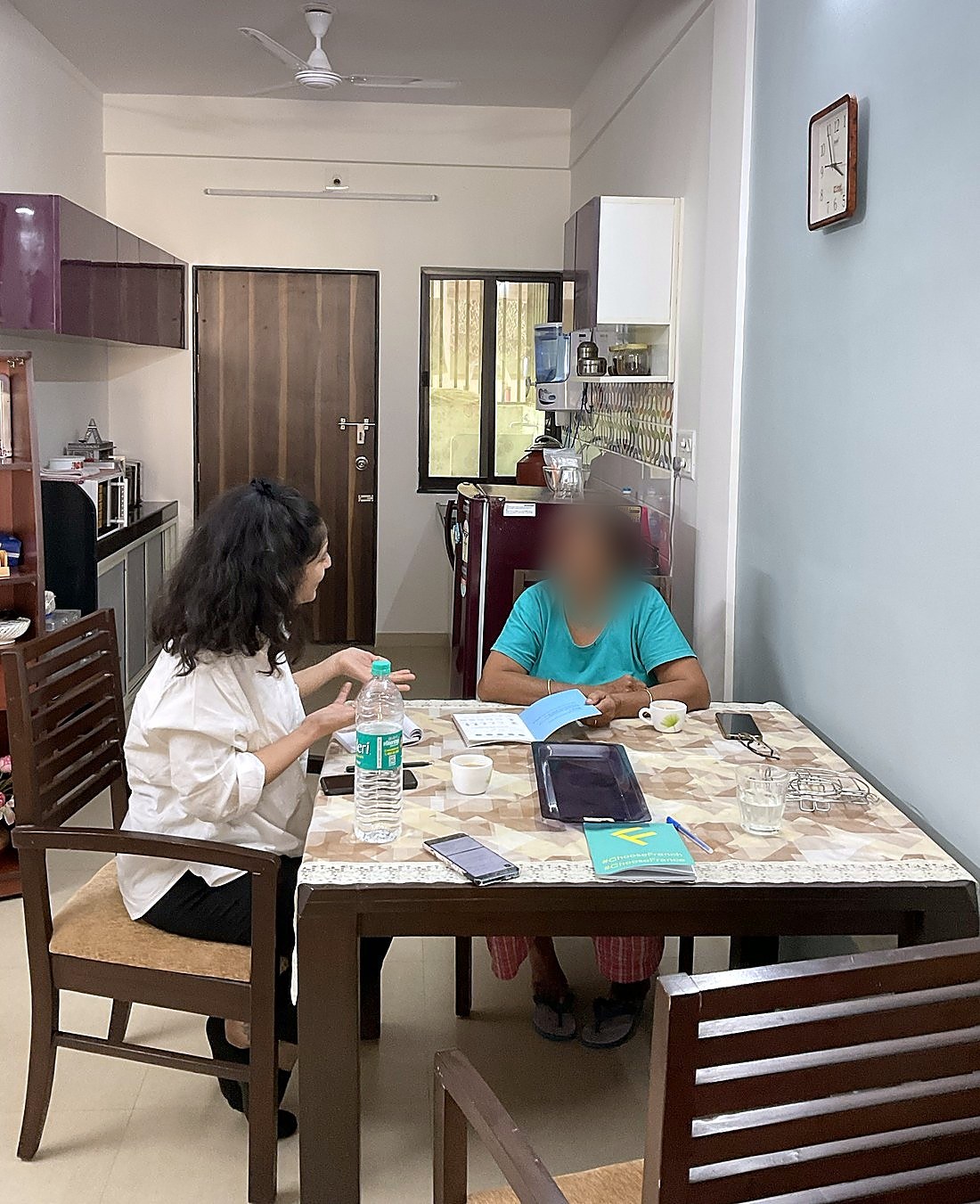
We folded the seven days into one booklet with softer visuals and reworded prompts, and tested it with a focus group at a participant’s home. They worked through all seven days in Gujarati, talking in Gujarati and Hindi after each one, over tea. The booklet kept the days in order, the visuals did not get in the way of writing, and the discussion sharpened the wording of each question.
vi.
the aging reflection probe
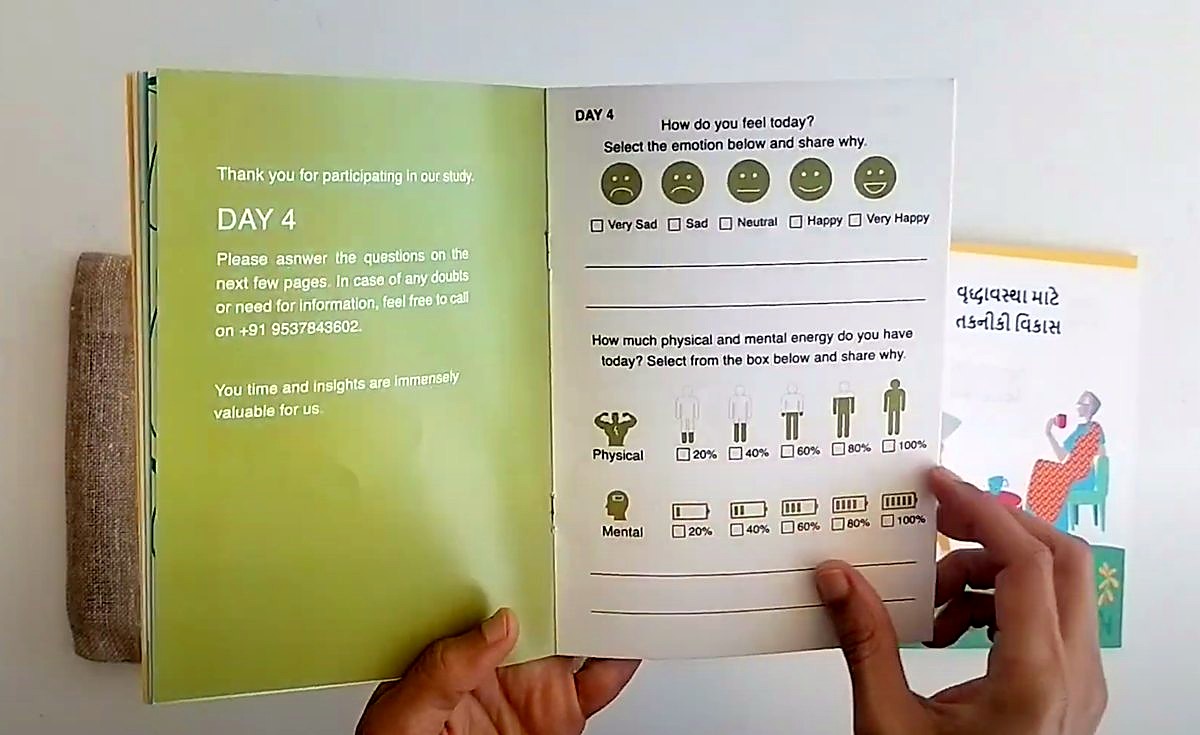
The final kit, the Aging Reflection Probe, was the booklet and pens in a jute bag, in English, Hindi or Gujarati.
the bookletSmall and easy to carry, like the prayer books many older adults keep: the Kitaab, the Hanuman Chalisa, the Agamas, the Jaap Sahib.
the jute bagSturdier than an envelope, soft to hold, and like the small bags older adults use for personal things.
every dayEach day opens on its own colour with emotion and energy, then the activity, with the researcher’s phone number on the page.
languageOne language per booklet, and an invitation to answer in any language.
levelsTick boxes for a quick answer, and space to write at length.
gratitudeA closing note on why the study mattered and what would happen next.
vii.
seven days of activities
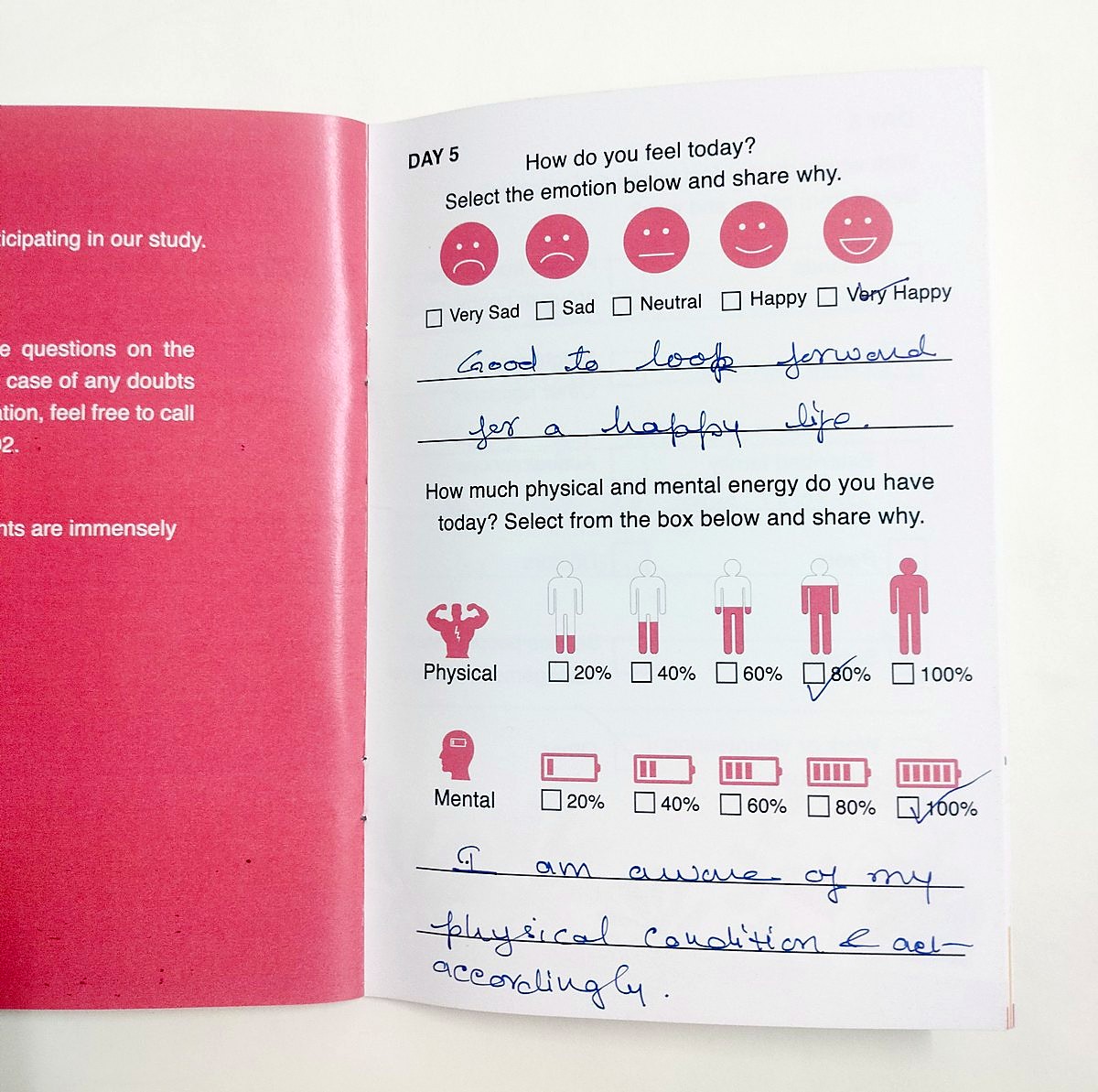
Each day opened with emotion and energy, then that day’s activity.
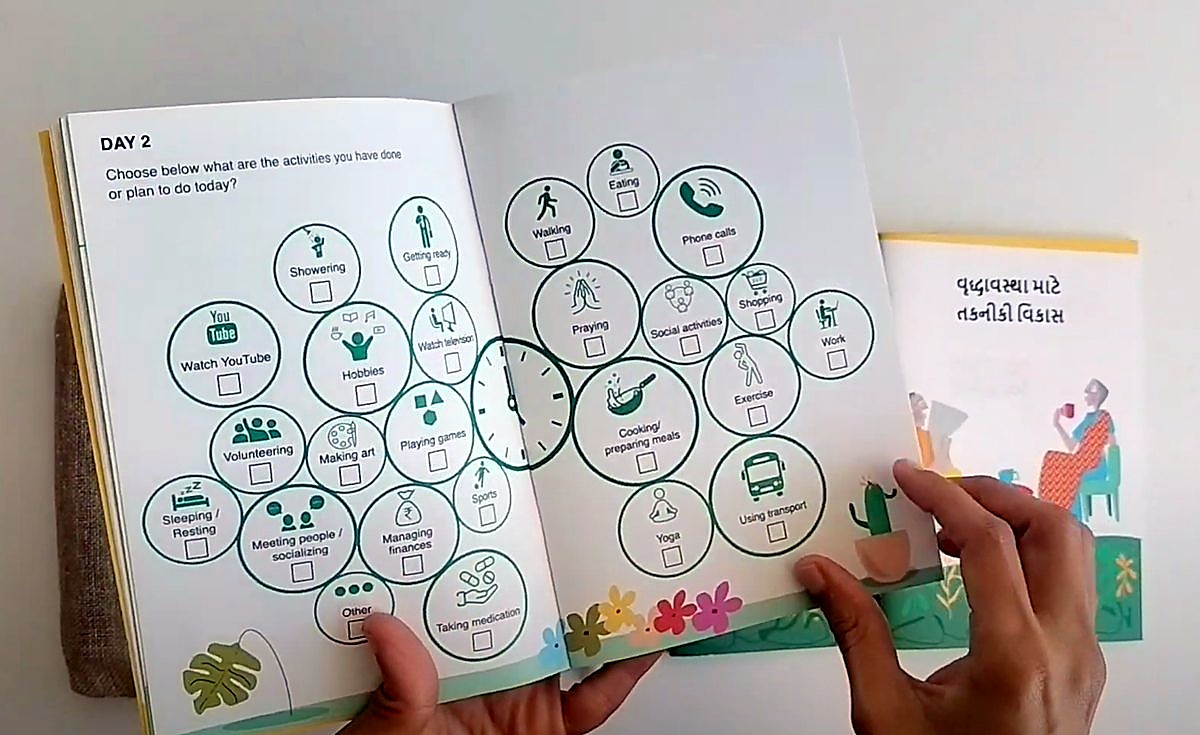
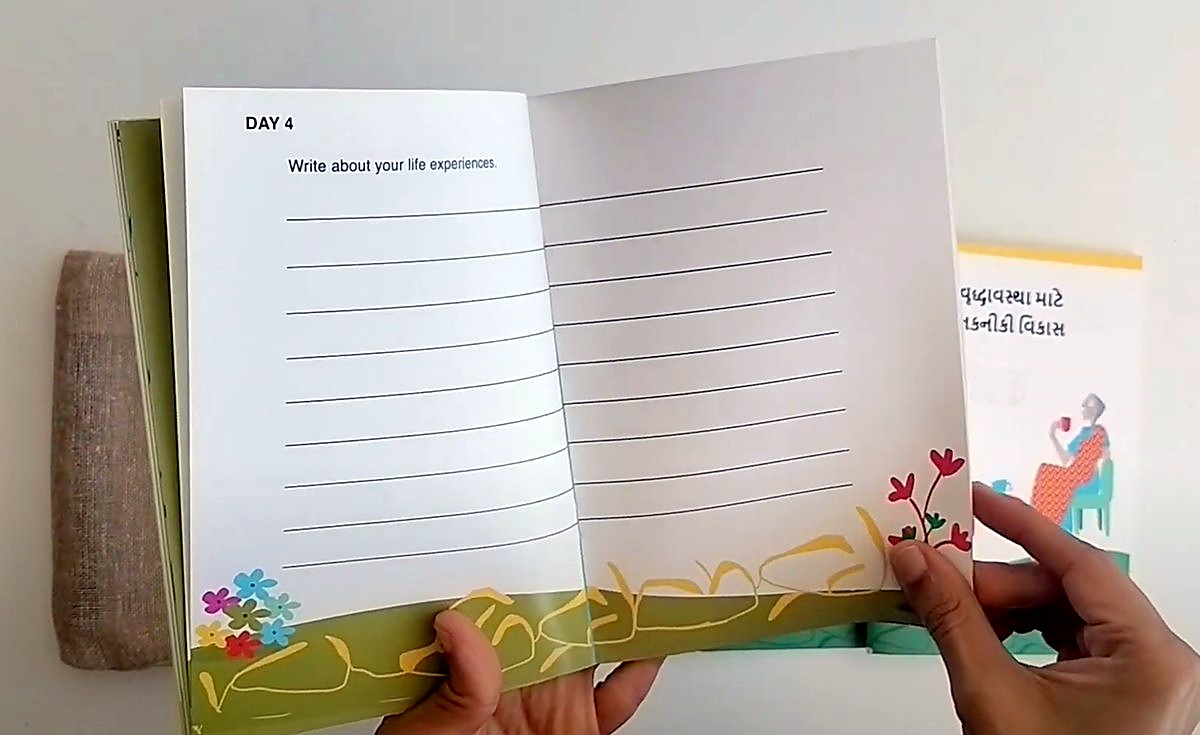
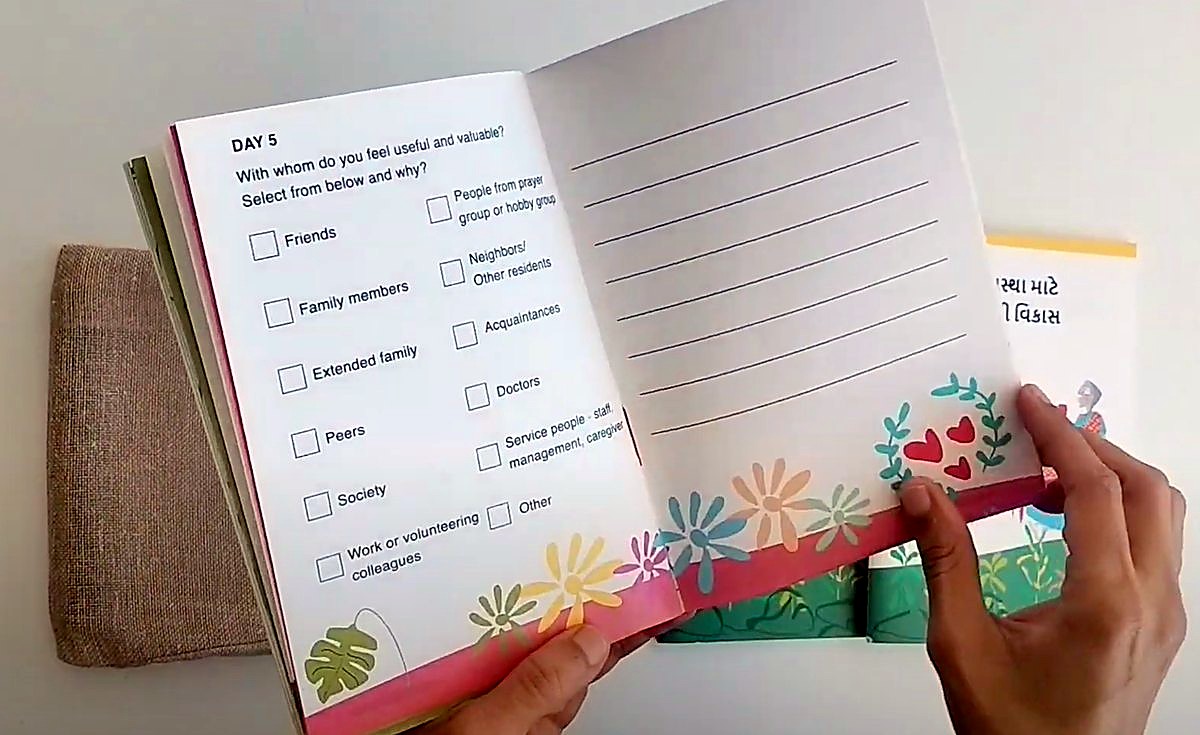
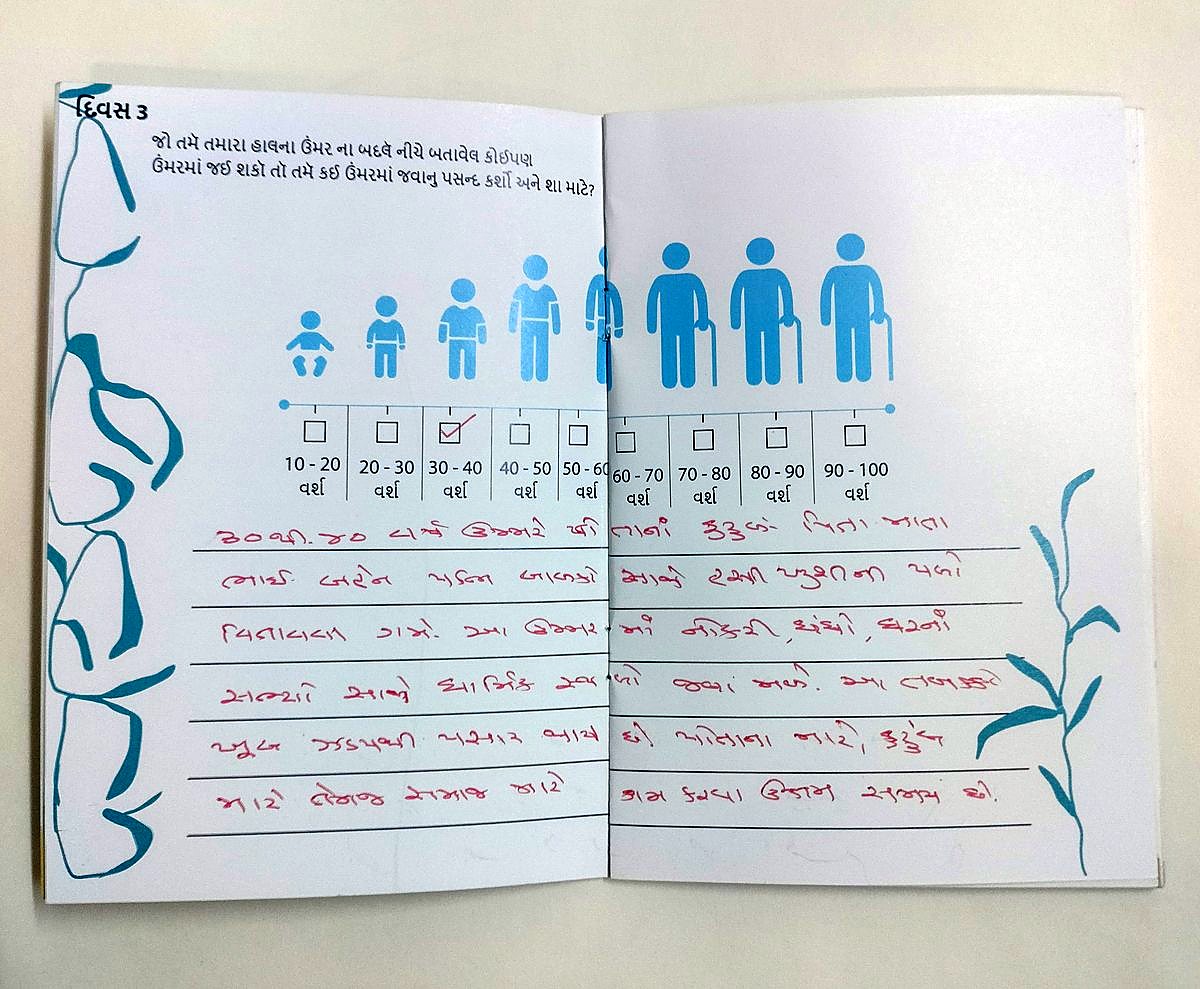
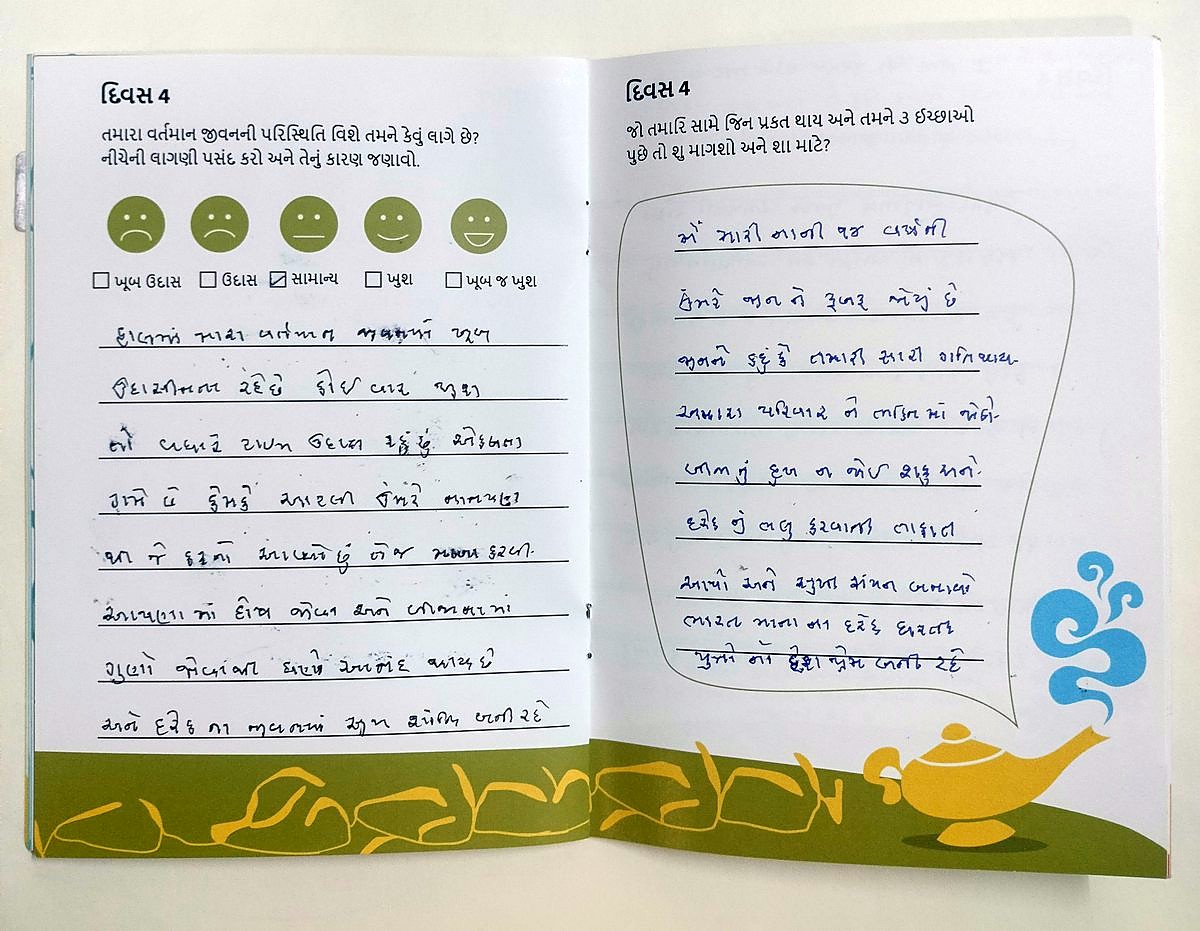
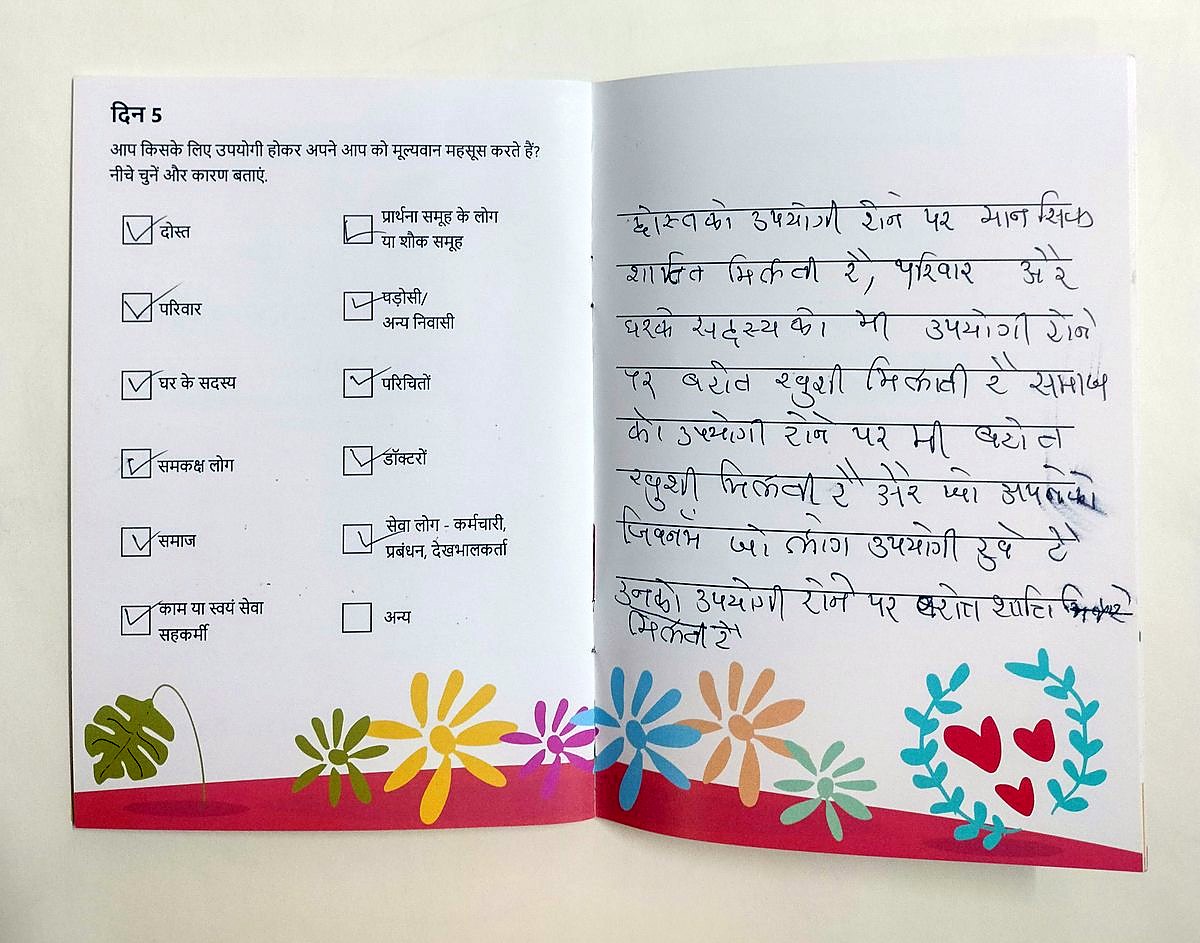
day 1 · social presenceWho was in your social circle at 30 or younger, between 30 and 60, and now.day 2 · self-efficacyThe powers you have, and the superpowers you would want.day 2 · activitiesWhat you have done or plan to do today.day 3 · aging processAn age you would go back to, and why.day 4 · life satisfactionHow you feel about your life now, and three wishes from a genie.day 4 · life satisfactionA letter about your life experiences.day 5 · feeling valuedWith whom you feel useful and valuable.day 6 · agencyWho you consult on day-to-day, financial, health and other decisions.day 7 · age associationWhen old age begins, and the activities, places and technologies you link with it.every day · emotion and energyHow you feel today, and your physical and mental energy.
viii.
distribution and collection
Six older adults in each of the four living contexts took a kit home for a week and filled it in on their own. All 24 came back.
day 3 · aging processAsked which age they would go to, 23 of 24 chose a younger age. One wanted to move forward: “Happy with my lifestyle.”day 4 · life satisfactionSelf-efficacy, life satisfaction, the aging process and age association drew the most reflective answers, like these three wishes.day 5 · feeling valuedSocial presence, agency and feeling valued drew descriptive answers: who is around them, who decides, who makes them feel useful.day 5 · emotion and energyPeople answered at their own level, from ticks alone to full pages. “I am aware of my physical condition and act accordingly.”
languageMany wrote in a language other than the booklet’s: Hindi booklets in English or Gujarati, a Gujarati booklet in English.
old age“A fresh start.” “Just a number.” “Great if you are healthy.” “I don’t like the term old age.”
careOne man asked for a second booklet to keep. Another wrote things he had not told anyone in years. A couple kept writing during a wedding trip.
ix.
booklets and interviews
Within a week of collecting the booklets, we interviewed each participant with their booklet open, using follow-up questions written for each theme. Many read their entries aloud and took them further. A paper on this analysis is under review.
social presenceHow has your social life changed over time?How do you stay socially involved?Do you feel in control of your social life?
self-efficacyHow are your cognitive, physical and emotional capabilities changing in the last 10 years or 20 years?How do you think changes in your capabilities affect the things you do and how?
activitiesWhat are the things that you can and cannot do?Please describe how you feel about performing these actions?
aging processHow would you describe your emotional state?Has it changed over time?Do you think your overall emotional state has changed over time?
life satisfactionAre things better or worse than you imagined they would be, when you were in your 20s, 30s or 40s?What are the age transitions that you noticed most, and how do you feel about it?
feeling valuedDo you feel less or more valuable as you age?What are the most impactful things that you have done?What would you like to pass on to the younger generation?
agencyHow are your decisions affected by your current capabilities?How do you think you control the effects of aging on your life?
age associationWhat are the good and bad things about getting older?Do you view yourself as old?Is there anything specific that makes you feel old?
follow-up interview questions, by theme
what happens next
The probe gave us nine themes and a way to ask about them. Part two turns them into a tool older adults can use on their own. We also plan to adapt the probe for older adults in the United States, to see whether the themes hold in a second context.