Neeta Khanuja

design · 2011

window to walled city

A window onto the old walled city of Ahmedabad. Visitors look through a frame and see the street around them with its history and everyday information laid over it. We chose augmented reality so the city stays in view instead of disappearing behind a screen.

Diploma project, National Institute of Design · self-initiated concept and prototype

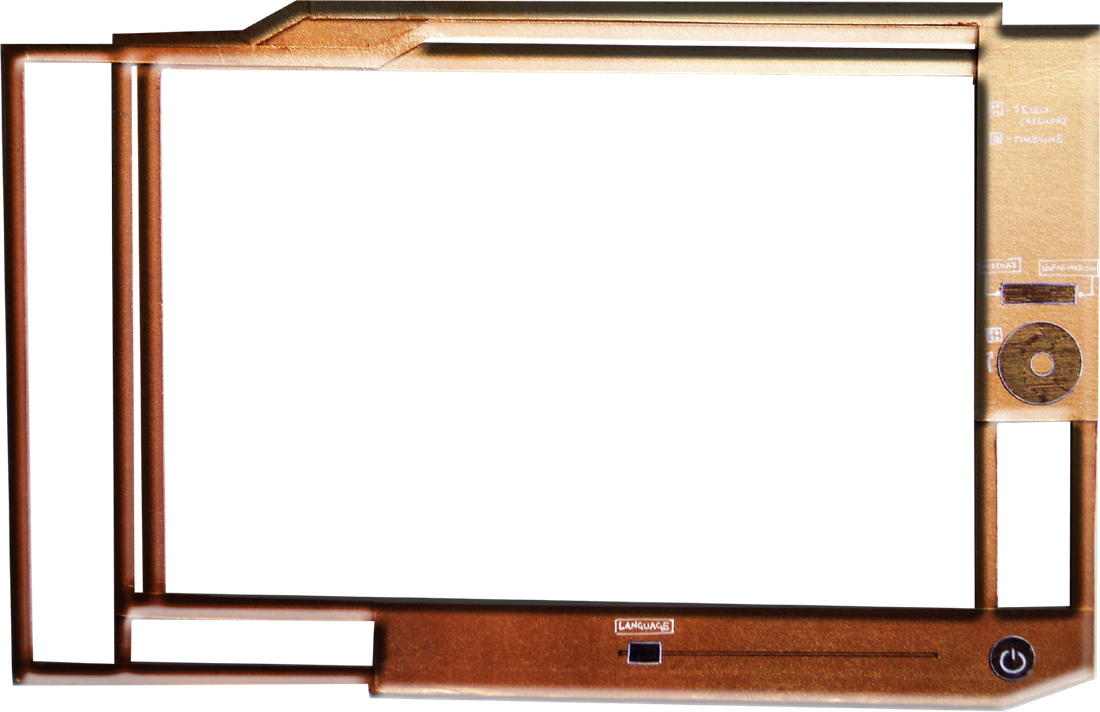
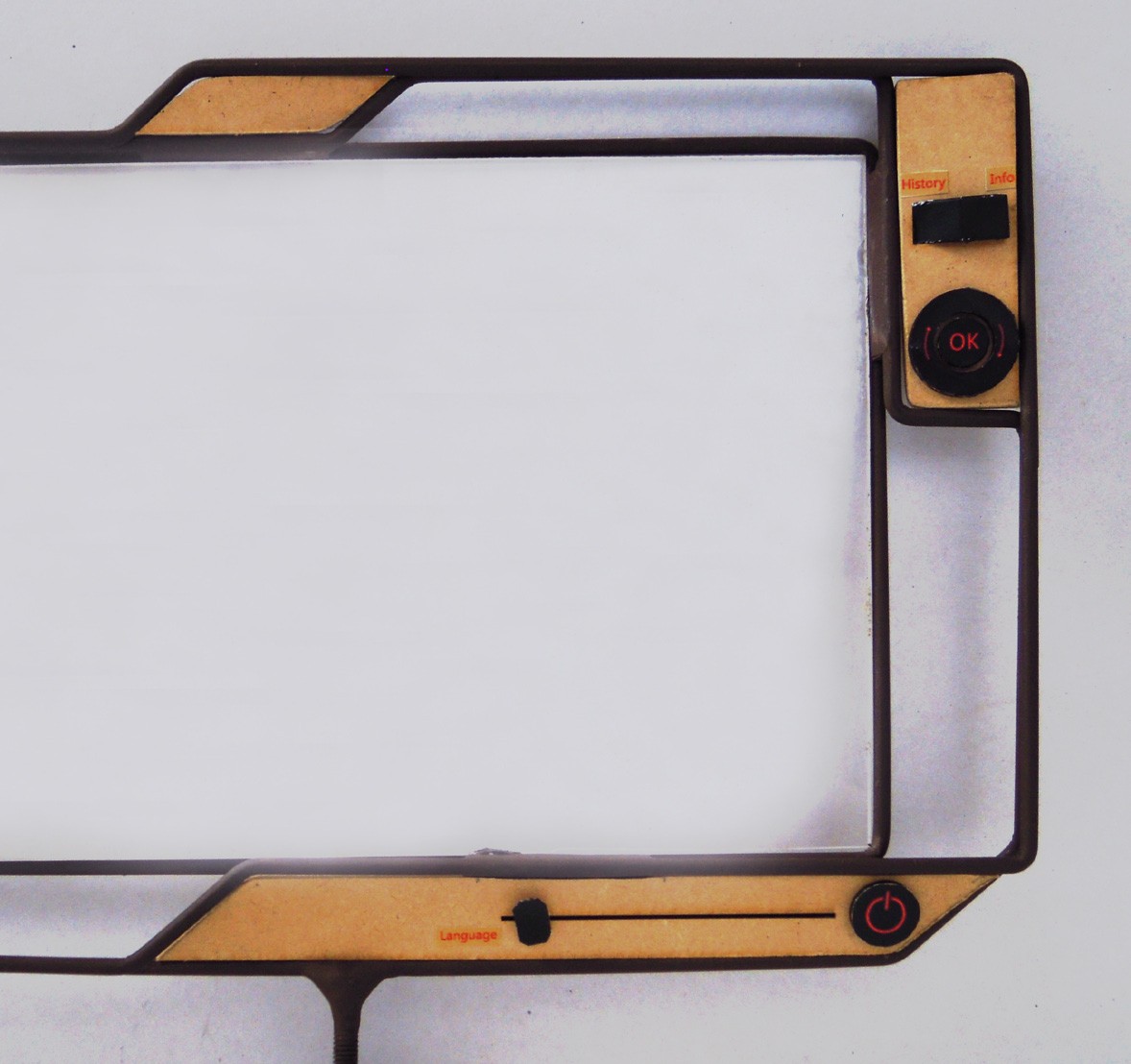
The window frame, with its controls on the right edge and along the bottom.
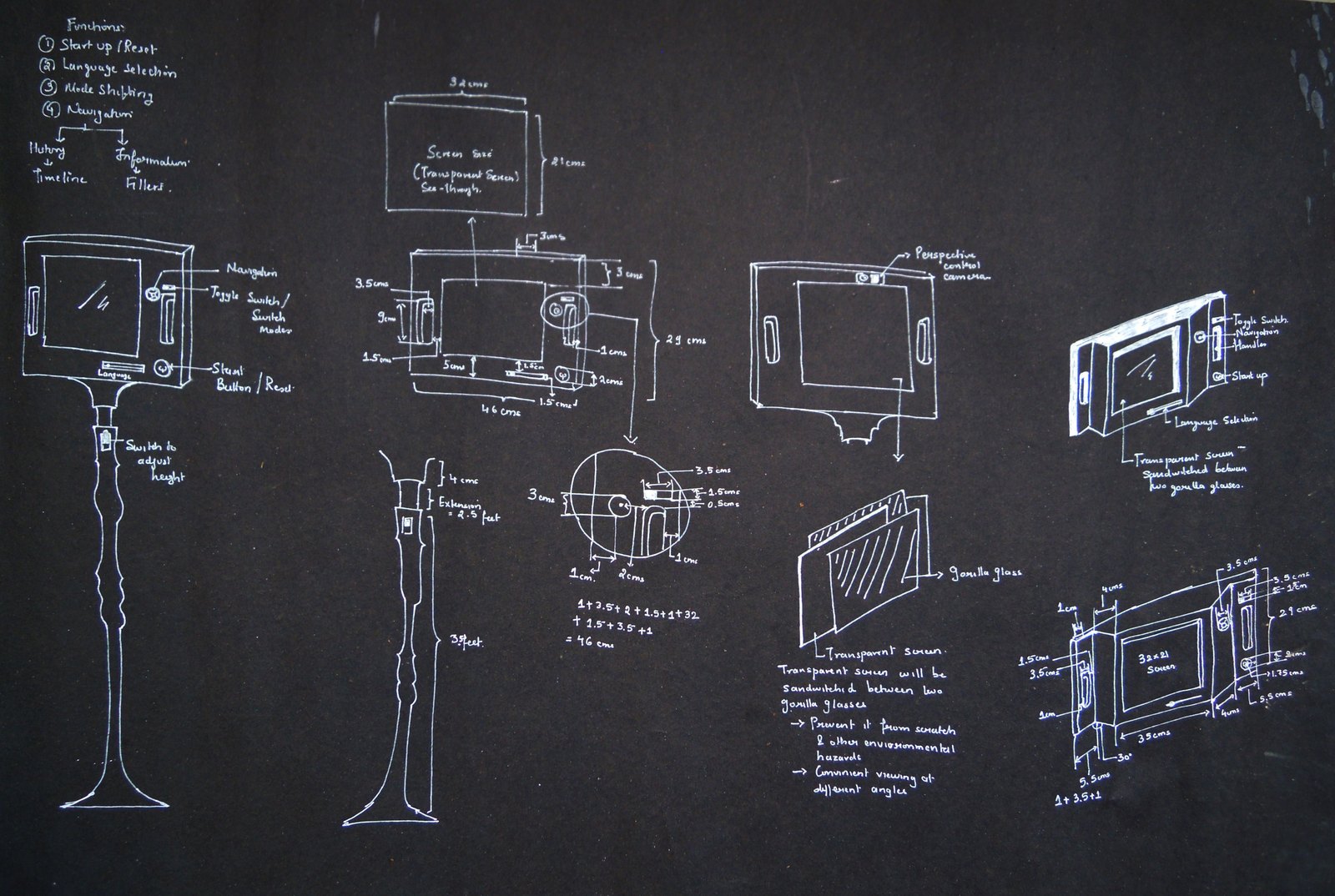
  1. cameraplaced at the top edge to match the visitor’s perspective
  2. switchtoggles between history and information mode
  3. scroll and pressmoves through the timeline or filters information
  4. sliderselects the language
  5. start and reset
  6. ball and socket jointrotates the window fully and tilts it 45 degrees
i.

a plural place

The walled city grew over generations without a plan: pols, havelis, gates, temples and mosques, formal and informal markets, narrow lanes and loud streets. Tourists, students and people from the new city each read it differently. Field visits, readings and a conversation with the architect Yatin Pandya framed the project: work with the experience of the place, not only its architecture.
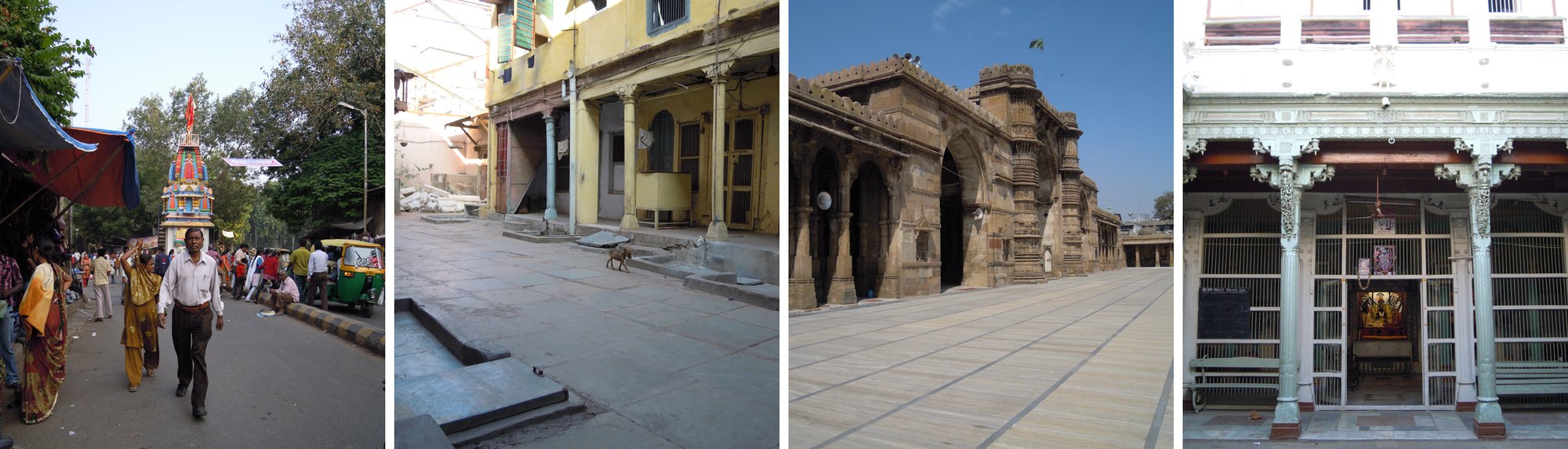
Four photographs of the old city: a busy street, a pol, a stone mosque courtyard and a carved haveli entrance.
ii.

a system for a heritage walk

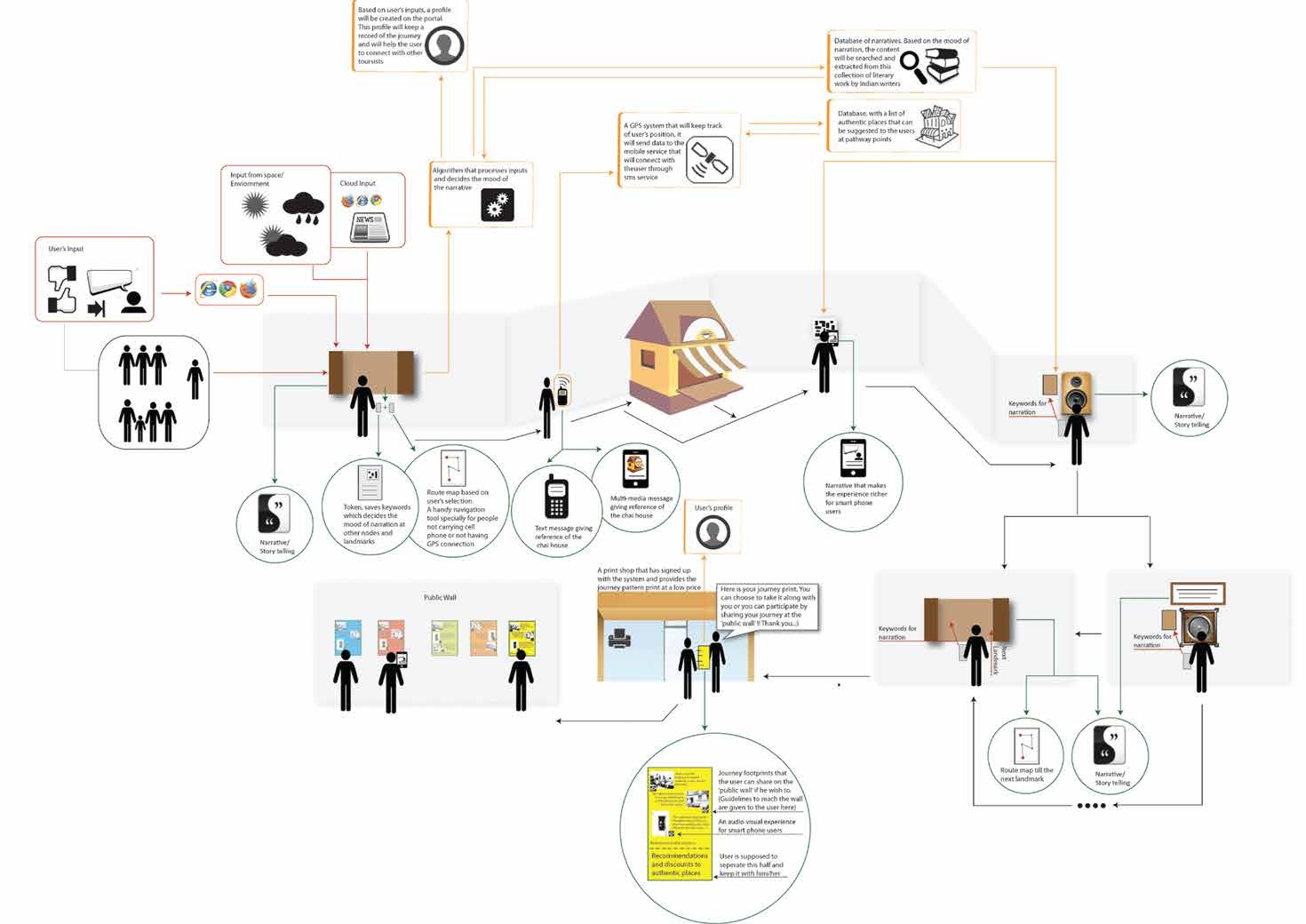
An early concept imagined the whole walk as a system: visitors set their interests, installations along the route tell stories chosen to match their mood and the weather, a print shop turns the journey into a map, and visitors pin it to a public wall.

Concept drawing of the heritage walk system: visitor inputs, a narrative engine, installations along the route, printed journey maps and a public wall.
iii.

sketching the frame

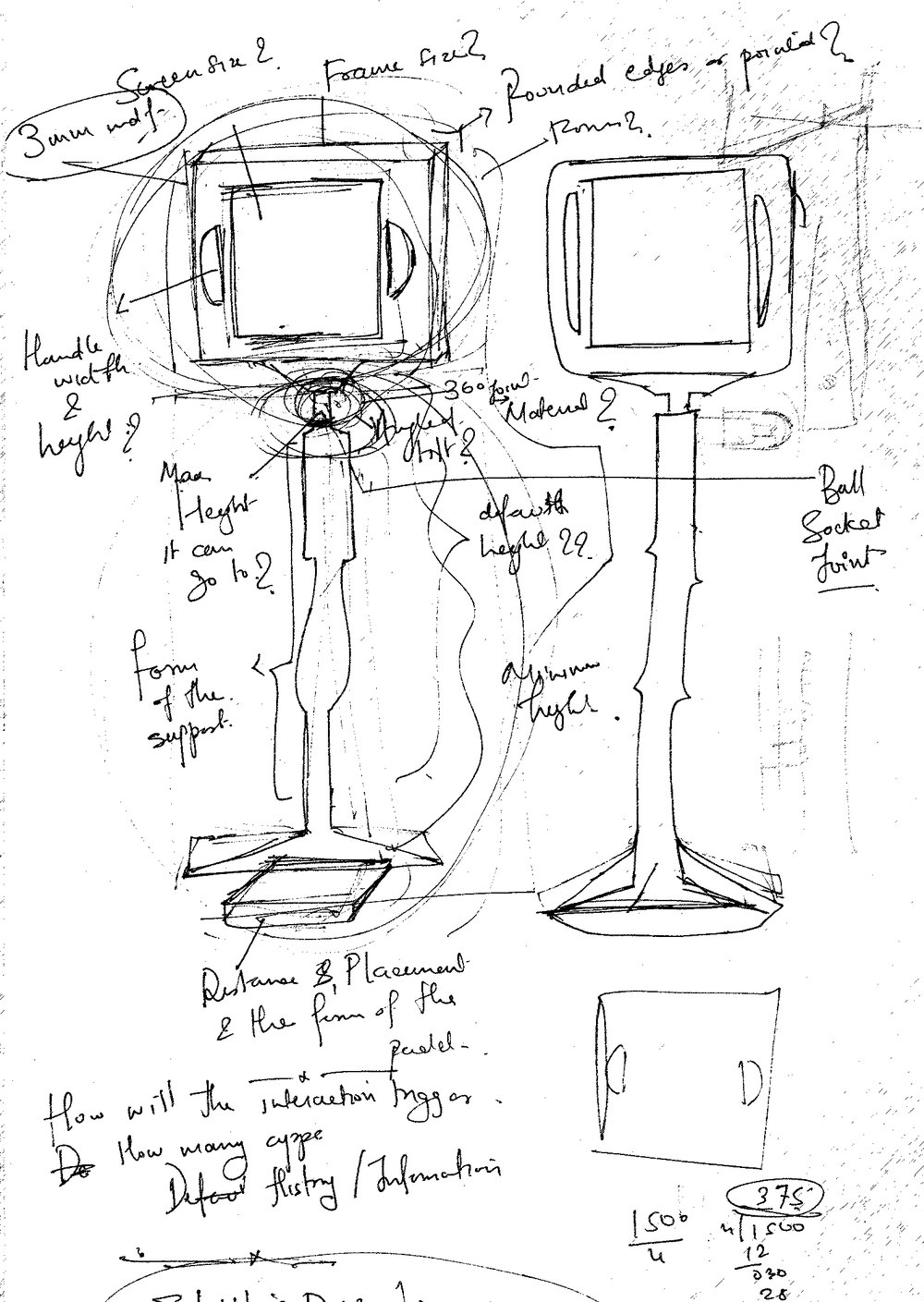
The idea narrowed to one object: a window you hold up to the street. We sketched its height, handles and stand, then drew it full size on a blackboard before cutting the first models.

Pencil sketch of the frame on a stand, with notes on height and handles. White chalk drawings of the frame and its controls on a blackboard.
iv.

a frame that turns

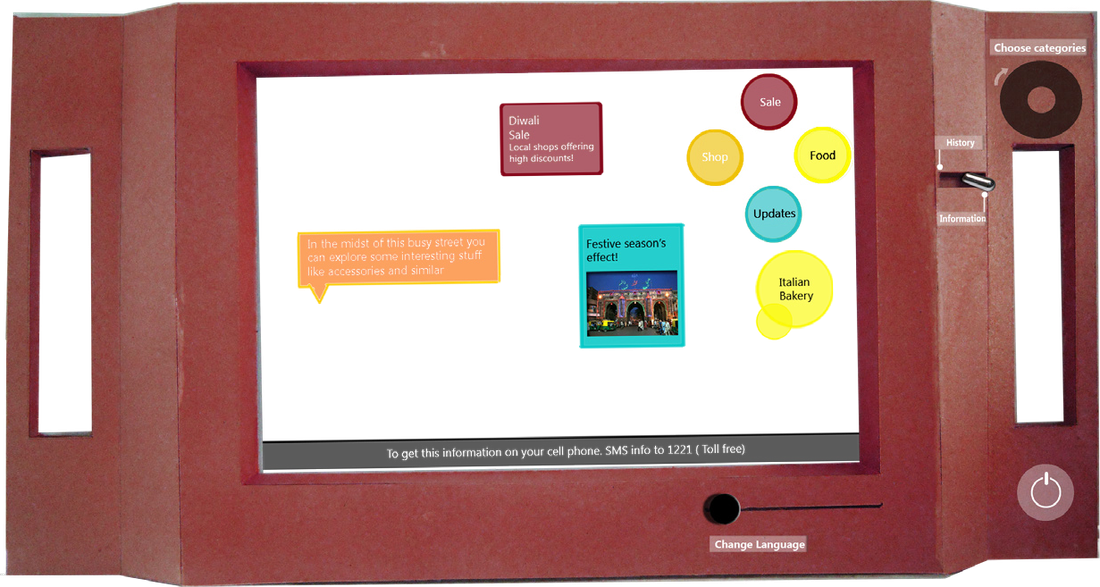
A one-to-one board model came first, then the final form: three overlapping frames, a nod to the layered city. It rotates fully and tilts 45 degrees, so it can take in the street around it.

The first board model of the frame, with the interface placed on screen. The final frame: overlapping wooden outlines with controls on the right.
v.

two modes on one screen

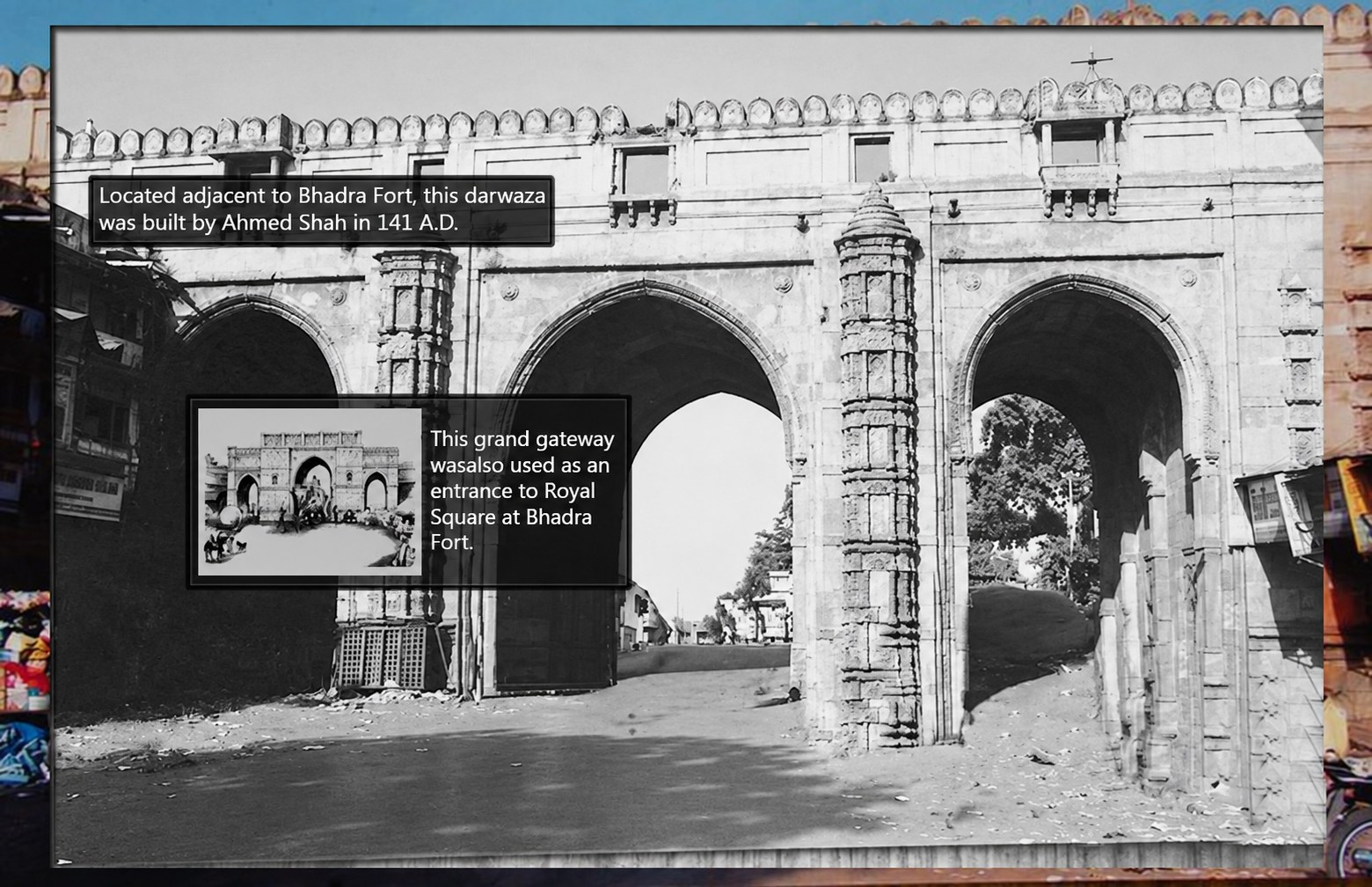
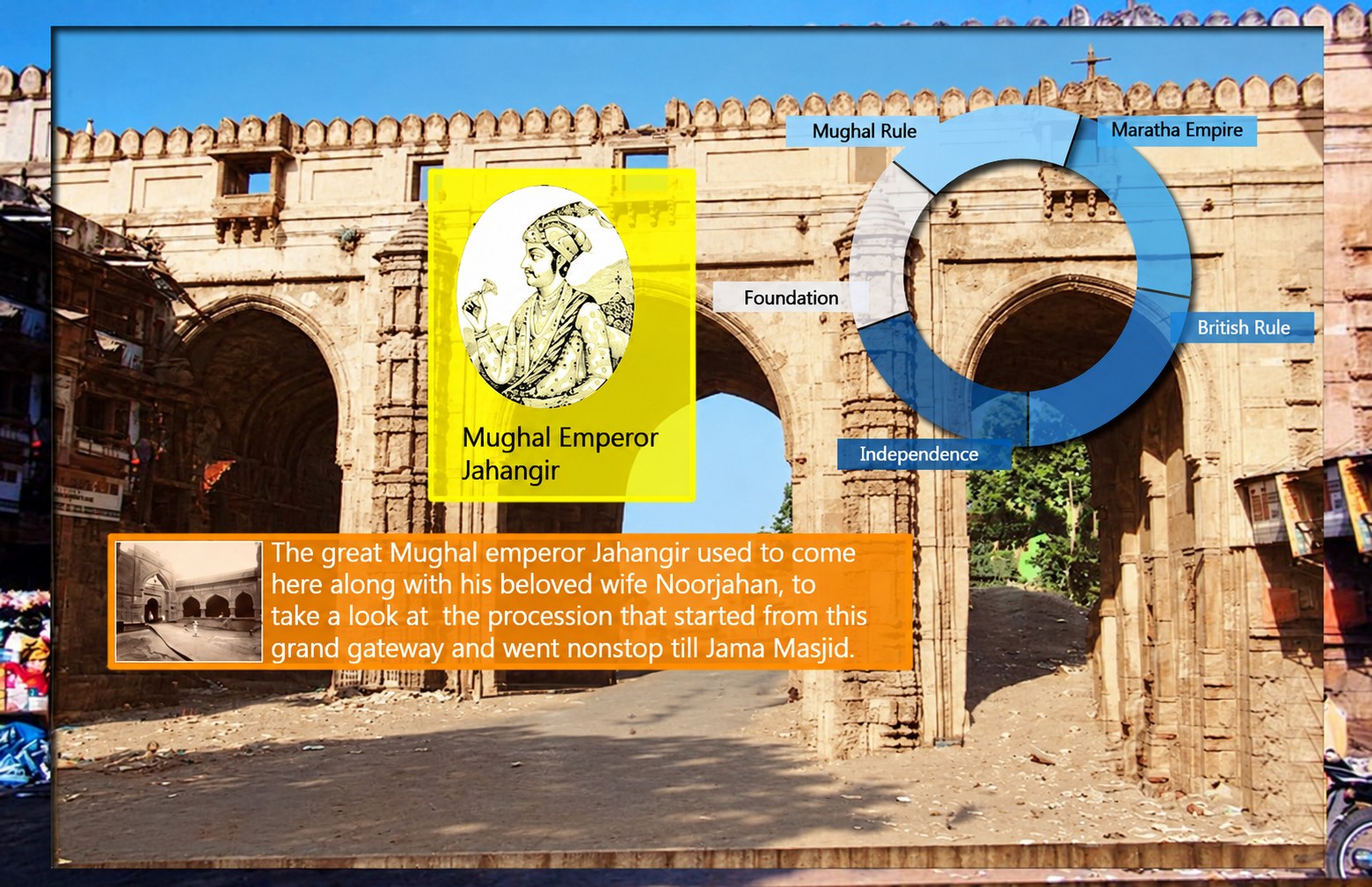
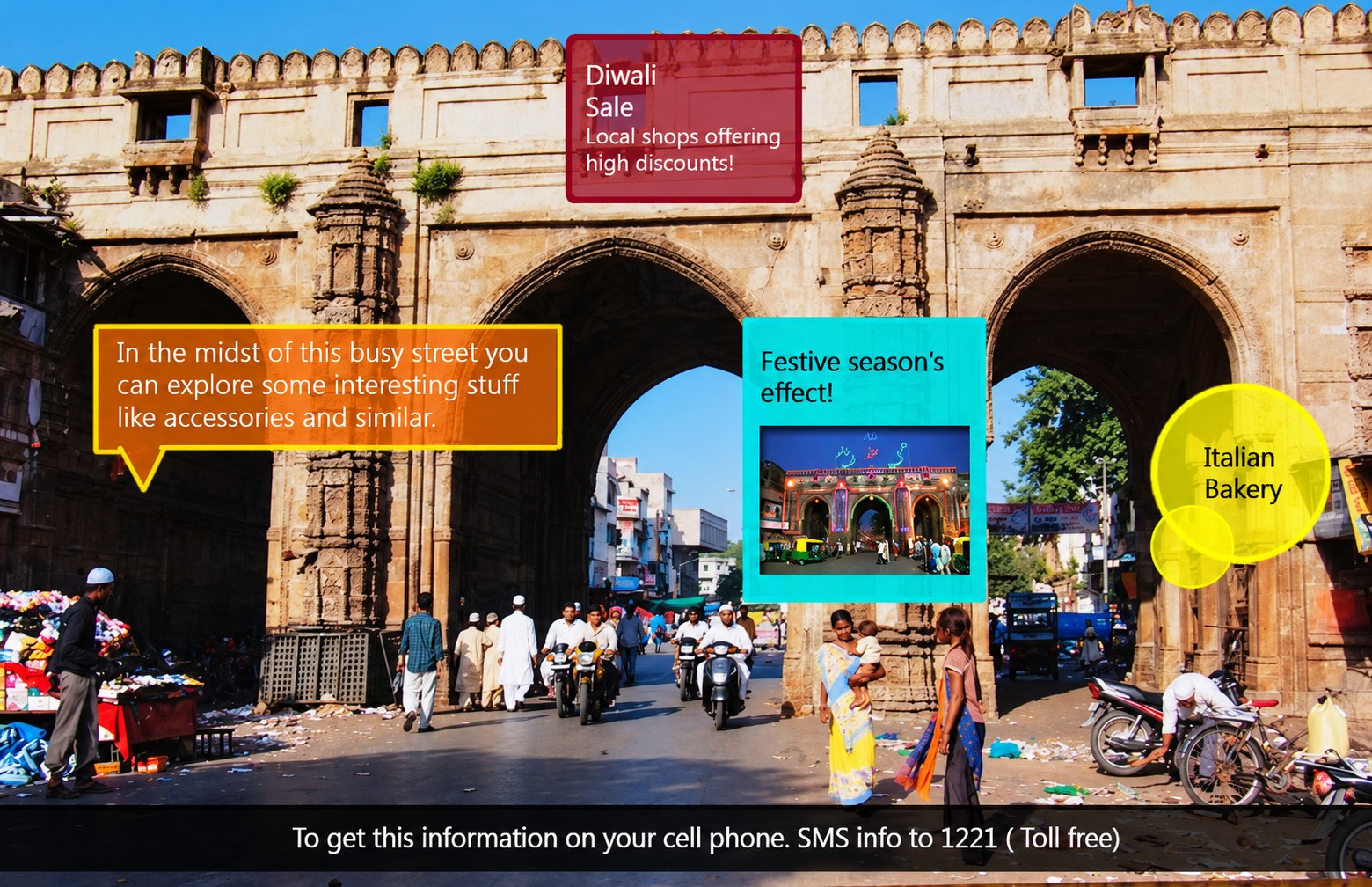
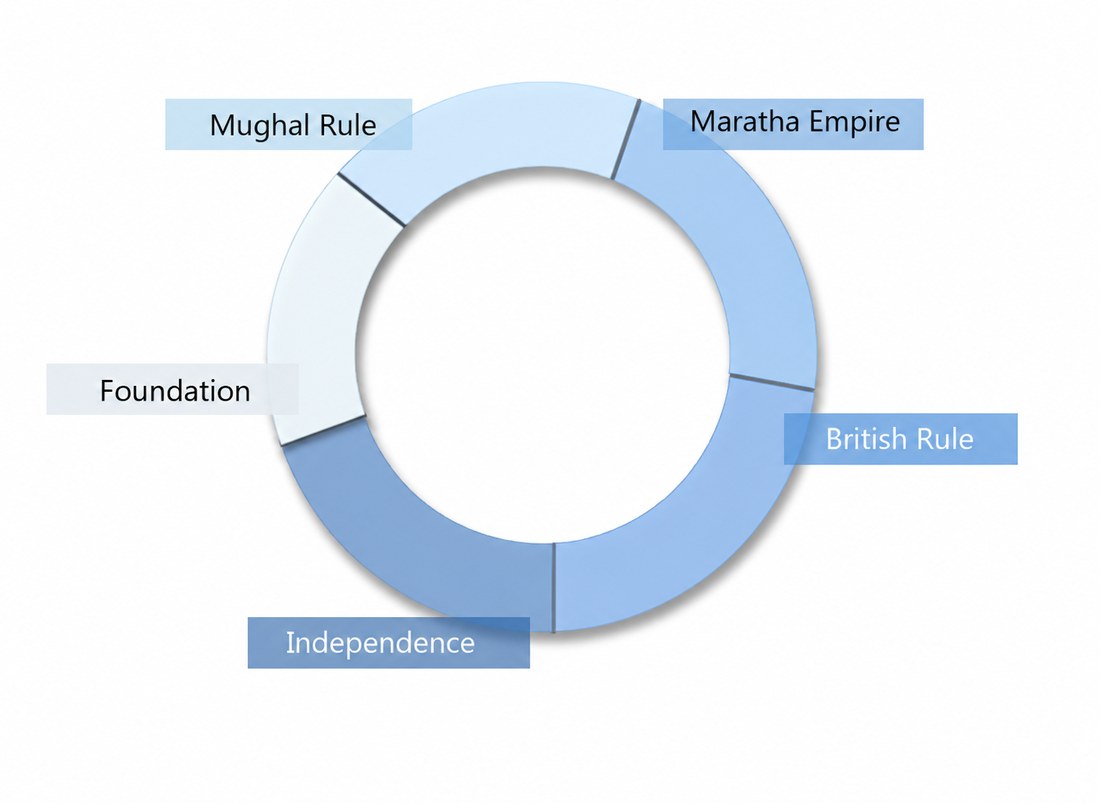
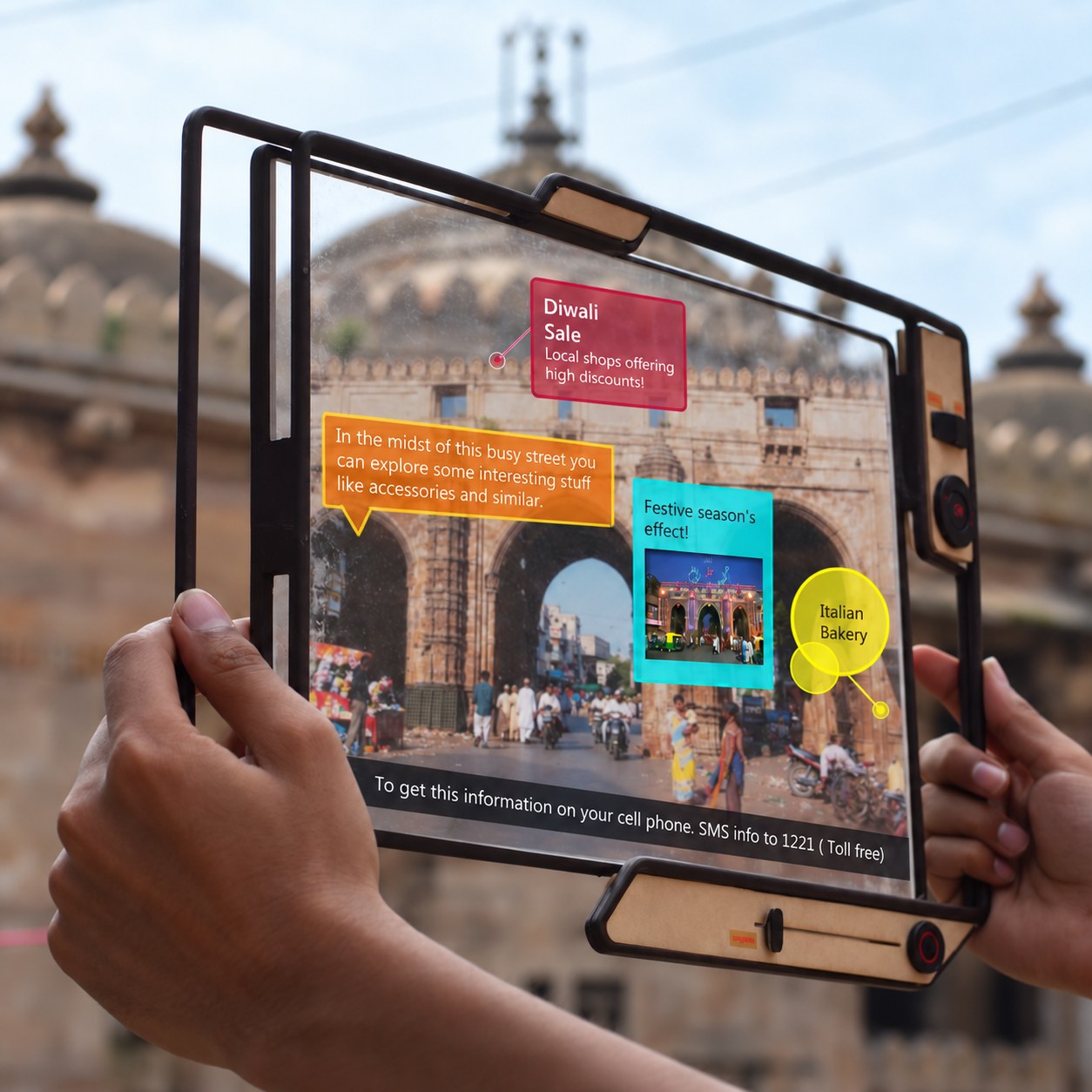
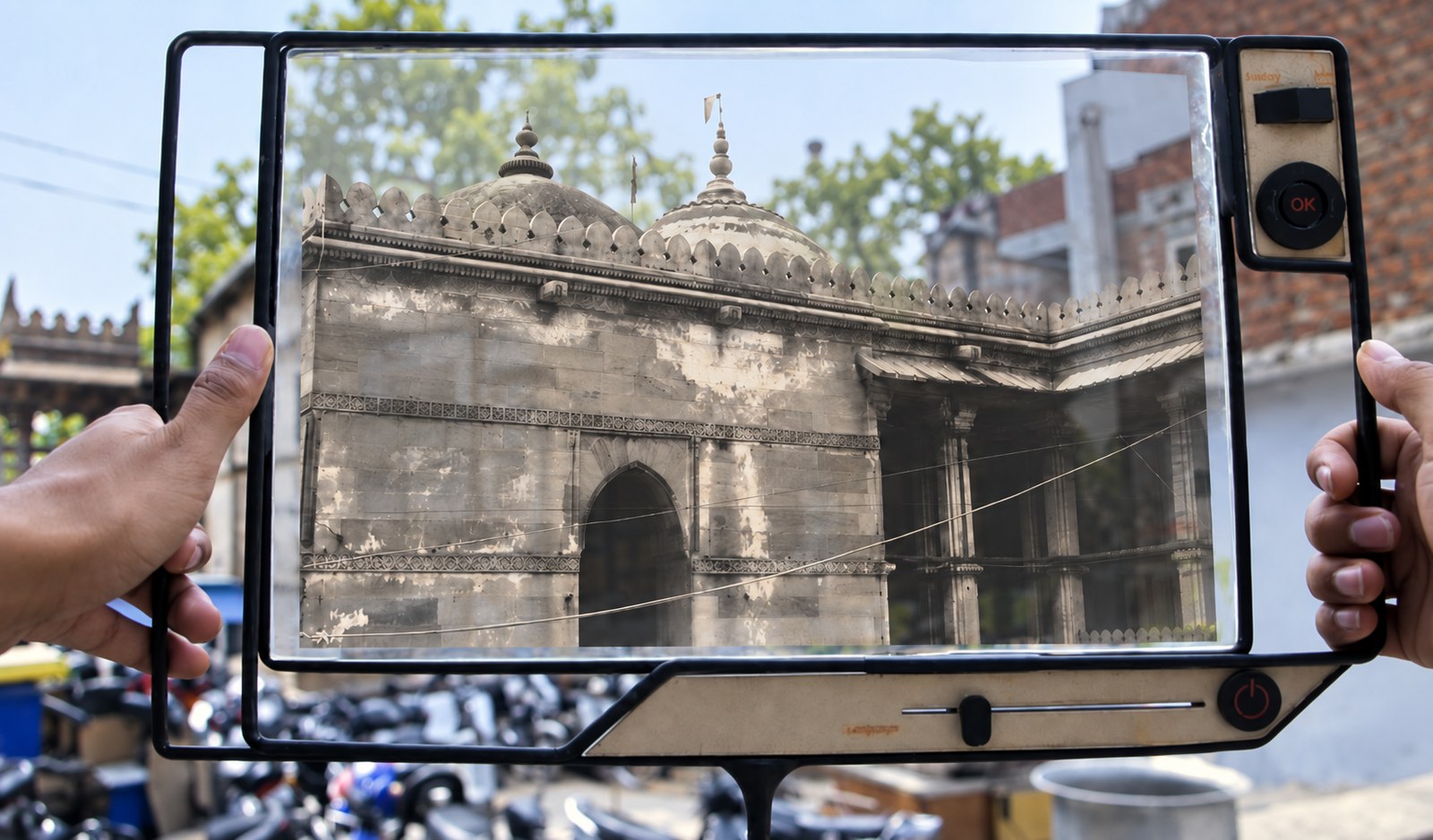
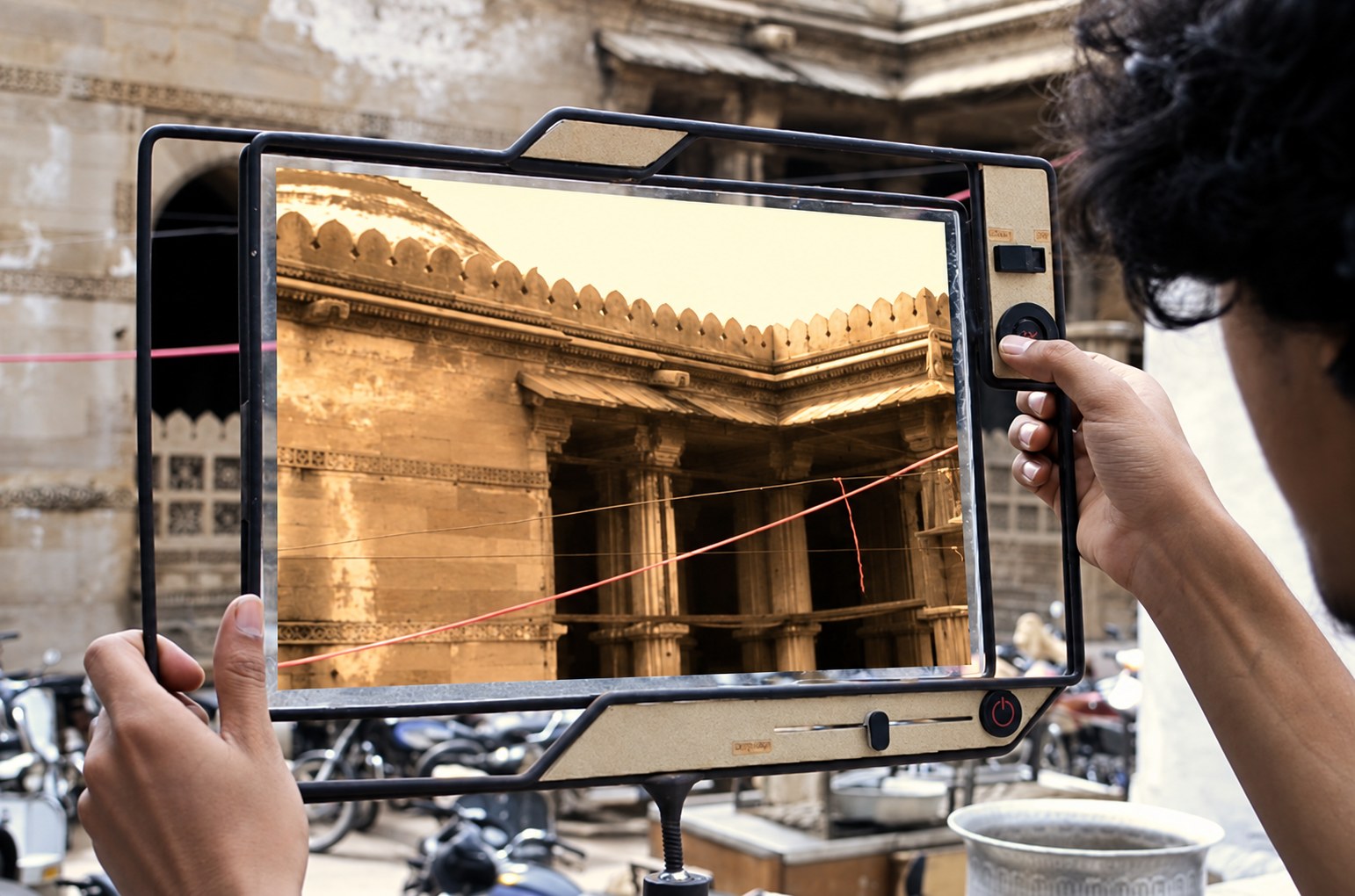
We designed the screens over Teen Darwaza, a fifteenth-century gateway. History mode places the gateway on a timeline: Foundation, Mughal rule, the Maratha empire, British rule and Independence. Turning the control moves through the eras, and each one brings its own stories and images. Information mode shows the same street today: festival sales, shops, bakeries and local news, with an option to receive it by SMS.

History mode: the gateway in black and white with notes on its foundation.
history mode, Foundation
History mode in the Mughal era, with a portrait of Emperor Jahangir and the era timeline.
history mode, Mughal rule
Information mode: the gateway today with labels for a Diwali sale, a festival and an Italian bakery.
information mode
The timeline control: a ring divided into Foundation, Mughal rule, Maratha empire, British rule and Independence.
the timeline, turned with one control
vi.

looking through it

Held up to the street, the window shows what is around now; held up to a tomb, it shows the same courtyard in an earlier era. These views are composed mock-ups of the experience.

Concept view: information mode seen through the frame, with labels for a Diwali sale, a festival and an Italian bakery over Teen Darwaza.
Through the frame, the courtyard appears in black and white as it was at its foundation. The same courtyard in sepia, a later era on the timeline.
vii.

a staged walk

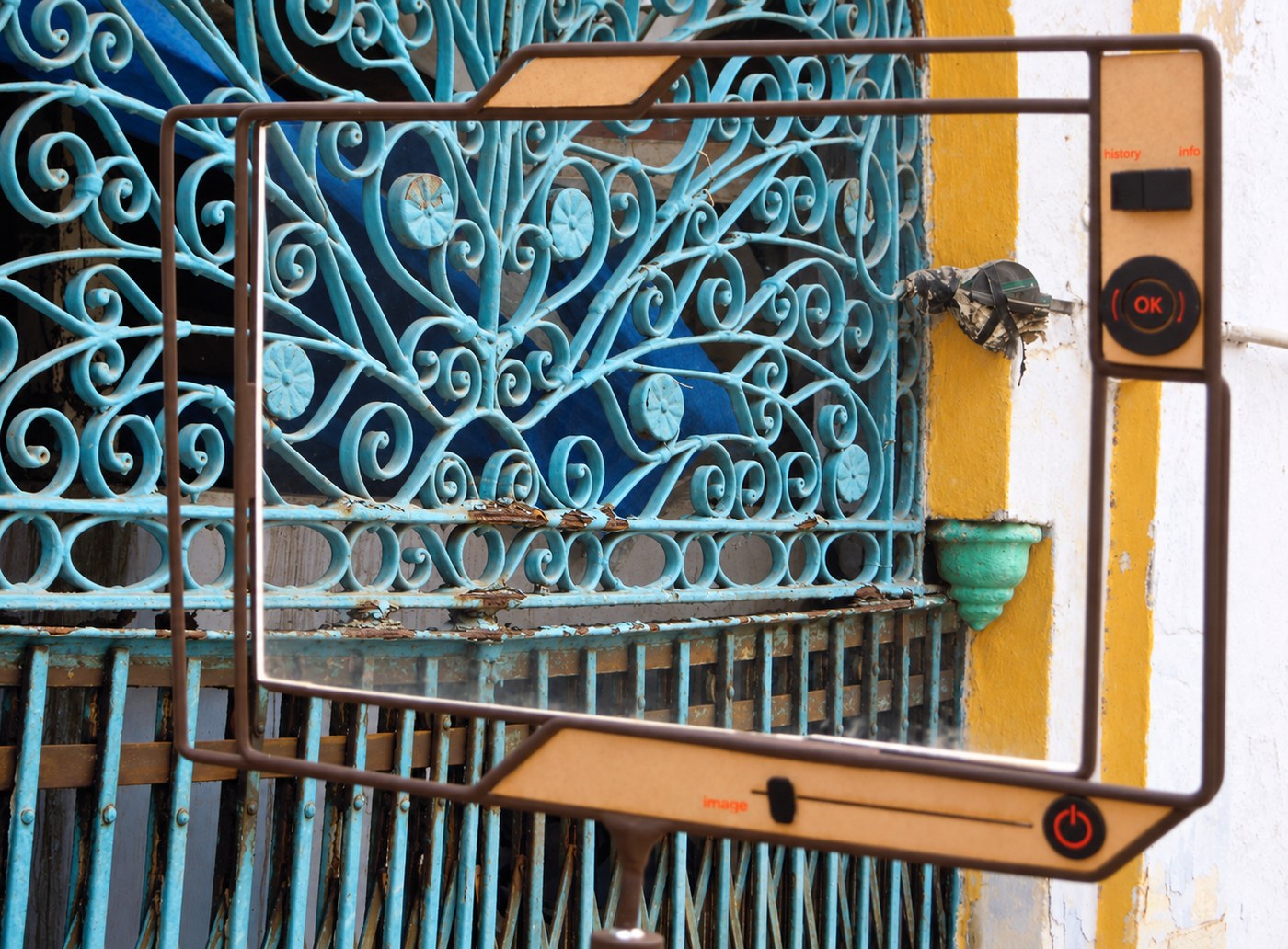
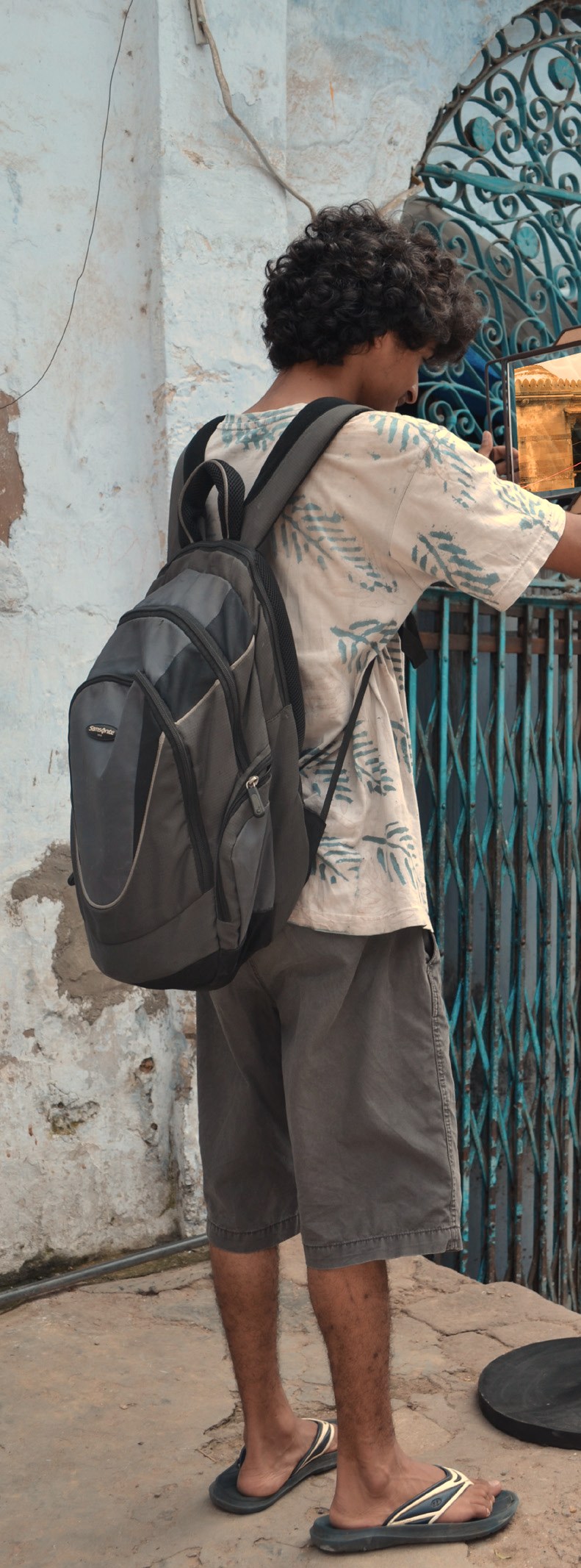
The window stayed a concept and a working mock-up. To test it in place, we took the frame into the walled city and staged a visitor’s walk with it: finding the window, trying the modes, then leaving it to go and eat at a place it recommended.

The frame held against a blue iron grille in the old city. A visitor with a backpack, seen from behind, using the frame beside a blue doorway.

After the diploma, the idea was developed further with Jayant Khanuja at the MICA Comcubator, Ahmedabad, and it was featured in The Times of India.