Neeta Khanuja

research  /  cultural probes

cultural probes to understand students’ mental wellbeing

Students may avoid seeking mental health support because of self-stigma. Earlier studies of student wellbeing used anonymous surveys, which gave numbers, or interviews, which gave stories but were not anonymous.

We designed a cultural probe as an anonymous self-reporting tool. Over six days, university students wrote, scribbled and drew about their perceptions, struggles and ways of coping. We asked how to design such a probe, and how students’ reflections could inform design for their mental wellbeing.

IASDR 2023 pictorial, with Joana Lameiras, Madalena Freire, Hugo Nicolau, Jodi Forlizzi and Valentina Nisi
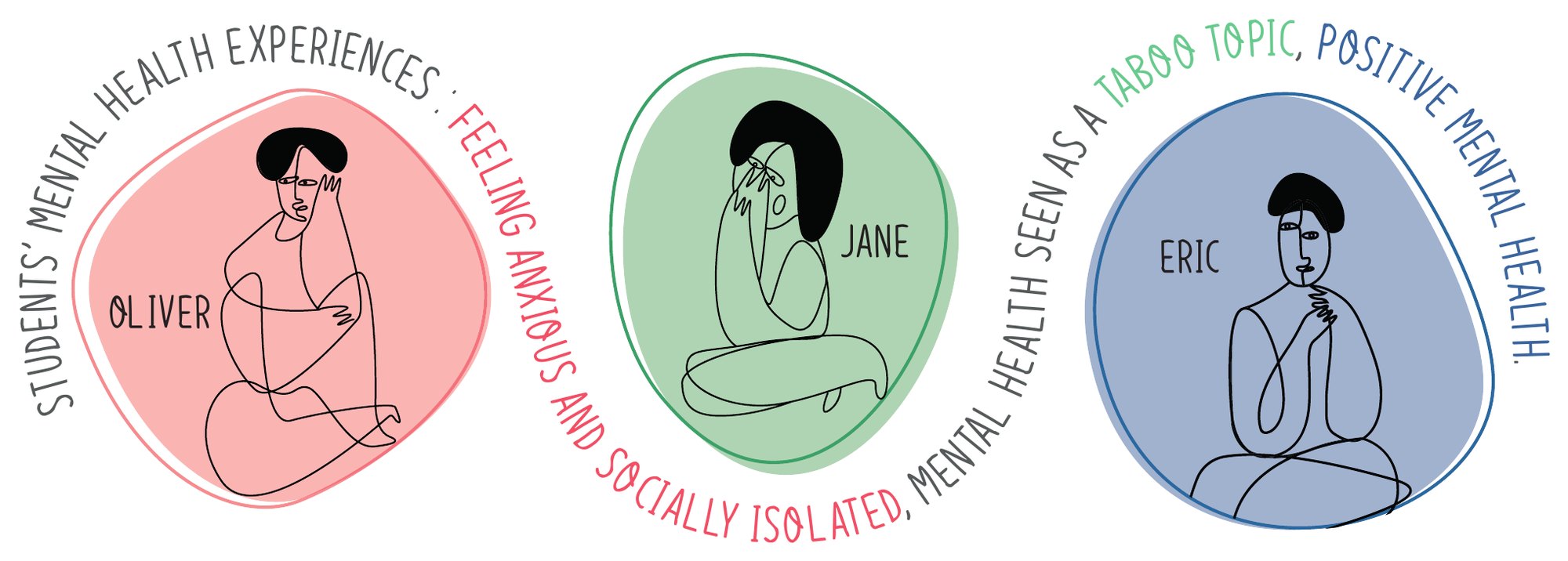
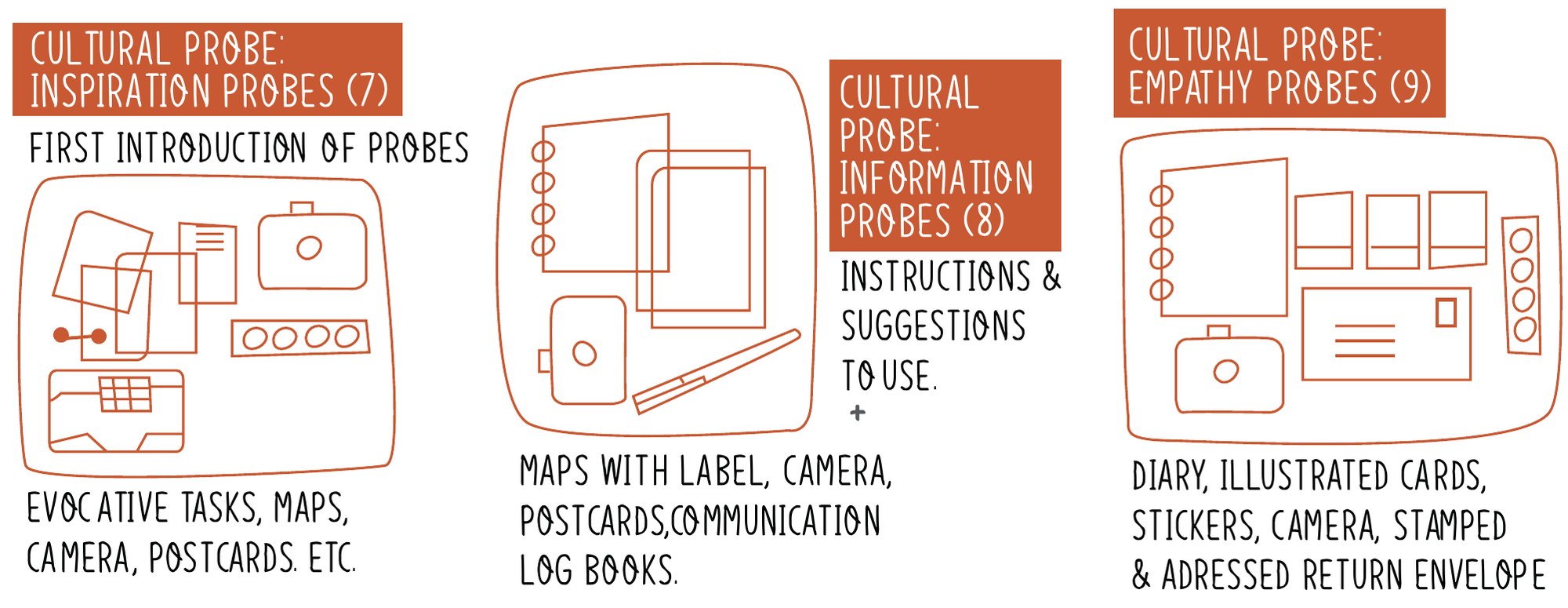
Illustration of three students drawn in single lines, Oliver hugging his knees, Jane with her hand on her face, and Eric thinking, with the text: students’ mental health experiences: feeling anxious and socially isolated, mental health seen as a taboo topic, positive mental health.
i.

three kinds of probes

Gaver introduced cultural probes to collect inspiration. Later work used them as information probes, with clearer instructions, and as empathy probes, followed by an interview about what participants made. Ours followed the empathy probe: a kit, then an optional follow-up interview.

Three line drawings of probe kits: inspiration probes with evocative tasks, maps, camera and postcards; information probes with labelled maps, camera, postcards and log books; empathy probes with a diary, illustrated cards, stickers, a camera and a stamped return envelope.
ii.

designing the probe

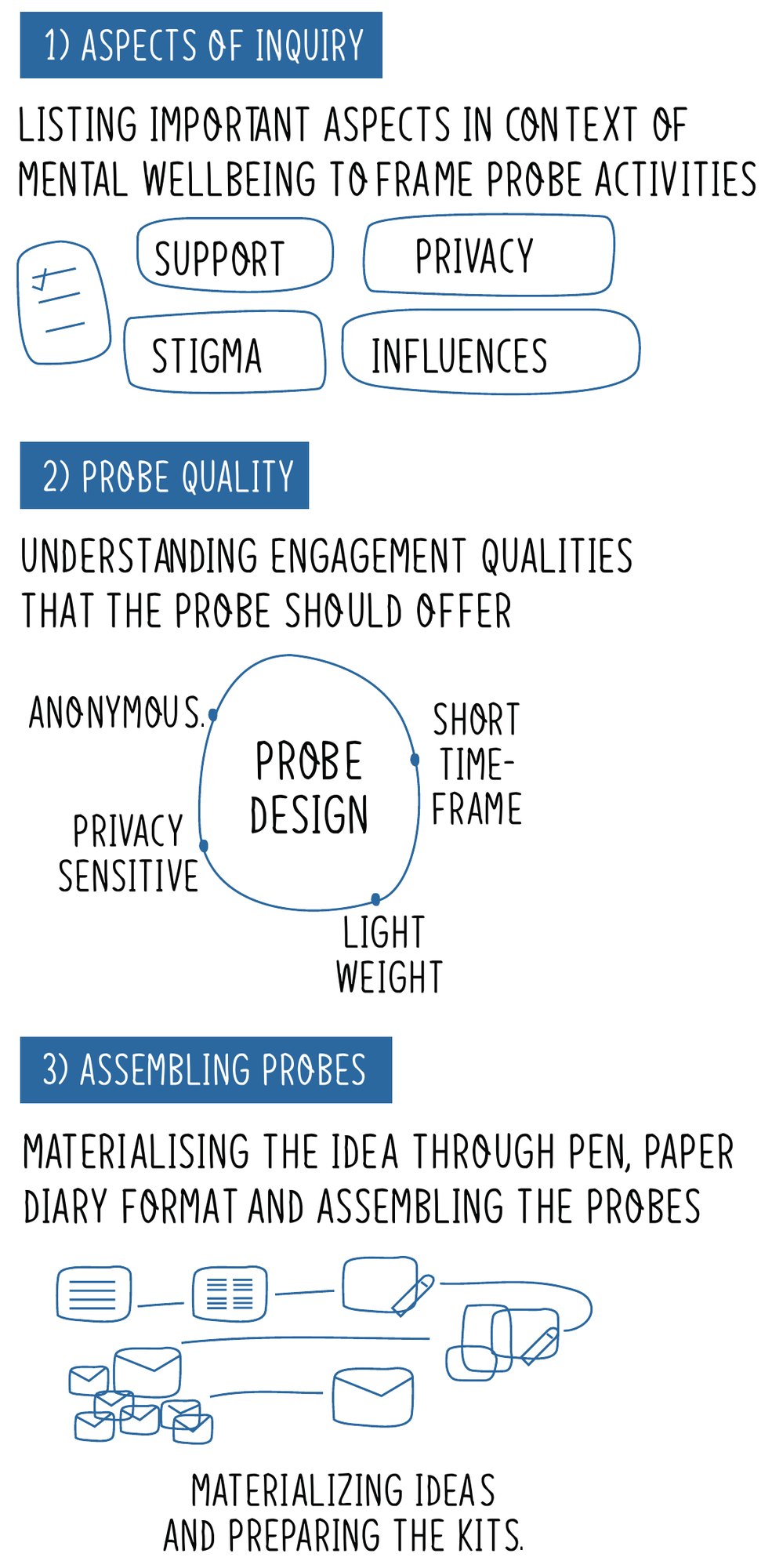
Informal conversations with students and with the university counselling service set four aspects of inquiry: support, privacy, stigma and influences. The probe had to be anonymous, privacy sensitive, lightweight and short.

We chose pen, paper and cards. The kit moved from a booklet to a foldable zine to cards, which cost little to produce and showed one task a day.

Probe design steps: 1, aspects of inquiry: support, privacy, stigma, influences. 2, probe quality: anonymous, short time frame, light weight, privacy sensitive. 3, assembling probes with pen, paper and envelopes.
iii.

a pilot with four students

Four participants tried the kit, followed by four interviews. Two changes came from it.

  • day seven removedDay 7 asked students how they would feel after failing an exam or missing a deadline. Pilot participants found it very uncomfortable, so the study became six days.
  • any languageThe probe was written in English, but participants felt more comfortable in their own language. A new card said they could answer in any language.
iv.

distribution through proxies

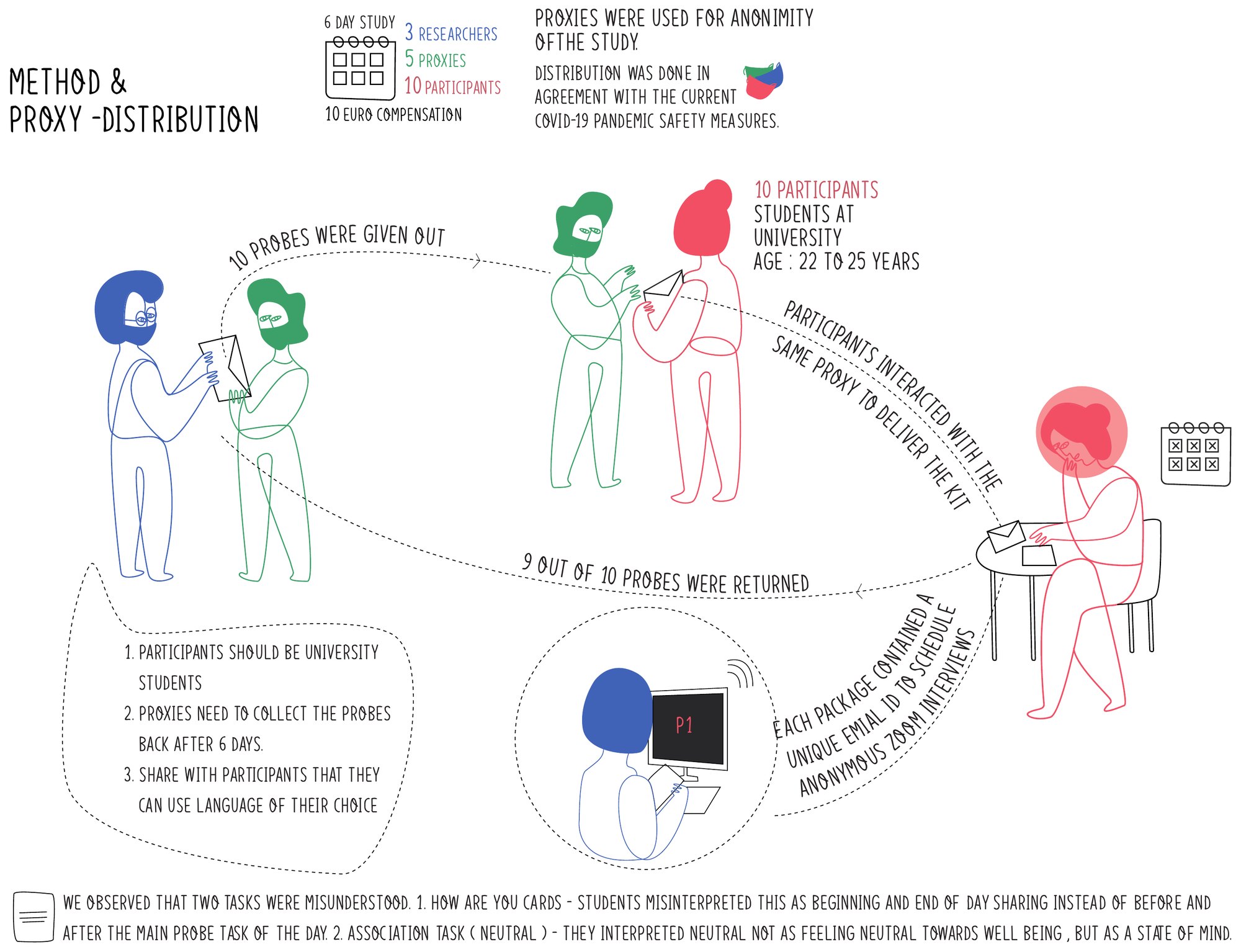
To keep participants anonymous to the researchers, five proxies handed out and collected the kits. Each kit held a unique email ID, so a participant could book an anonymous follow-up interview on Zoom.

Illustration of the proxy distribution: a researcher hands probes to a proxy, the proxy hands them to students, a student fills the probe at home, and joins an anonymous Zoom interview as P1. Ten probes were given out and nine returned.
v.

six envelopes, one a day

An A4 envelope held a welcome card, a thank you card and six small envelopes, one for each day. Every day began and ended with a “how are you” card, so we could see how the task changed a student’s mood.

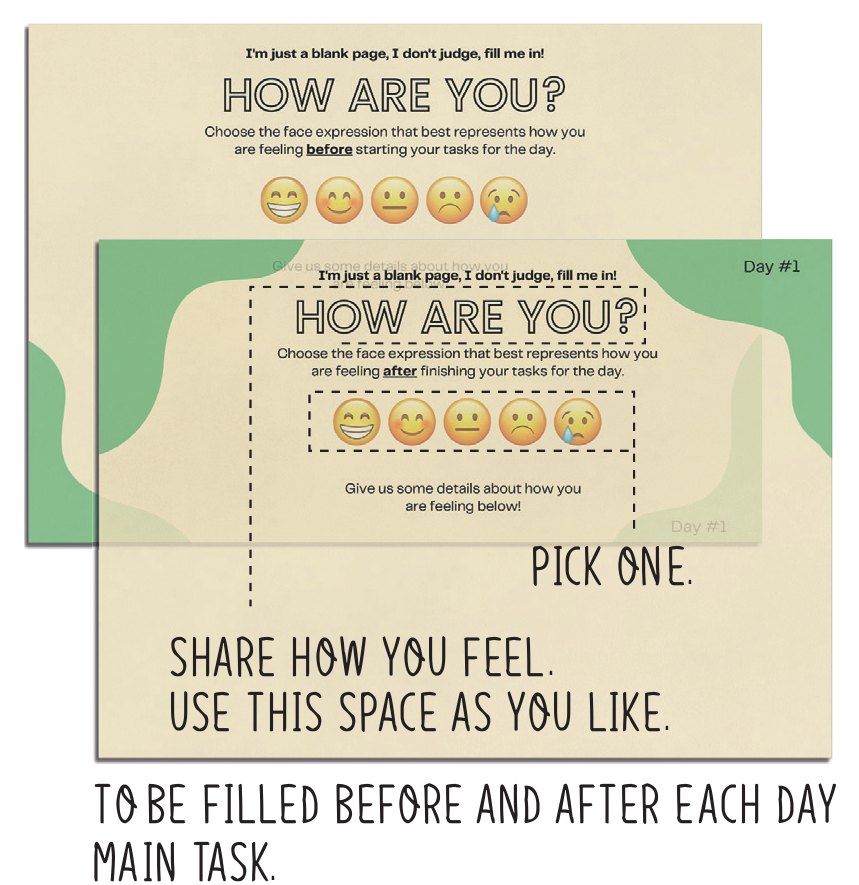
Two how are you cards with five face expressions, to fill before and after the day’s task.
every day · how are youPick a face before and after the task, and share how you feel.
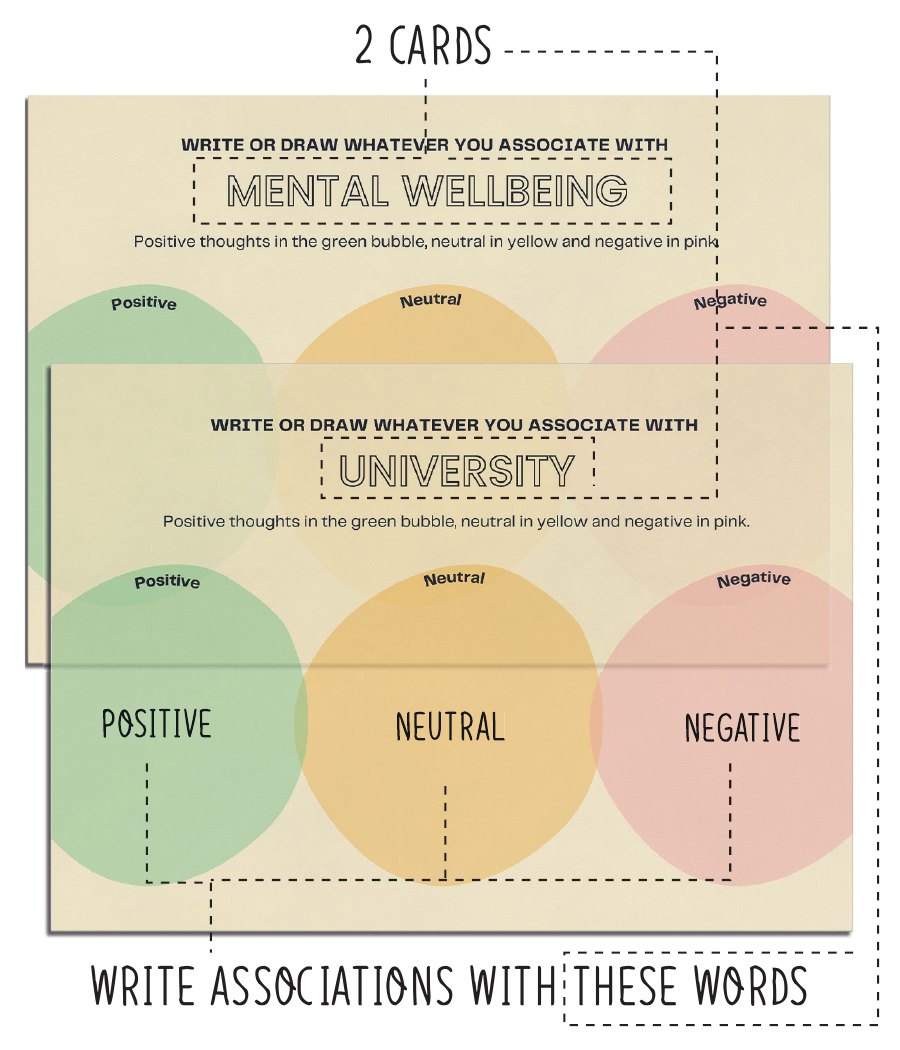
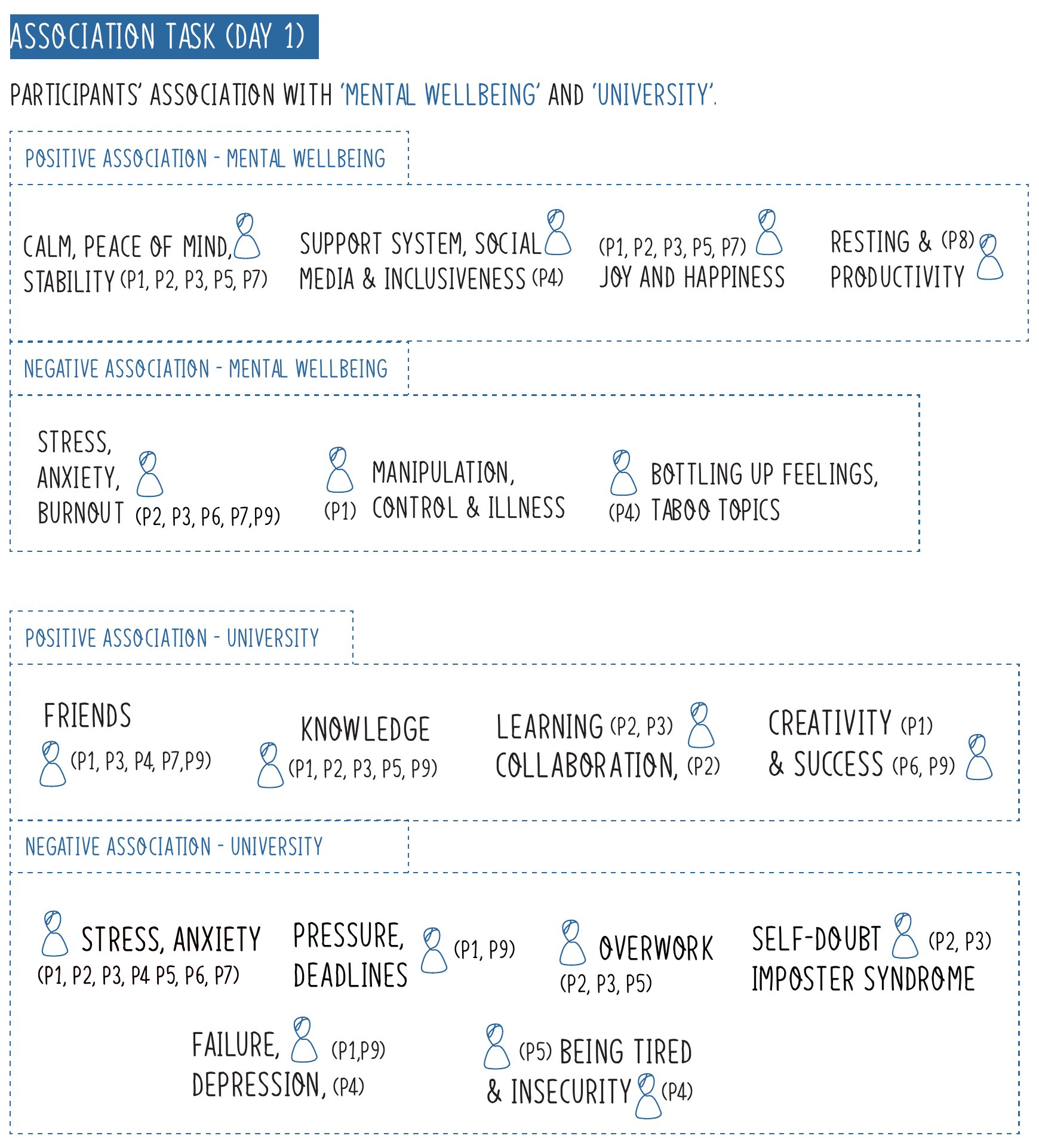
Two association cards, mental wellbeing and university, each with positive, neutral and negative circles.
day 1 · associationWhat you associate with mental wellbeing and with university.
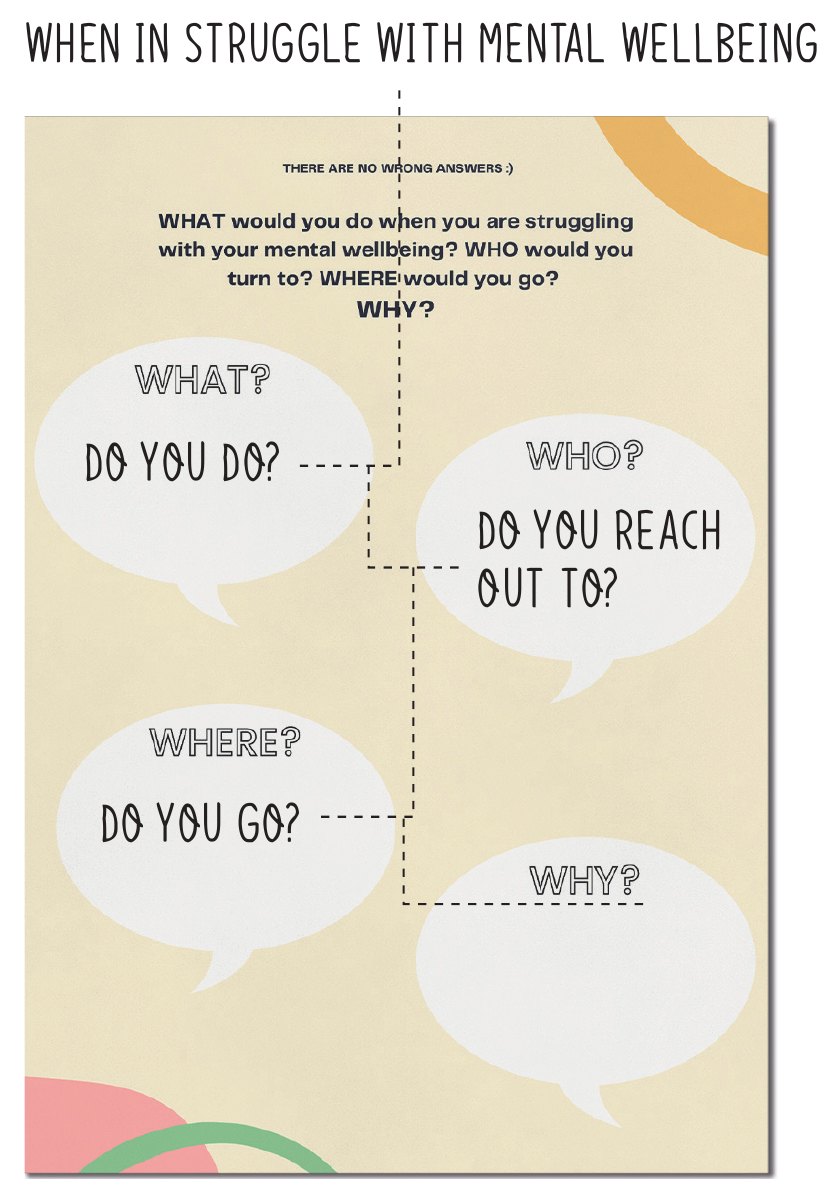
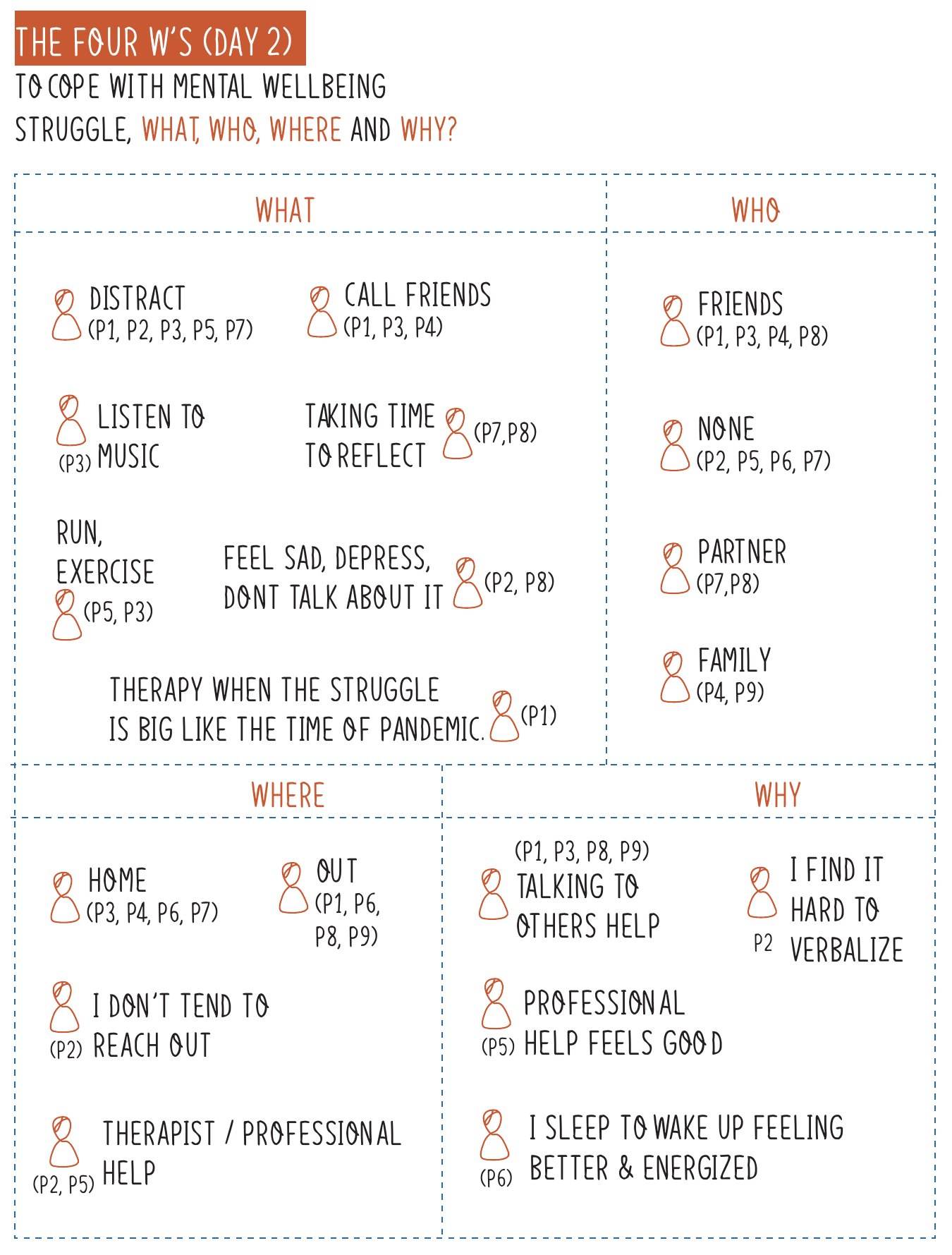
A card with speech bubbles: what do you do, who do you reach out to, where do you go, why.
day 2 · the four W’sWhat you do, who you turn to, where you go and why, when you struggle.
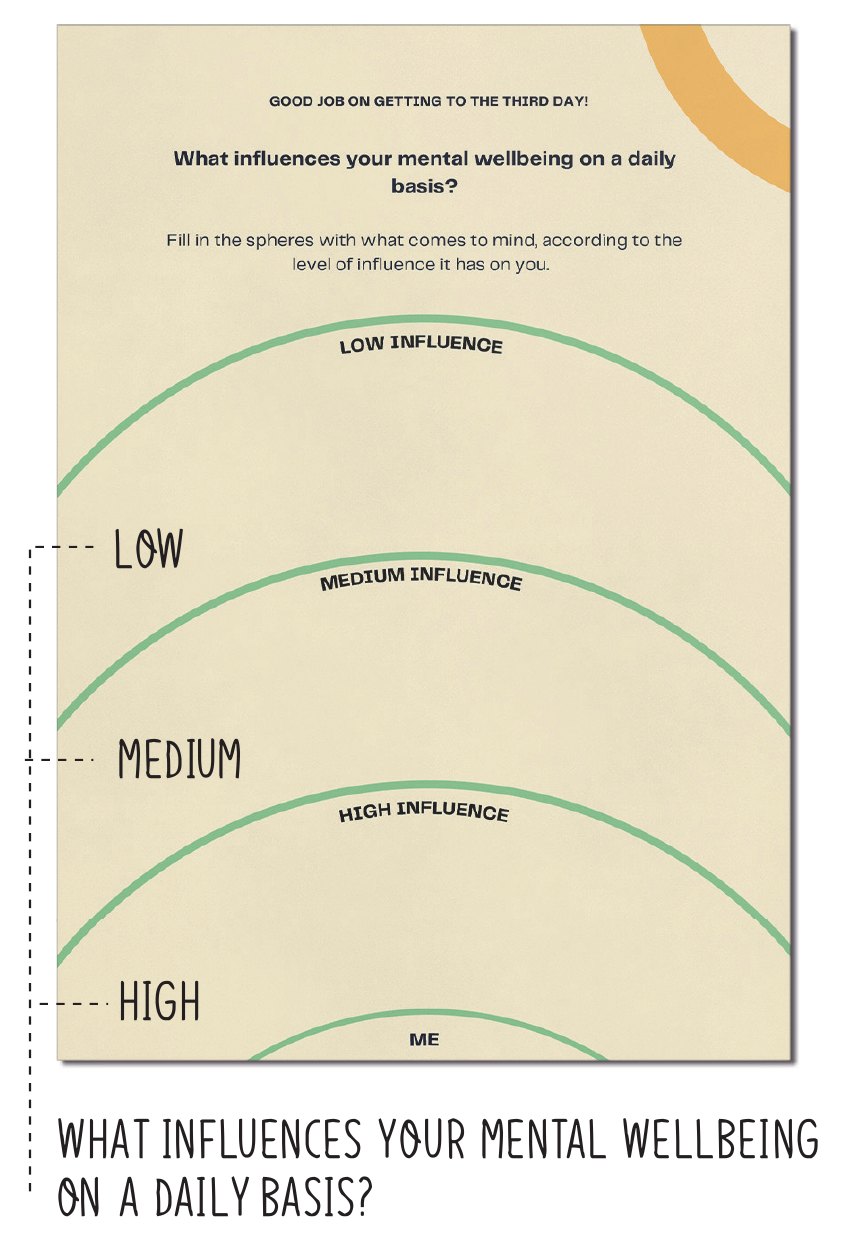
A card with arcs of low, medium and high influence around the word “me”.
day 3 · influenceWhat influences your mental wellbeing every day, and how much.
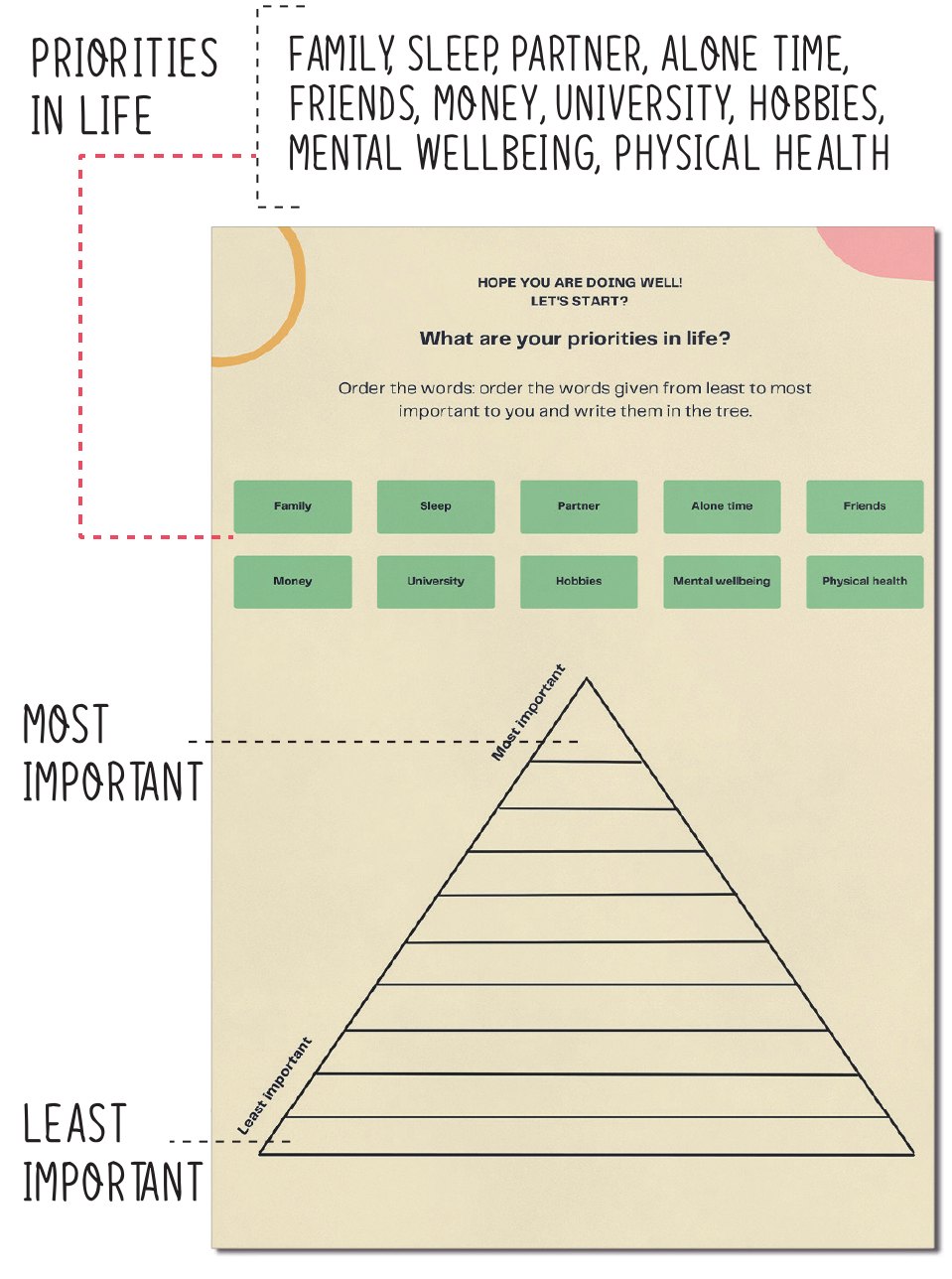
A pyramid card ranking priorities: family, sleep, partner, alone time, friends, money, university, hobbies, mental wellbeing, physical health.
day 4 · prioritiesRank ten parts of life, from least to most important.
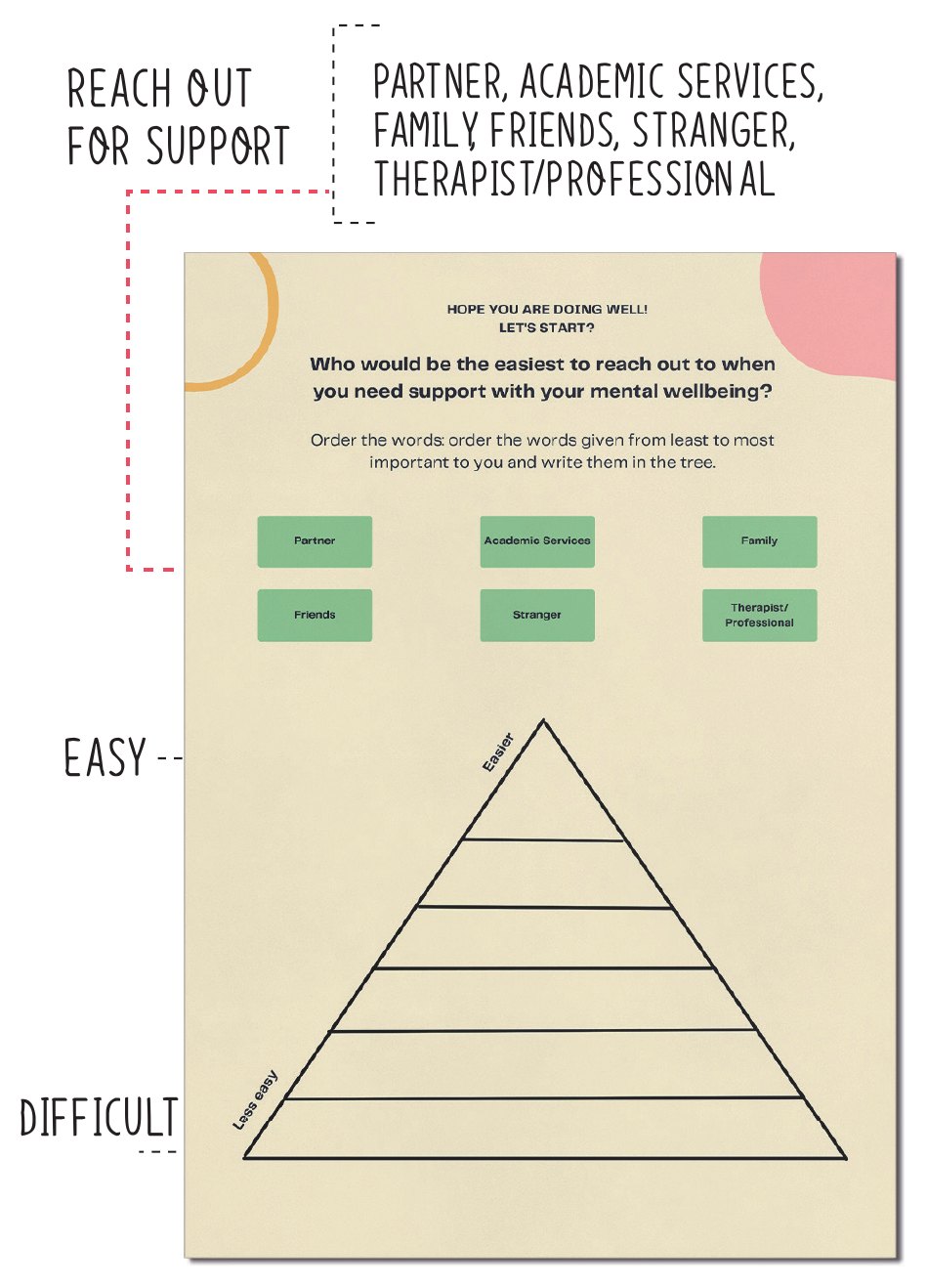
A pyramid card ranking who is easiest to reach out to: partner, academic services, family, friends, stranger, therapist.
day 4 · reaching outRank who is easiest to ask for support.
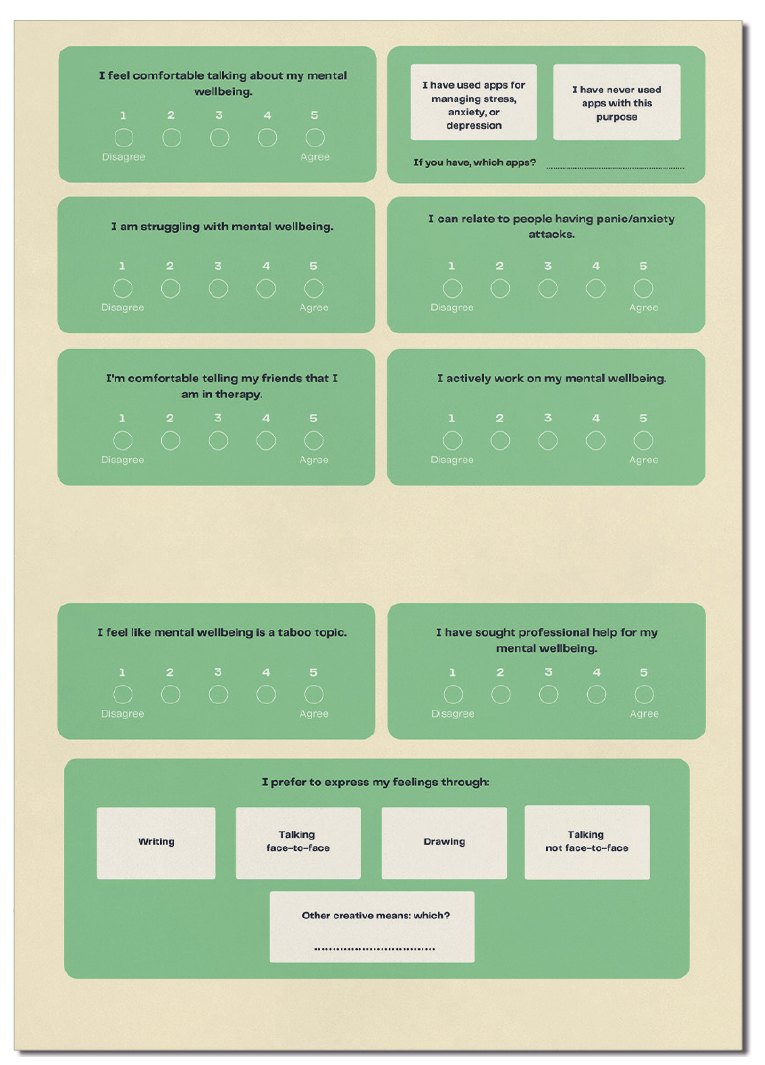
A questionnaire card with seven five-point scales and two multiple choice questions.
day 5 · questionnaireSeven five-point questions and two multiple choice questions on comfort, stigma and seeking help.
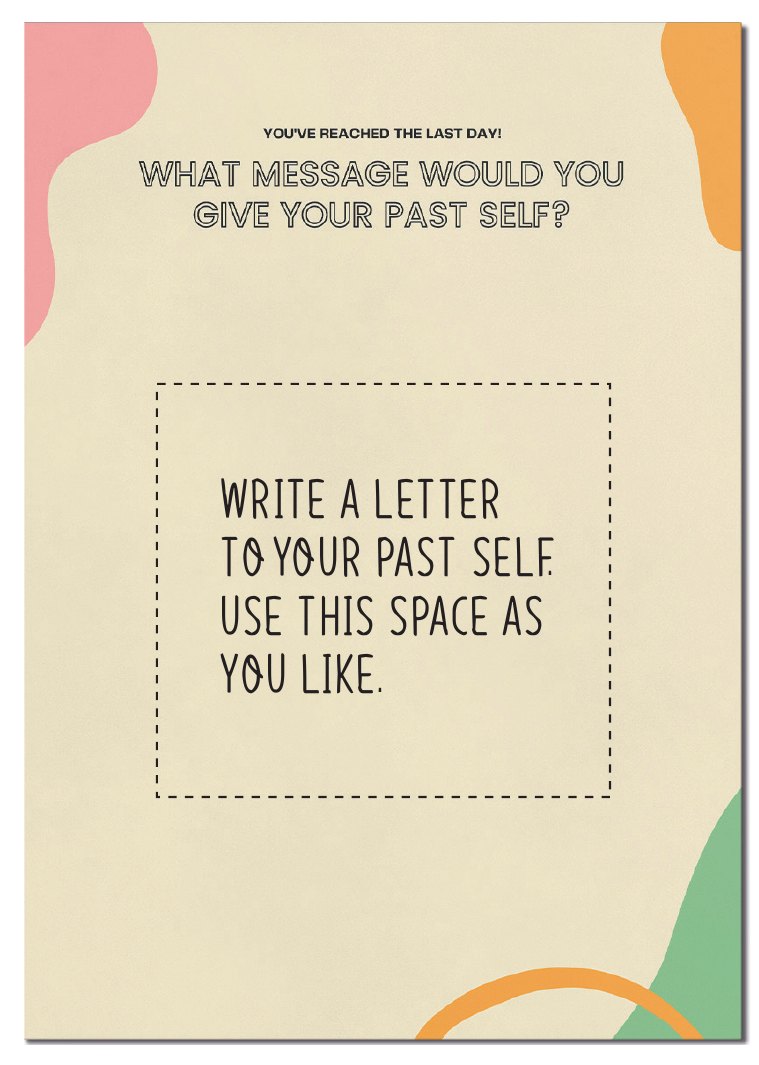
A card asking: what message would you give your past self? Write a letter to your past self.
day 6 · note to selfA letter to your past self.
vi.

what students wrote

Three researchers analysed the kits, two of them fluent in the language students wrote in. We translated, digitised and grouped the insights by each day’s task.

Findings from day 1: positive associations with mental wellbeing such as calm and support, negative ones such as stress and burnout; positive associations with university such as friends and learning, negative ones such as pressure, overwork and imposter syndrome.
Findings from day 2: what students do when they struggle, such as distract, call friends or listen to music; who they turn to; where they go; and why.
vii.

filling the probe

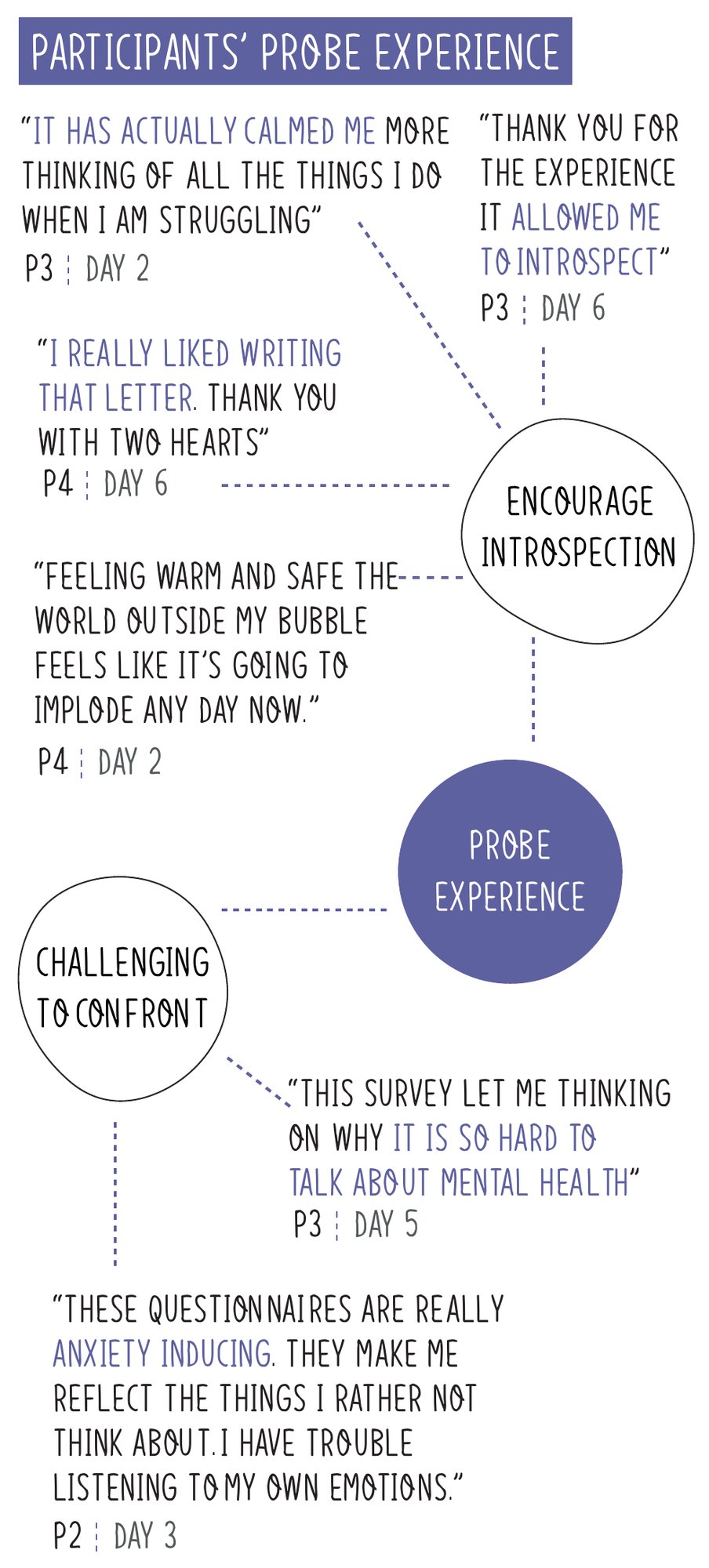
The “how are you” cards showed how the tasks felt. Some tasks encouraged introspection: “It has actually calmed me more thinking of all the things I do when I am struggling.” Others were hard to face: “These questionnaires are really anxiety inducing. They make me reflect the things I rather not think about.”

Participants’ quotes about the probe experience, grouped as encouraging introspection or challenging to confront.
viii.

four sensitizing concepts

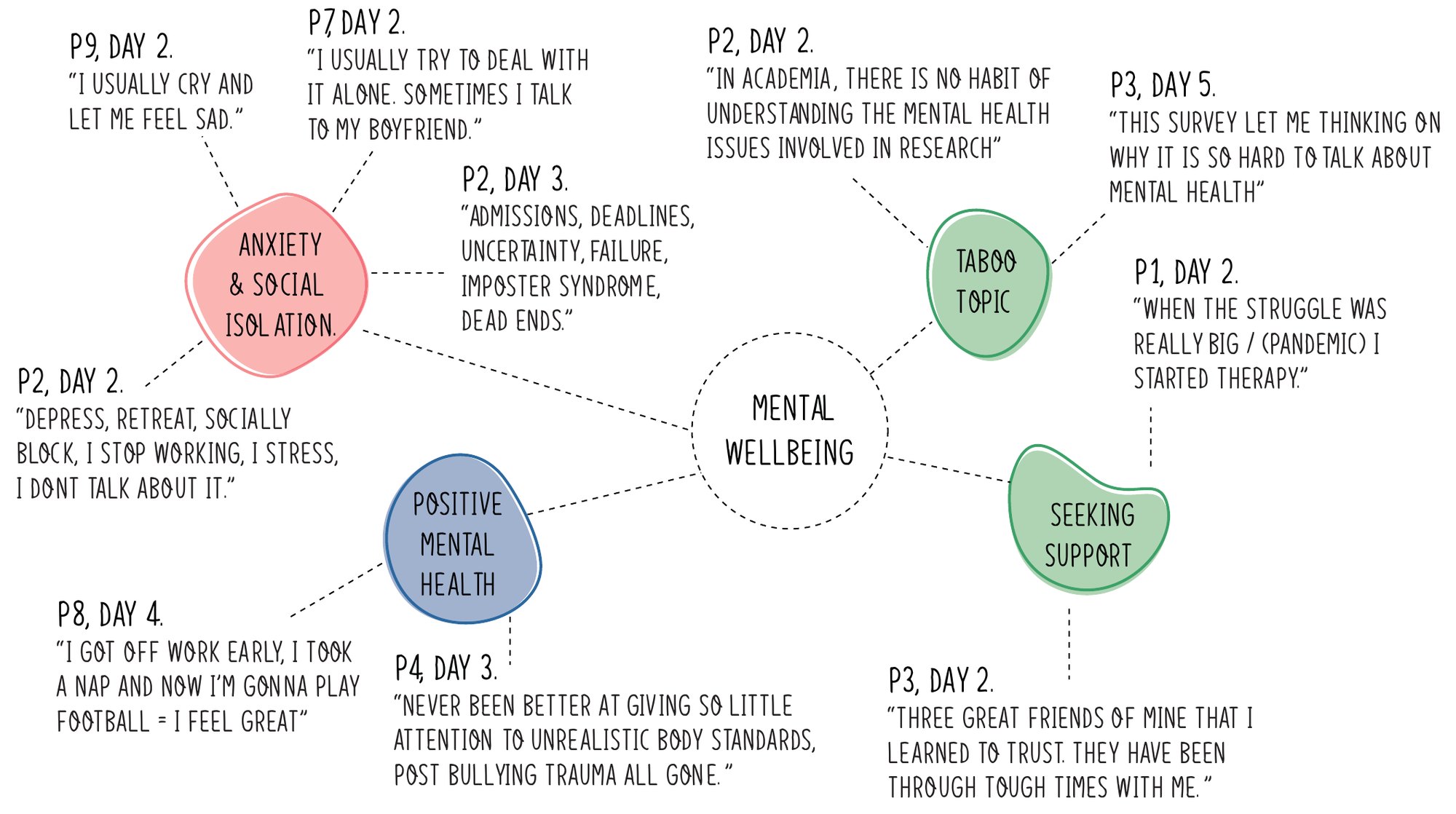
Across tasks and students, four areas stood out for designing for students’ mental wellbeing.

A map of mental wellbeing linked to anxiety and social isolation, taboo topic, seeking support and positive mental health, each with students’ quotes.
ix.

three personas

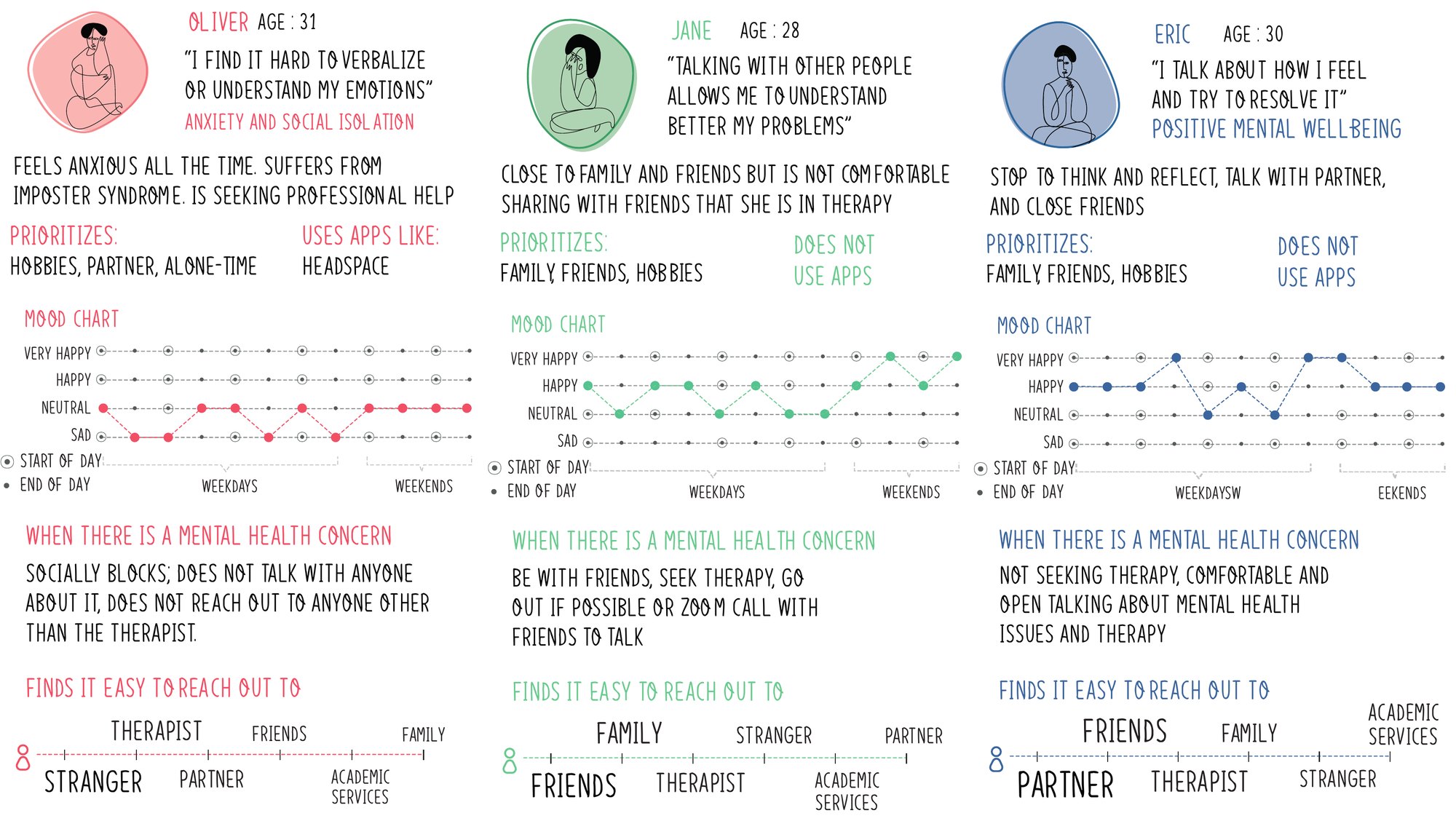
We combined characteristics that students shared into three personas: Oliver, who is anxious and isolated; Jane, who seeks help but sees mental wellbeing as a taboo topic; and Eric, who has positive mental wellbeing.

Three persona sheets for Oliver, Jane and Eric, each with a quote, priorities, app use, a week’s mood chart, what they do when there is a mental health concern, and who they find easy to reach out to.
x.

crossing personas and concepts

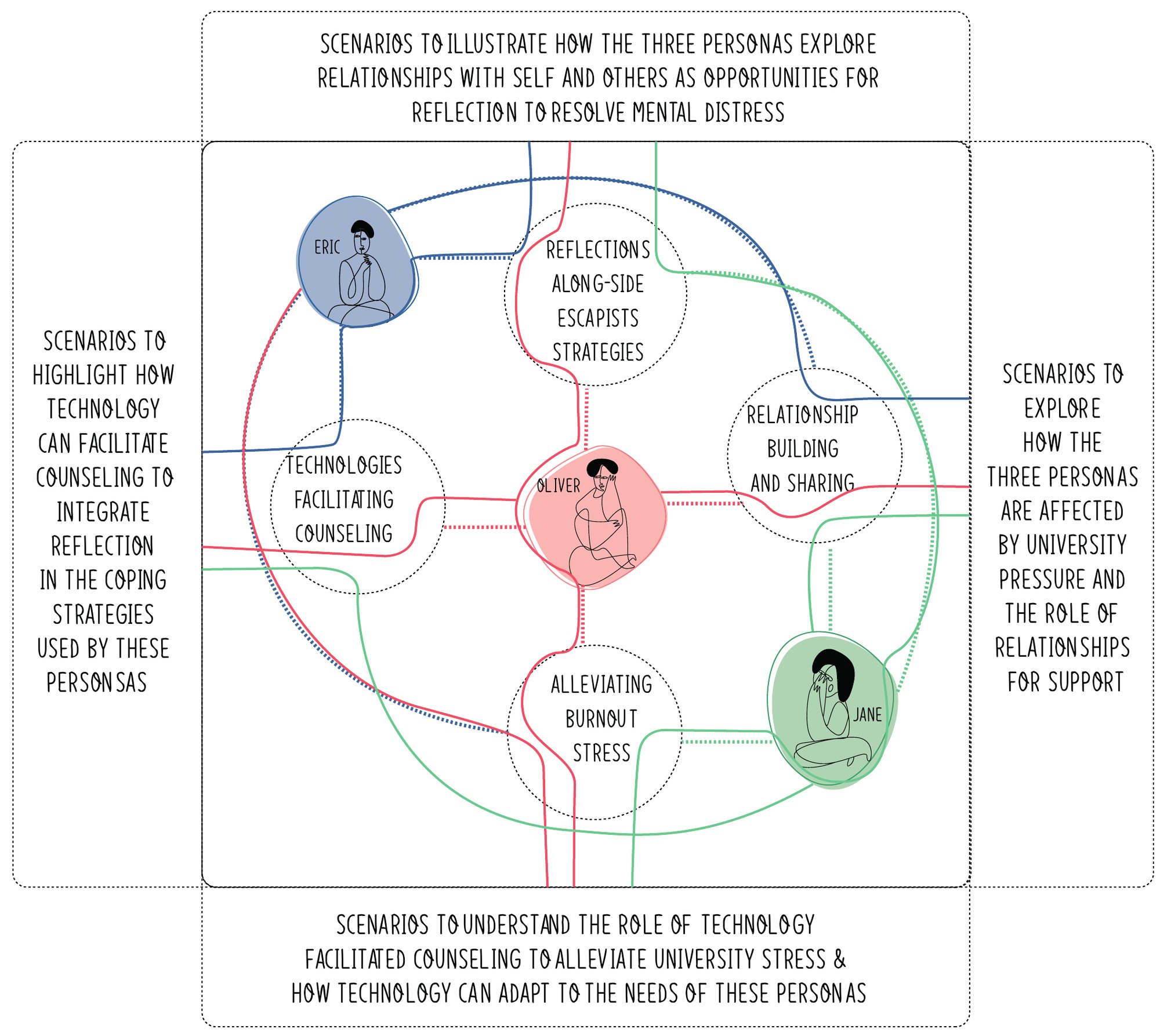
Crossing one or more personas with one or more concepts gives scenarios for design. For example: how technology could make counselling part of the coping strategies these students already use, or how each persona is affected by university pressure and relies on relationships for support.

A diagram crossing the three personas with four concepts: reflections alongside escapist strategies, relationship building and sharing, alleviating burnout stress, and technologies facilitating counselling.

what we learned

Anonymity let students share personal and sensitive details, which made the personas and concepts possible. The study was limited to ten students from one department, and the kits went out during exam week.

Probes returned in the PhD as the aging reflection probe, with older adults in India.